

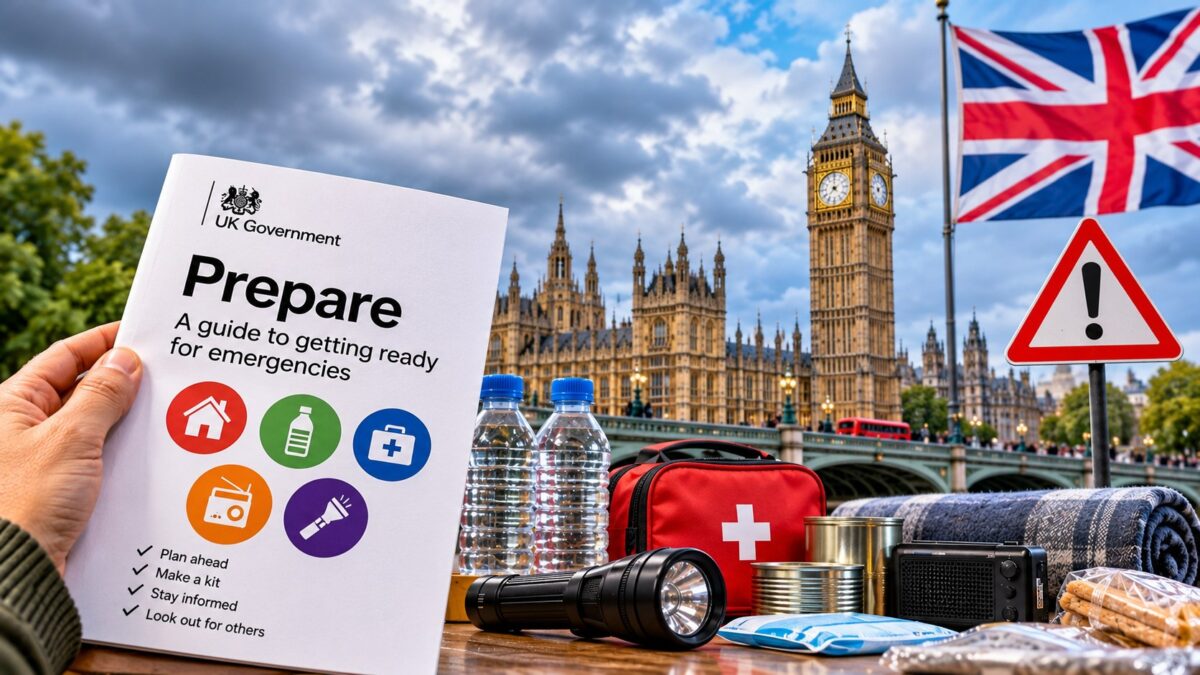
Britain’s recommendation that households keep three days of essential supplies at home reflects a practical concern about how quickly everyday life can be disrupted when essential services fail. Severe weather, flooding, electricity outages and interruptions to communications can leave people struggling to obtain food, water and reliable information, even when their homes remain safe. The government’s advice encourages residents to prepare for these situations in advance, allowing emergency services to concentrate on people who need urgent assistance. It is part of a wider effort to make emergency preparedness a routine responsibility rather than something considered only after a crisis has begun.
The three-day recommendation is not a declaration that a major emergency is imminent. Instead, it addresses the period when disruption has occurred but public services, utility companies and local authorities may still be assessing the damage. Having basic supplies available can give households greater flexibility while repair work and emergency operations continue. The policy also reflects a growing recognition that the reliability of modern life depends on interconnected systems, and that a problem affecting one service can quickly create difficulties across several others.
Why the government is encouraging households to prepare
Britain’s updated preparedness campaign follows experiences with severe storms and wildfires that disrupted services and exposed the difficulties faced by communities when normal arrangements break down. The immediate consequences of such events may include damaged roads, power cuts, interrupted mobile phone services and problems with water supplies. Even when emergency responders reach affected areas quickly, restoring every service can take longer, particularly when several communities are affected at the same time.
The government is asking households to maintain bottled water and non-perishable food for three days, alongside basic items such as a torch, spare batteries, a first-aid kit and a charged power bank. A battery-powered radio can provide access to updates when mobile networks or internet connections are unavailable. Keeping some cash and important contact details on paper may also help when electronic payment systems or digital services are disrupted.
These recommendations are intended to be manageable. Households are encouraged to check what they already have rather than purchase an entire emergency kit immediately. Missing items can be added gradually during ordinary shopping trips, reducing the financial burden and making preparation more realistic for families with limited storage space or tight budgets.
The government has also advised eligible households to register for the Priority Services Register, which helps utility providers identify customers who may need additional support during an outage. This can be particularly important for people who depend on medical equipment, have mobility difficulties or need assistance because of their age or other circumstances.
How everyday services become vulnerable during a crisis
Modern households rely on systems that are often taken for granted. Electricity powers heating, refrigeration, lighting and many medical devices. Mobile networks provide access to information and emergency communication, while internet services support banking, shopping and contact with public authorities. When one of these systems fails, the consequences can spread beyond the original problem.
A prolonged power cut, for example, can interrupt refrigeration and prevent some households from using electronic payment methods. If mobile phone charging becomes difficult, residents may also lose access to information about local conditions. A water supply interruption can create further problems with cooking and hygiene, particularly for households with young children or people who require regular medical care.
The three-day guidance provides a basic response to these possibilities, but the appropriate level of preparation varies. A household with an infant may need additional supplies, while someone who relies on regular medication must ensure that prescriptions do not run out during a disruption. Pet owners also need to consider food and water for animals. People using electricity-dependent medical equipment may require specific backup arrangements that cannot be covered by a general household checklist.
The advice is therefore best understood as a starting point. It cannot account for every emergency or guarantee that all needs will be met, but it can encourage people to identify their most important requirements before a disruption occurs.
The financial and social limits of preparedness
One difficulty with household emergency planning is that the ability to prepare is not equally distributed. Families with sufficient income and storage space may find it easy to keep additional food, water and supplies. Others may struggle to afford extra purchases when ordinary living costs already consume most of their income. People living in temporary accommodation or crowded housing may also have limited space for storing essentials.
The government’s emphasis on low-cost and gradual preparation recognises some of these barriers. However, the effectiveness of the campaign will depend partly on whether its advice remains accessible to people who cannot easily meet every recommendation. Emergency preparedness cannot become a substitute for public support, particularly when people need assistance because of disability, poverty or a lack of secure housing.
Community networks can help fill some gaps. Neighbours may be able to check on older residents, share information and help people obtain basic supplies. Local organisations can also identify households that may need assistance during an outage. Such cooperation is particularly valuable when communication systems fail or official emergency services are stretched.
Nevertheless, responsibility for maintaining essential infrastructure remains with governments, regulators and service providers. Households cannot repair a damaged electricity network or restore a disrupted water supply. Preparedness advice is most effective when it complements reliable infrastructure, well-coordinated emergency services and clear public communication.
Why the three-day period matters
The three-day recommendation provides a practical target for households, but it should not be treated as a guarantee that every emergency will be resolved within 72 hours. The duration of a disruption depends on its scale, location and cause. A short power failure may be resolved within hours, while severe flooding or extensive infrastructure damage may require a much longer recovery period.
The advice also needs to be communicated carefully. If people interpret preparedness messages as evidence that a specific disaster is expected, they may become unnecessarily anxious or buy supplies they do not need. Clear explanations of the risks being addressed can help avoid panic purchasing while encouraging sensible preparation.
The government has said that many recommended actions cost little or nothing and that supplies can be assembled over time. This is important because emergency planning should not become an expensive exercise. Checking existing cupboards, keeping essential medication available and writing down important phone numbers can provide useful protection without requiring substantial spending.
The longer-term test will be whether households maintain these arrangements after the initial publicity fades. Food and medication need to be replaced, batteries checked and plans reviewed when family circumstances change. Preparedness is not a one-time purchase but an ongoing process of making sure that people know what to do when ordinary services are interrupted.
Britain’s campaign places household readiness alongside the responsibilities of emergency responders and public authorities. Its practical value will depend on whether the advice reaches those who need it, whether people can afford to act on it and whether infrastructure providers are prepared to restore services quickly. The three-day target offers a clear starting point, but national resilience ultimately requires households, communities and public institutions to work together.
(Source:www.theguardian.com)