
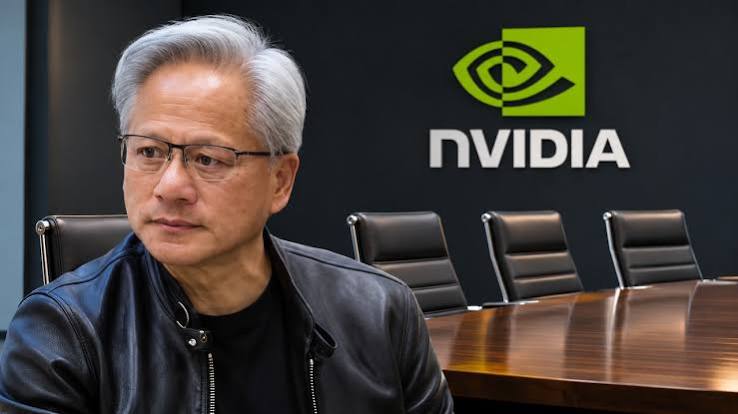
Jensen Huang’s return to Nvidia as chief executive has exposed an extraordinary concentration of power within the artificial intelligence industry. In an industry populated by some of the world’s wealthiest technology companies, influential investors and ambitious entrepreneurs, one individual has acquired an influence that extends far beyond the business he founded. His presence has become a source of confidence for investors, technology companies and financial markets, while his absence has demonstrated how quickly uncertainty can spread across an entire industry. The sharp recovery in technology stocks following his reinstatement was not simply a reaction to a corporate leadership decision. It reflected the extent to which the future of the AI investment boom has become associated with Huang himself.
The episode has raised an uncomfortable question about the structure of the global AI economy. How has an industry driven by technological innovation, enormous financial resources and competition between powerful corporations become so dependent on one individual? Huang does not own the companies developing the leading AI models, control the world’s cloud infrastructure or determine the investment decisions of every technology business. Yet his influence over the computing infrastructure, commercial relationships and financial ecosystem supporting these companies gives him an unusual ability to affect their fortunes. His departure unsettled businesses and investors across the sector, while his return helped restore confidence almost immediately.
One Individual Has Become the Face of an Entire Industry
Huang’s influence is rooted in his ability to position himself at the centre of several interconnected developments in artificial intelligence. Nvidia supplies the advanced processors used by major technology companies to train and operate AI models, but Huang’s role extends well beyond the company’s semiconductor business. He has developed relationships with cloud computing providers, AI startups, semiconductor manufacturers, investors and governments, creating a network through which Nvidia has become closely connected to the industry’s expansion.
This position gives him an influence that few other technology executives can match. When companies such as Microsoft, Google, Amazon and other major players announce ambitious AI infrastructure investments, the availability of advanced computing technology becomes an important consideration. Nvidia is a major beneficiary of this spending, and Huang’s decisions about product development, supply commitments and strategic partnerships can influence the plans of businesses across the industry.
His influence is also visible in the investment community. Nvidia’s announcements frequently affect expectations about the future of AI infrastructure, semiconductor demand and the commercial prospects of companies operating in related sectors. Investors often interpret Huang’s statements about computing demand and technological development as indicators of where the industry is heading. This has gradually transformed the Nvidia chief into something more than a corporate leader. He has become one of the principal figures through whom the market interprets the future of artificial intelligence.
The market reaction to Huang’s reinstatement provided perhaps the clearest demonstration of this influence. Following his return on November 23, Nvidia shares surged approximately 32%, adding more than $900 billion to its market value. The Nasdaq 100 also rose sharply, while shares of companies associated with AI infrastructure and computing benefited from the renewed optimism. The recovery followed a period of heavy selling during which Huang’s departure had intensified concerns about the sustainability of the AI investment boom.
The significance of this movement lies in the fact that the rally extended well beyond Nvidia. Companies involved in data centre construction, cloud computing and specialised infrastructure also benefited from the change in sentiment. Businesses such as CoreWeave and Nebius, whose prospects are closely connected to the availability of advanced AI computing capacity, had faced pressure during the uncertainty surrounding Huang’s departure. His return helped restore investor confidence in the broader ecosystem.
This reaction suggests that markets increasingly view Huang as a stabilising figure for the entire AI economy. His leadership is associated with continuity in the supply of advanced processors, financial support for emerging companies and the expansion of computing infrastructure. When that leadership became uncertain, investors began reassessing not only Nvidia but also the businesses whose growth depends on the continued expansion of the AI sector.
The speed of the recovery is particularly revealing. A leadership change at an individual semiconductor company would not normally be expected to influence such a wide range of technology stocks. Yet Huang’s departure and return produced precisely that effect. It demonstrated how much investor confidence in the AI boom has become concentrated around one individual.
Huang’s Financial Relationships Extend His Reach
Another important source of Huang’s influence is his involvement in financing the wider AI ecosystem. Nvidia has invested in several emerging technology businesses, including companies that subsequently purchase its processors and computing systems. These investments can help startups obtain the capital required to expand their operations while strengthening Nvidia’s position as a supplier to the next generation of AI companies.
However, this arrangement also creates a complicated financial relationship. When a technology supplier invests in businesses that become its customers, the distinction between independently generated demand and supplier-supported demand becomes important. A startup may have genuine commercial prospects, but its ability to purchase expensive computing infrastructure can partly depend on investment received from companies operating within the same ecosystem.
Huang has defended Nvidia’s approach, arguing that the company is supporting genuine demand for computing capacity rather than artificially creating sales. Nevertheless, concerns about circular financing have become increasingly relevant as the AI industry attracts enormous amounts of capital. Investors want to know whether companies are purchasing infrastructure because their businesses can generate sufficient returns or because external financing allows them to continue expanding.
Huang’s involvement in these relationships gives him considerable influence over which businesses receive support and how the wider ecosystem develops. His departure therefore raised questions about whether Nvidia would continue backing certain companies and whether investors would remain confident in their growth prospects. His reinstatement removed some of that uncertainty, illustrating how decisions taken by one executive can affect the financing expectations of multiple businesses.
Political Influence Adds Another Dimension to His Power
Huang’s importance is no longer confined to corporate boardrooms and financial markets. Artificial intelligence has become a strategic priority for governments, particularly as the United States and China compete for technological leadership. Advanced processors are essential to the development of sophisticated AI systems, scientific research and several military-related applications. This has placed Nvidia at the centre of an increasingly sensitive geopolitical environment.
The intervention of US President Donald Trump in the circumstances surrounding Huang’s reinstatement illustrated the political significance attached to his leadership. Trump publicly supported his return and said he had played an important role in persuading Nvidia’s board to restore him to the chief executive position. The episode demonstrated that Huang’s future was being discussed at a level extending beyond ordinary corporate governance.
His relationships with policymakers are important because decisions involving semiconductor exports, international customers and access to advanced computing technology can affect Nvidia’s commercial prospects. The company must navigate US national security requirements while maintaining its position in a global market. Huang’s ability to communicate with political leaders and industry executives gives him a significant role in these discussions.
However, this influence also creates risks. When one individual becomes so closely associated with a country’s technological ambitions, questions about corporate accountability, regulatory independence and the separation between commercial interests and national priorities become unavoidable. The more important Huang becomes to the AI industry, the greater the scrutiny surrounding his decisions and relationships.
The AI Industry Has Become Vulnerable to One Man’s Fortunes
The most troubling aspect of Huang’s influence is the extent to which the industry’s fortunes appear connected to his personal position. His departure triggered concerns across the technology sector, while his reinstatement produced a broad market recovery. Such reactions suggest that investors are not simply evaluating the financial performance of individual AI companies. They are also attaching considerable importance to the continued presence of the person they associate with the industry’s growth.
This creates a structural vulnerability. Artificial intelligence is supposed to represent a technological transformation driven by competition, research and innovation across multiple companies. Yet the financial markets supporting this transformation appear unusually sensitive to developments involving one executive. If confidence in Huang weakens again, the consequences could extend well beyond Nvidia’s share price.
There are also questions about whether this concentration of influence is healthy for the industry. Microsoft’s investments, Google’s AI development, Amazon’s cloud infrastructure and the activities of emerging model developers represent substantial independent capabilities. Their long-term prospects should ultimately depend on their technology, customers and financial performance rather than the continued leadership of one semiconductor executive.
Huang’s return has restored confidence, but it has not removed the underlying dependence that became visible during his absence. The AI industry still faces questions about infrastructure spending, profitability, financing arrangements, competition and the long-term commercial value of artificial intelligence. None of these challenges can be resolved simply by restoring one individual to the position he previously occupied.
The episode has nevertheless established something important about the present structure of the AI economy. Huang has acquired an influence that extends across companies, markets and political institutions, making him one of the most consequential individuals in the technology industry. His decisions do not determine every movement in the AI market, but the reaction to his departure and return shows how strongly the fortunes of an entire industry have become tied to his presence.
(Source:www.channelinsider.com)