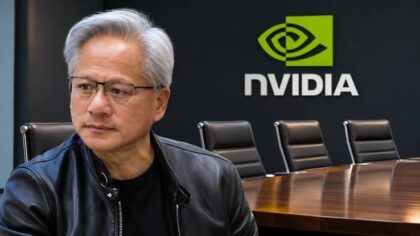

Nvidia’s decision to restore Jensen Huang as chief executive within days of his resignation has brought an uncomfortable governance question to the centre of the artificial intelligence industry. The company has justified the decision by saying its board reviewed the available information, consulted senior United States government officials and concluded that Huang’s return did not create a national security threat. However, the circumstances surrounding the reversal have raised questions about the independence of corporate decision-making when a company becomes strategically important to national economic and technological interests.
Huang’s return initially encouraged investors who had been concerned about a prolonged leadership vacuum at the world’s most influential artificial intelligence chipmaker. Nvidia shares surged 31.5% following the announcement before falling 5.9% in the subsequent trading session as attention shifted towards unresolved questions about governance, political involvement and the company’s internal standards. The changing market response illustrates the difficulty of separating leadership confidence from the wider risks surrounding an executive whose decisions affect an increasingly important technology ecosystem.
A Rapid Reversal Creates Questions About Board Independence
Huang’s departure followed revelations about extramarital relationships, including an alleged relationship with a woman suspected of having connections to Chinese intelligence. The circumstances raised questions about potential security vulnerabilities, executive conduct and the responsibilities of a chief executive leading a company whose products are central to American technological competitiveness.
The board initially accepted Huang’s resignation and indicated that it would seek a replacement. Chief financial officer Colette Kress was appointed interim chief executive while the company considered its leadership options. However, the position changed dramatically when the board reinstated Huang following discussions and an assessment of the available information.
The speed of the reversal is particularly important. The company had moved from accepting the resignation to restoring the same executive before all concerns surrounding the circumstances had been fully resolved. Although the board stated that it was satisfied with Huang’s explanations and ability to lead, the decision has raised questions about whether the investigation and governance review were sufficiently independent.
A board of directors is expected to act in the interests of shareholders rather than simply protect the position of a successful founder. Its responsibility includes examining potential conflicts, evaluating executive conduct and ensuring that corporate policies apply consistently. When a company reverses a major leadership decision so quickly, investors are entitled to understand what changed and what evidence supported the new position.
Huang’s Admission Complicates the Leadership Debate
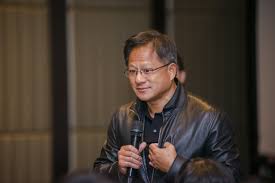
Addressing employees after his return, Huang acknowledged that he had violated aspects of Nvidia’s code of conduct and made serious mistakes. He apologised to staff and said he was receiving therapy, while disputing reports that he had been an abusive manager. He also rejected suggestions that political pressure from President Donald Trump had determined the board’s decision.
His admission creates a difficult situation for Nvidia. The company has restored an executive who has acknowledged violating internal conduct requirements, while simultaneously attempting to maintain confidence in the standards expected from employees and senior management. The distinction between personal behaviour and professional performance may be relevant, but the board must explain how it has assessed the consequences of the admitted violations.
Corporate codes of conduct are not merely documents designed to guide ordinary employees. They establish expectations for leadership, accountability and the handling of conflicts that could affect the company. Senior executives are expected to meet these standards because their decisions influence the behaviour of the wider organisation.
The issue is particularly sensitive at Nvidia because Huang has become closely associated with the company’s identity and commercial success. His technical knowledge, industry relationships and public standing have helped make him one of the most influential figures in artificial intelligence. However, the importance of an individual executive should not remove the need for independent oversight.
Political Intervention Raises a Different Set of Risks
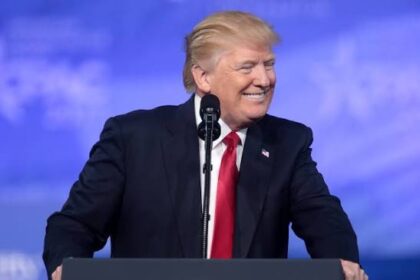
President Trump publicly took credit for Huang’s reinstatement, adding another dimension to the controversy. The president has argued that Nvidia is essential to maintaining American leadership in artificial intelligence, while indicating that he would consider a pardon for Huang if necessary. He has also discussed the possibility of the United States government acquiring an equity stake in Nvidia.
Such statements create uncertainty about the relationship between corporate governance and national industrial policy. Governments have legitimate reasons to engage with companies producing strategically important technologies, particularly where export controls, national security and international competition are involved. However, there is a difference between government oversight and political involvement in an individual company’s leadership decisions.
The Nvidia situation illustrates how closely commercial interests and national security priorities have become connected. Advanced chips are essential for artificial intelligence development, military applications, data centres and scientific research. Washington therefore has a direct interest in determining where these products are sold and whether sensitive technology could reach countries or organisations subject to restrictions.
But this strategic importance can create pressure on corporate boards. A company that becomes central to government objectives may find itself operating in an environment where political relationships influence decisions that would traditionally be handled through independent corporate processes.
For shareholders, this creates a difficult balance. Government engagement could help Nvidia maintain its position in an increasingly competitive international market, but political involvement can also introduce uncertainty. Decisions may become vulnerable to changing administrations, regulatory priorities and disagreements over technology exports.
National Security Questions Remain Unresolved
The board’s statement that it received input from senior government officials and found no national security risk has not ended congressional scrutiny. Lawmakers from both major political parties have questioned the circumstances of Huang’s return and called for further examination of the company’s decision-making process.
The concerns extend beyond his personal relationships. Questions have also been raised about possible foreign intelligence exposure, chip-smuggling allegations and Nvidia’s compliance with American export restrictions. These issues are particularly important because the company’s products are used in advanced computing systems that can support both civilian and military applications.
Huang is scheduled to appear before congressional committees, including the Senate Banking Committee, in early December. His testimony is likely to attract attention not only because of his reinstatement but also because lawmakers want greater clarity about the company’s security procedures and the handling of sensitive technology.
The hearings could place Nvidia in a difficult position. The company must defend its leadership decision while demonstrating that its internal controls are sufficiently strong to address national security concerns. A positive conclusion from the board’s review does not automatically settle questions being examined by regulators or lawmakers.
Nvidia’s Importance Makes Governance More Difficult
Nvidia’s position in the artificial intelligence industry is an important reason why the leadership dispute has attracted such attention. Its graphics processing units and related computing systems have become central to the development and operation of advanced AI models. Major cloud companies, technology businesses and research organisations depend on its products to expand their computing capacity.
The company’s influence extends beyond chip sales. Its software ecosystem, developer tools and relationships with technology companies have helped establish a business position that competitors cannot easily reproduce. Nvidia has also played an important role in financing and supporting the wider artificial intelligence ecosystem through partnerships and strategic investments.
This influence makes leadership stability commercially valuable, but it also increases the importance of accountability. Investors may welcome the return of an executive who understands the business, yet they must also consider whether the board can challenge decisions made by a powerful founder.
A successful company cannot rely indefinitely on the reputation of one individual. It requires institutional systems that can function independently of its chief executive, particularly when allegations involve conduct, security or regulatory compliance.
The immediate share price movement may not determine the long-term direction of Nvidia. The company’s underlying demand for artificial intelligence computing remains an important commercial factor. However, unresolved governance questions could affect investor confidence, regulatory relationships and the company’s ability to manage political risks.
Huang’s return has removed one immediate source of uncertainty, but it has not resolved the wider debate about how Nvidia should be governed. The company now faces the challenge of demonstrating that its commitment to executive leadership and technological competitiveness can coexist with credible internal accountability.
(Source:www.thebusinessjournal.com)