

Australia To Not Amend Its Law For Online Tech Giants
Online platforms have shown consent in adopting “an industry-wide code of practice” which would reduce the “spread of misinformation online”.
Online platforms have shown consent in adopting “an industry-wide code of practice” which would reduce the “spread of misinformation online”.

Has the winning year for ‘corporate stay-at-homes’ come to an end?
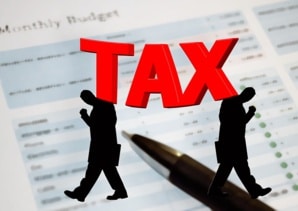
Failure to update international tax rules could incur a loss of “$100 billion”.The OECD expressed its concern on the issue of countries agreeing to continue negotiating till middle of 2021 regarding rewriting “rewrite cross-border tax rules”, whereby adding that in case the attempts “break down” and ignite a trade war, the global economy would be in the risk of losing over “1% of output”.
As many as hundred forty countries have shown their consent of extending talks following the outbreak of COVID-19 pandemic while the U.S. is hesitant prior to its “presidential election” as the hope of arriving at a deal this year have been squashed.
Moreover, there is a growing pressure from the public for the profitable multinational companies to “pay their share under international tax rules” even as the national budget feels the strains of post pandemic effect, revealed the countries in a statement.
In the digital commerce era, the idea is to update the international tax rules especially discouraging big internet giants such as “Google, Facebook and Amazon” from “booking profits in low-tax countries”, like Ireland. The lack of “new international rulebook”, however, is causing more and more governments to come up with their “own digital services taxes” whereby prompting “threats of trade retaliation from the Trump administration”.
In the words of the Secretary General of OECD, Angel Gurria:
“The alternative to finding an agreement would be a trade war … The last thing you want at this time with COVID-19 is to have to deal with further trade tensions”.
This scenario could lead to trade disputes whereby knocking off the world’s GDP by over 1%, as per the estimated “impact assessment” of OECD. On the other hand, new set of rules for “digital taxation” along with the “proposed global minimum tax” the global income tax for corporate could go up by “1.9% to 3.2%”, in other words “about $50 billion to $80 billion” annually. As per Reuters report:
“That could reach $100 billion when including an existing U.S. minimum tax on overseas profits, amounting to 4% of global corporate income tax, the OECD said. Meanwhile, any drag on global growth would be no more than 0.1% in the long term”.
References:
reuters.com

Last year, Google in Denmark earned a “revenue of 284 million Danish crowns” while it employs close to 100 people in the country.

The search giant collaborated with the U.S. government to develop a website dedicated to important information about COVID-19 outbreak.

Amazon’s cloud unit to launch “more powerful” processor chips.

Is Google inching towards turning quantum computing into reality?

While, the tech firms in the U.S. awaits the details of new policy announced by President Trump, the Tech firms are invited for a White House conference.

A diverse group of panel form the council to scrutinise and counsel the usage of AI and other emerging technologies.

The EU block has just approved of changes in the copyright law which will affect the online platforms like Facebook and Google.

The race of the autonomous driving technology seems to be nearing its completion while permissions for road tests become stricter.

The French Finance Minister informs that the global giants of digital sector could expect EU tax by the end of March.

Google is in no current discussions on launching customised search engine platform in China, while the option is still under study.

Genetic engineers inform that the realm of science is closer than ever to discovering the secret key to immortality, while tech giants collaborating with medical science are already researching to reverse ageing process besides finding cure for terminal illnesses.
The watchdogs will keep an eye on how the tech giants treat smaller companies.

The huge amounts of funds being sunk into the tech sector have necessitated for bigger war chest.

Using ads to mine crypto-currencies “is a relatively new form of abuse” violating Google’s policy.

Shares of Facebook and Apple “hit record highs” this week.

Google agrees to pay the balance tax amount for 2016.
American social media companies are under the scrutiny radar in Europe for violating the ‘consumer protection law’, which can culminate in fines.

Homekit versus Alexa war continues to explore new solutions and technologies, while following different approaches, for securing a lead in the smart-home niche.

In today’s data driven world, data-centers can “no longer rely” on one single company.
Will Google’s peer for WhatsApp and Messenger be the app you have been waiting for?

Project Abacus experiments with “behavioural biometrics” for Android devices.
Google has been accused of favouring its own company products and services in its search engine optimisation technique.

Lenovo and Google choose CES 2016 to demonstrate the features of their upcoming Project Tango’s smartphone.

Google is set to try new log in method which are hassle free from typing in lengthy password characters.

Facebook teams up with Google, whereby allowing the latter to access the relevant page straight away within Facebook mobile app.

The constant movement to everything mobile, obviously, is the reason. Customers are utilizing their cell phones to look for items and purchase them on the web. The screen size offers no space for Google’s hunt promotions, in addition to customers incline toward the simplicity of having the capacity to tap on, say, the Amazon buy button, which as of now has the instalment data put away.

The European Commission’s new computerized single market initiative could have enormous ramifications for TV and film fans, which might soon have entry to significantly more substance than any other time in recent memory. In another method declared today, the Commission has laid out its wants to lessen obstructions between countries – or make a post Europe.
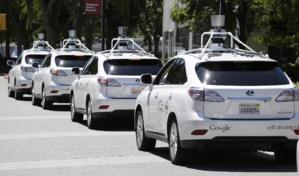
Google brought up that it doesn’t plan to offer its self-driving models and that they are intended to “figure out how individuals may need to utilize them.” On the topic of a plan of action for the innovation, Google just said that “once you really see a vehicle like this, you may begin to contemplate how you’d need a vehicle in your life.”