

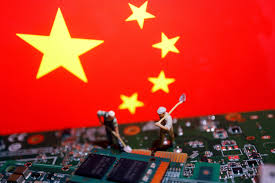
China’s latest expansion of export restrictions on rare earth elements and processing technologies delivers a forceful signal: Beijing is turning its dominance in critical minerals into a strategic weapon in global competition. The new rules, announced ahead of high-stakes trade talks, are poised to reverberate across industries, redistribute geopolitical leverage, and intensify frictions in U.S.–China economic relations.
Strategic Rationales Behind Beijing’s Move
At first glance, China’s expanded restrictions deepen a pattern that began earlier this year. But beneath the surface, the shift reflects a conscious recalibration of how Beijing intends to use its control over rare earths—not simply as an economic asset, but as a geopolitical tool.
China already handles more than 90 percent of the world’s processed rare earths and rare earth magnets. Its dominance in the refining and magnet-manufacturing stages gives it outsized influence over downstream industries. By widening the list of regulated elements and subjecting semiconductor, defense, and magnet users to new licensing controls, Beijing is converting nominal advantage into enforceable authority.
One motive is to preempt foreign efforts to replicate its supply chain. By insisting that even foreign firms using Chinese-origin components or equipment must apply for Chinese export licenses, Beijing signals that any attempt to bypass its control—even indirectly—is subject to scrutiny.
Timing also matters. The restrictions come just ahead of a planned summit between American and Chinese leaders, and in the context of fraught trade tensions. In effect, rare earths become a diplomatic chip in a larger negotiation—the ability to withhold or slow exports is a lever Beijing can wield at will.
A further pillar of the strategy: protect domestic value chains. By limiting the outward flow of high-end processing and magnet technologies, China preserves its comparative advantage in the more profitable downstream stages of the rare earth ladder—even as it flexes control over end-use applications.
Finally, the references to national security and dual-use technologies allow China to cloak these restrictions in legitimacy. By declaring that defense users will be barred and that advanced semiconductor uses will be evaluated case by case, Beijing frames the move as protection of sovereignty rather than coercion.
Disruptions Across Industries: Ripple Effects and Weak Links
The economic fallout from these restrictions is uneven but profound. Some sectors can absorb the shock; others may buckle under it.
- Semiconductors and Advanced Electronics
- Electric Vehicles, Renewables, and Consumer Tech
- Defense and Aerospace
- Mining and Upstream Technology Firms
Moreover, academic research and cross-border joint ventures involving Chinese expertise in rare earths will face tighter oversight, curbing knowledge flows and delaying innovation in next-generation materials.
Countries in the Crosshairs
Not all nations will feel the squeeze equally. China’s reach is optimized where dependence is highest and alternatives are scarce.
- United States
- East Asia (South Korea, Japan, Taiwan)
- European Union
- Emerging Producers: Australia, India, Brazil
- Smaller manufacturing economies
Tensions Intensify in U.S.–China Trade Negotiations
By weaponizing rare earth rules, China has inserted a new strategic dimension into its trade relationship with the United States—one that could reset the terms of any negotiated equilibrium.
In bargaining terms, China gains a powerful card. It can withhold licenses or delay approvals to extract concessions on tariffs, intellectual property, financial access, or investment restrictions. Because rare earths are deeply embedded in critical industries, leverage here is stronger than in many other domains.
But the move also risks backlash. The U.S. is unlikely to passively accept constraints on defense or high-tech supply. Washington may counter with expanded sanctions, subsidies to internal firms, or diplomatic pressure on allies to create alternative supply networks. Retaliatory moves could escalate the trade confrontation into a full-spectrum competition over supply chains.
China’s extraterritorial reach—where foreign manufacturers using Chinese-origin components must still seek Chinese license equivalence—raises complex jurisdictional and trade law questions. Disputes over whether such rules violate WTO principles or international trade norms may become central elements of any future trade case.
Moreover, Beijing’s strategy may accelerate “decoupling” trends. As the U.S., Europe, Japan, and allied nations invest in rare earth capacity and downstream material ecosystems, their dependence on China in key sectors will erode. That undermines China’s long-term dominance. Thus, while rare earth restrictions may yield short-term negotiating clout, they carry long-term strategic risk: prompting partners to accelerate diversification away from Chinese supply.
In tightening its grip on rare earths, China has turned critical minerals from economic inputs into instruments of statecraft. Industries from defense to consumer electronics are now playing on Beijing’s field of power. The coming months will test whether nations can reshuffle their supply architectures rapidly—and whether trade diplomacy can adapt to this new front in global competition.
(Source:www.straitstimes.com)