

Latin American criminal organizations are no longer simply exporting cocaine to European markets. They are establishing operational networks, building relationships with local mafias and expanding beyond traditional trafficking hubs. A new investigation by The Guardian reveals the extent of a transformation that is reshaping organized crime across Europe.
Latin American criminal networks are expanding their European presence
For decades, European cocaine trafficking has depended on criminal relationships linking South American producers with European distributors. Spain, Belgium and the Netherlands have traditionally played important roles because of their maritime infrastructure and commercial connections with Latin America. But the structure of this illicit market is changing.
An investigation published by The Guardian on October 13, 2026, found that criminal organizations originating in Latin America have established documented activities in at least 12 European countries. The four month investigation drew on police records, intelligence assessments, judicial proceedings and interviews with specialists from eight countries.
The organizations identified include Mexico’s Sinaloa Cartel and Jalisco New Generation Cartel, Colombia’s Clan del Golfo, Brazil’s Primeiro Comando da Capital and Comando Vermelho, and Venezuela’s Tren de Aragua. Their European activities take different forms, ranging from individual representatives and brokers to more established operational networks.
The investigation also cited an unpublished assessment from prosecutors in São Paulo, partly based on Brazilian intelligence information, indicating that the Primeiro Comando da Capital, commonly known as the PCC, operates in 16 European countries. This assessment should not be interpreted as evidence that the organization maintains large, permanent structures in every country concerned.
Cocaine seizures reveal the scale of the European market
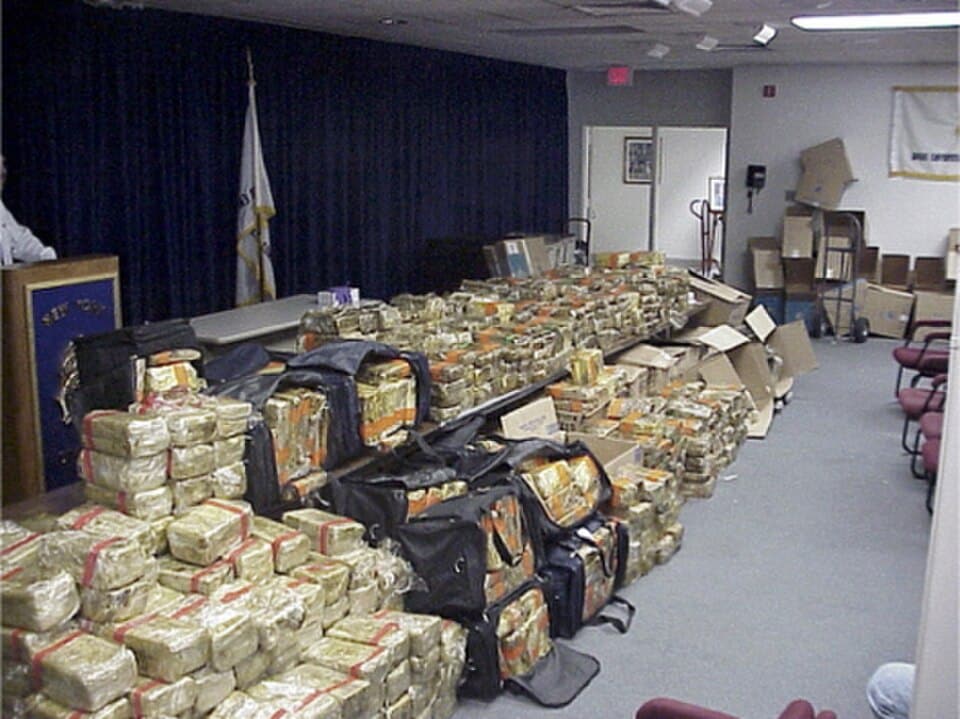
The expansion comes amid a major transformation of Europe’s cocaine market. According to the European Union Drugs Agency, EU member states seized 330 tonnes of cocaine in 2024. Although this represented a decline from the record 419 tonnes seized in 2023, the longer term increase remains substantial.
Spain reported 124 tonnes seized in 2024, followed by France with 53.5 tonnes and Belgium with 44.6 tonnes. Together, these three countries accounted for approximately two thirds of the total quantity intercepted in the European Union.
These figures do not directly measure consumption or the total volume of drugs entering Europe. Seizures are influenced by enforcement activity, trafficking methods and changes in transportation routes. Nevertheless, the scale of the quantities intercepted demonstrates the importance of the European market to international trafficking organizations.
The European Union Drugs Agency also reports that traffickers increasingly exploit smaller ports, transfers between vessels at sea, sophisticated concealment methods and alternative maritime routes. Such diversification complicates enforcement strategies traditionally concentrated on major commercial ports.
The expansion is not exclusively geographical. European authorities have also dismantled facilities used to process cocaine products within the continent. In 2024, six EU member states reported the dismantling of at least 42 sites associated with cocaine production or processing.
Cooperation with European mafias is reshaping organized crime
The growth of Latin American criminal organizations does not necessarily mean that they are replacing established European groups. In many cases, their operations depend on partnerships with organizations that already possess local distribution networks, logistical expertise and knowledge of European markets.
This cooperation creates a complex international structure. Latin American organizations may provide access to suppliers and overseas trafficking routes, while European partners contribute transportation, storage, distribution and money laundering capabilities. The precise division of responsibilities varies between networks and cannot be reduced to a single model.
Europol’s 2026 assessment of Europe’s most threatening criminal networks emphasizes the adaptability of organized crime. Its findings highlight the use of digital platforms, encrypted communications, legitimate businesses and financial systems to support criminal operations and conceal illicit proceeds.
For European authorities, the challenge is increasingly international. Investigations may involve criminal actors operating across several jurisdictions, with financial transactions, transport infrastructure and intermediaries spread between continents.
This evolution also raises questions about the resilience of legitimate businesses. Ports, logistics companies, financial institutions and commercial intermediaries can become targets for infiltration or exploitation, even when the companies themselves are not knowingly involved in criminal activity.
The central finding is therefore broader than the geographical expansion of individual cartels. Europe’s cocaine trade is becoming part of an increasingly interconnected criminal economy, in which organizations from different continents cooperate across established commercial routes.
The challenge for European governments will be to address these relationships without treating every trafficking network as a centrally controlled cartel. Understanding how criminal partnerships operate may prove just as important as identifying the organizations behind them.