
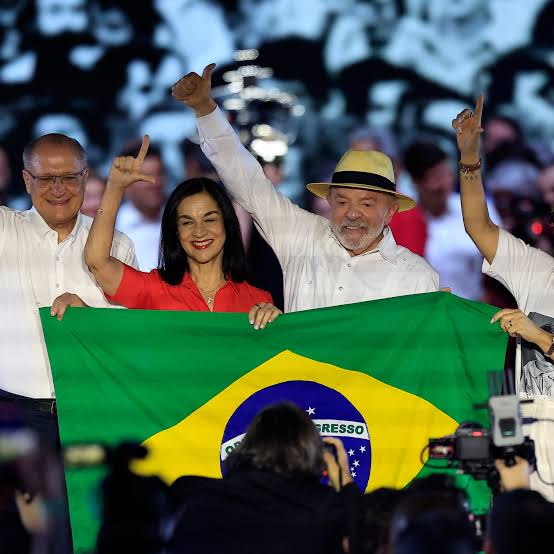
Brazil has given Luiz Inacio Lula da Silva another four years in office, but the election has done little to settle the country’s political arguments. His victory over Flavio Bolsonaro, son of former president Jair Bolsonaro, came after a close and divisive campaign in which economic policy, public spending and the role of the state remained major points of disagreement. Lula has secured another mandate, yet the result also shows that conservative politics retains considerable support. Winning the presidency was one task. Governing a country where millions of voters remain sceptical of his approach will be considerably harder.
There is also a financial problem waiting for the new administration. Brazil’s economy has performed better than many expected in recent years, but public debt has climbed above 82% of gross domestic product and borrowing costs remain high. Lula wants to protect social programmes, raise wages and improve living standards, particularly for poorer Brazilians. These are familiar promises from a president whose political career has long been tied to reducing inequality. The question is how much of this agenda can be delivered when the government has limited room to spend and investors are watching its finances closely.
The Election Has Not Removed Brazil’s Political Divide
Lula’s return is politically significant, but it should not be read as a decisive rejection of the right. Flavio Bolsonaro had led the first round of voting before losing the runoff, showing that the conservative movement associated with his father remains a serious force. The result gives Lula the presidency, not a blank cheque to govern as he wishes. Many voters may have preferred him to his opponent without agreeing with every part of his economic programme.
That distinction matters because Brazil’s political divisions have lasted for years and extend beyond personalities. They involve different views on the size of government, social welfare, taxation, public security and the country’s economic priorities. Lula’s supporters expect the state to play an active role in reducing poverty and expanding opportunity. His opponents are more likely to question public spending, government intervention and the consequences for private investment. These differences will not disappear because the election is over.
The response from the defeated side adds another complication. Flavio Bolsonaro has refused to concede and said he would seek to challenge the result following a Supreme Court decision extending voting hours. Such claims can prolong political uncertainty, although the existence of a challenge does not itself establish that the election was invalid. The authorities will have to handle any legal proceedings through the established system while the new administration prepares to take office.
For Lula, the practical test will be whether he can move beyond the campaign and build enough political support to govern. A narrow victory may encourage his supporters, but it also leaves a large opposition that will scrutinise decisions on spending, taxation and public institutions. If every major policy becomes another contest between rival political camps, even sensible economic measures could become difficult to pass.
Social Promises Meet the Reality of Public Debt
Lula’s economic programme depends partly on the belief that stronger growth can help finance social improvements. Higher wages and welfare payments put money into the hands of households that are likely to spend a substantial part of it. That can support shops, local businesses and employment. But there is a limit to how far public spending can be expanded without considering where the money will come from.
Brazil’s budget is unusually difficult to adjust because much of federal expenditure is already committed to statutory obligations, including pensions and other established payments. Less than 8% of the federal budget is considered adjustable, according to recent estimates. This leaves the government with limited room to redirect spending without changing existing rules or finding additional revenue. When debt rises and interest payments absorb more public money, the pressure becomes harder to ignore.
Lula has promised to increase the minimum wage faster than inflation. For workers, that could mean some relief from rising living costs and a better ability to afford everyday necessities. But minimum-wage increases can also raise government expenditure because pension payments and other obligations are linked to wage levels. The policy therefore has consequences beyond the workers who receive the increase directly. It can improve incomes, but it also makes the budget arithmetic more demanding.
There is no simple answer here. Cutting social expenditure could weaken the living standards of people the government wants to protect, while borrowing more could increase the cost of financing the state. Raising taxes might bring in revenue but could meet resistance from businesses and households. Lula will need to explain how the different parts of his programme fit together, rather than relying on economic growth to resolve every fiscal problem.
High Interest Rates Could Undermine the Growth Plan
Brazil’s high borrowing costs are another obstacle. Inflation has remained above the central bank’s preferred target, while the benchmark interest rate has stood at 13.75% despite a series of reductions. High rates make credit more expensive for businesses and consumers. Companies may postpone expansion, households may spend less and the government itself faces a larger bill when financing debt.
Lula wants lower interest rates because cheaper credit could support investment and economic activity. Yet the government cannot simply demand lower rates and expect the problem to disappear. Monetary policy depends on inflation expectations and confidence in the broader economic outlook. If investors believe public spending will keep inflationary pressure alive, the central bank may have less room to reduce rates quickly.
This is where fiscal policy becomes central to the argument. The government needs to demonstrate that it can protect essential programmes while keeping borrowing under control. If it succeeds, the resulting confidence could help create conditions for lower rates and more private investment. If it fails, higher financing costs could weaken the very growth that Lula hopes will generate more revenue.
The consequences are not abstract. A small business considering new equipment, a family trying to buy a home and a company planning to hire workers all respond to the cost of credit. When borrowing remains expensive, investment decisions are delayed. The effects accumulate gradually, making it harder for the economy to produce the growth needed to sustain the government’s promises.
Congress Will Decide How Much Lula Can Deliver
Even if Lula settles on a workable economic plan, he must still persuade Congress to support it. Conservative parties have a substantial presence in the legislature, and the president will need to negotiate with lawmakers whose priorities do not always match his own. Tax changes, spending adjustments and reforms affecting established interests can be difficult to pass, especially when their immediate costs are clear but their long-term benefits are uncertain.
Coalition building will therefore matter as much as presidential authority. Brazil’s political system requires negotiation, and a government that fails to maintain legislative support may struggle to turn its plans into law. This could encourage compromises that dilute reforms or delay difficult decisions until the financial pressure becomes more serious. Lula’s experience may help him manage those negotiations, but it cannot guarantee success.
The wider economic environment will add to the pressure. Changes in global trade, commodity demand and international financial conditions can affect Brazilian exports, investment and currency movements. The government will not control these developments, but it will be judged on how well it responds to them. A credible domestic economic framework would give Brazil a stronger position when external conditions become less favourable.
Lula’s fourth term will ultimately be measured by whether it improves living standards without allowing public finances to deteriorate further. His electoral victory gives him the authority to pursue that goal, but the result has not resolved the country’s disagreements over how to achieve it. The real test begins when the promises made during the campaign meet the limits of the budget, the demands of Congress and the expectations of a divided electorate.
(Source:www.france24.com)