
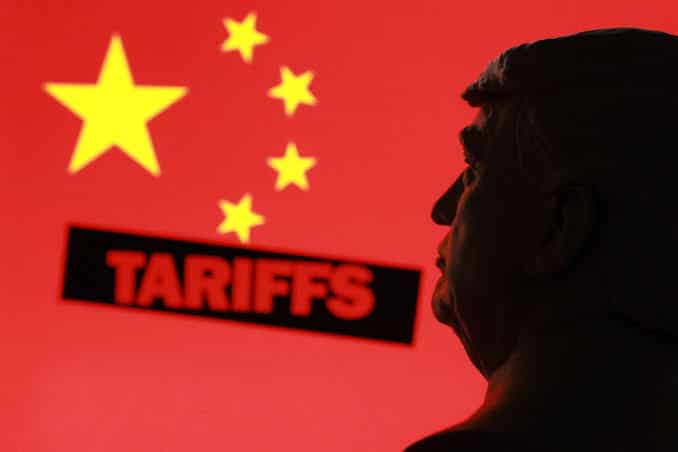
The Trump administration’s latest tariff measures are aimed at changing more than the terms of trade between the United States and China. Washington is attempting to influence where goods are manufactured, how international supply chains are organised and how other economies deal with Chinese industrial expansion. By extending tariff pressure to 14 major trading partners, including the European Union, India, Japan and several Southeast Asian economies, the administration is pursuing a strategy in which countries may have to reconsider their commercial relationships with China if they want to preserve favourable access to the American market.
The measures follow an eight-month investigation into what Washington describes as structural excess manufacturing capacity and production supported by government intervention. Under Section 301 of the Trade Act of 1974, the United States Trade Representative determined that the industrial policies of the 14 economies were unreasonable and placed American commerce at a disadvantage. The proposed duties include a 20% rate on certain Chinese goods, in addition to earlier tariffs, while other countries face different rates depending on their proposed trade arrangements with Washington.
The immediate target may be China’s manufacturing dominance, but the wider objective is to weaken the country’s position within international production networks. This is a considerably more ambitious goal than reducing the American trade deficit. China has become deeply integrated into global manufacturing through its industrial capacity, supplier networks, infrastructure and ability to produce goods at scale. Tariffs can increase the cost of accessing the American market, but changing this industrial structure will require other countries to develop the capacity to replace Chinese production.
Washington Wants Other Countries to Reconsider Their Dependence on China
China’s manufacturing strength is built on a combination of industrial investment, large production facilities, established supplier networks and access to international markets. Its companies operate across electronics, machinery, batteries, chemicals, textiles, solar equipment and several other sectors. This extensive manufacturing base allows Chinese producers to supply components and finished goods to businesses operating in different parts of the world.
Washington’s concern is that tariffs imposed directly on Chinese products may not be sufficient if production and investment are redirected through third countries. A manufacturer could establish operations elsewhere while continuing to depend on Chinese components, capital or industrial inputs. In such circumstances, the final country of export may change without substantially reducing China’s influence over the supply chain.
This is why the latest American investigation has examined industrial policies in economies beyond China. Washington is effectively asking its trading partners to strengthen their own trade defences against Chinese industrial expansion and limit practices that allow Chinese manufacturing capacity to influence their domestic markets. The reports accompanying the investigations repeatedly refer to China’s role in global production and investment networks.
The approach could place governments in an uncomfortable position. Many countries want to attract Chinese investment and benefit from access to its manufacturing ecosystem, while also maintaining favourable trade relations with the United States. They may now face greater pressure to demonstrate that their industrial development is not simply providing an alternative route for Chinese goods into American markets.
Tariffs Are Being Used as Leverage in a Wider Strategic Contest
The latest measures also have a diplomatic dimension. The United States and China have maintained a fragile trade truce following an earlier escalation in tariffs and export restrictions. The proposed duties remain within the limits of that arrangement, but Washington has retained the possibility of imposing additional tariffs if the agreement breaks down.
China faces a proposed 20% tariff increase on covered goods, in addition to duties dating from Trump’s first presidency. If the current understanding collapses, the rate could rise further. The timing is significant because the two governments are preparing for another leaders’ meeting, while the existing trade arrangement is due to expire on January 10, 2027.
This gives Washington additional negotiating leverage. Rather than immediately returning to the extreme tariff escalation witnessed during the earlier trade confrontation, the administration is establishing a framework that can be used to increase pressure if negotiations fail. The measures also communicate that the United States is prepared to involve other trading partners in its effort to limit China’s manufacturing influence.
However, this strategy carries risks. China has previously demonstrated that it can respond through restrictions on strategically important materials, particularly rare earth products used in automobiles, electronics, defence equipment and other industrial applications. Any renewed escalation could therefore disrupt American and international manufacturers that depend on Chinese supplies.
Manufacturing Relocation Will Take More Than Higher Import Duties
The central weakness in Washington’s strategy is the assumption that higher tariffs will encourage manufacturing to move away from China. Companies choose production locations based on a combination of labour costs, infrastructure, supplier availability, logistics, technical skills, energy supply and access to customers. Tariffs are only one part of that calculation.
China has developed manufacturing capabilities that cannot easily be replicated elsewhere. Its industrial clusters allow companies to obtain components, machinery and specialist services within relatively short distances. This reduces production delays and makes it easier to expand output when demand increases. Even companies that relocate final assembly may continue relying on Chinese suppliers for important inputs.
Countries such as India, Vietnam, Indonesia, Malaysia and Thailand can benefit from efforts to diversify production. However, they will need to expand their own industrial ecosystems if they want to replace a substantial part of China’s role. That means investing in transport infrastructure, ports, electricity, skilled labour and reliable regulatory systems.
There is also a risk that tariffs could simply redirect trade rather than create new manufacturing capacity. If companies move production to countries that still depend heavily on Chinese components, Washington may find that its measures have changed the route of international trade without achieving the intended reduction in Chinese influence.
American Businesses May Pay Part of the Price
Tariffs can also increase costs for American manufacturers and consumers. US companies import large quantities of intermediate goods and components used in domestic production. If duties increase the cost of these inputs, manufacturers may face higher expenses before alternative suppliers become available.
The consequences could be particularly significant in sectors such as electronics, machinery, automotive production and renewable energy. Businesses may have to renegotiate contracts, change suppliers or absorb additional costs. Some may pass these expenses to customers, adding to inflationary pressure.
The administration will also have to consider possible retaliation from affected trading partners. Countries that face additional duties may respond by restricting American exports or introducing their own trade measures. Such actions could affect agricultural producers, industrial companies and businesses that depend on international customers.
The longer-term outcome will depend on whether the tariffs encourage investment in genuinely independent manufacturing networks. Washington wants to reduce the influence of Chinese industrial capacity over global trade, but achieving that objective requires more than making imports expensive. It requires alternative production centres capable of competing on cost, quality, scale and reliability.
(Source:www.businessinsider.com)