

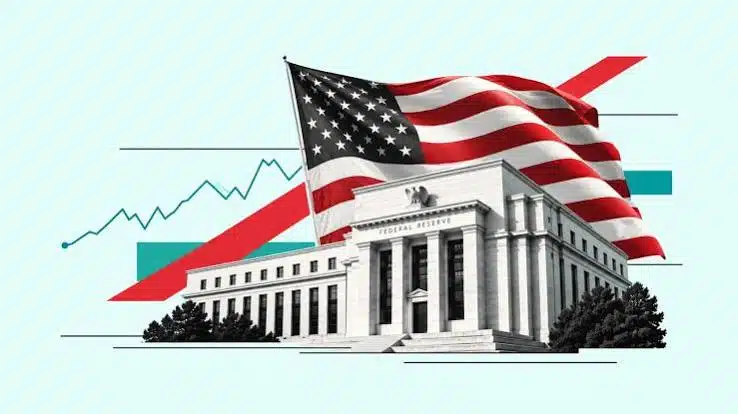
The Federal Reserve’s decision to keep interest rates unchanged reflects a difficult economic situation in which strong domestic activity is competing with persistent inflationary pressure. The central bank maintained its benchmark interest rate at 3.75% to 4% on October 28, 2026, choosing to wait for more economic information before deciding whether borrowing costs need to rise further. The decision was widely expected, but the reasoning behind it reveals how difficult it has become to determine the appropriate direction of monetary policy when energy prices, consumer demand and investment are moving in different directions.
The Federal Reserve is not simply trying to slow the economy or encourage growth. Its task is to bring inflation back towards its 2% target without causing an unnecessary deterioration in employment and economic activity. That balance has become harder to achieve because the economy continues to demonstrate resilience even as households face higher living costs. The latest decision therefore represents a cautious approach rather than a clear indication that interest rates have reached their peak.
Inflation Leaves Little Room for an Early Rate Cut
The central bank’s assessment of inflation remains the most important factor behind its decision. Although policymakers have kept rates unchanged, they have acknowledged that price pressures remain elevated. This matters because cutting interest rates too early could encourage additional borrowing and spending before inflation has been brought under control. If demand remains strong while businesses continue to face higher costs, companies may retain the ability to raise prices rather than absorb those costs themselves.
Energy prices have made the situation more complicated. The conflict involving the United States, Israel and Iran has increased the risk of disruptions to oil supplies, creating another potential source of inflation. Higher crude prices can increase transport, manufacturing and electricity costs, with the effects eventually reaching consumers through more expensive goods and services. Even if the immediate increase in oil prices proves temporary, businesses may adjust their pricing decisions in anticipation of higher operating expenses.
The Federal Reserve must also distinguish between temporary price increases and inflation that becomes more persistent. An increase in fuel prices does not automatically mean that inflation will continue accelerating across the economy. However, if higher energy costs influence wages, transport charges and consumer expectations, the original shock can spread into other areas. Policymakers need sufficient evidence to determine whether this process is taking place before changing their position.
The decision was not unanimous. Two policymakers supported an immediate increase in rates, indicating that concern about inflation remains substantial within the central bank. Their position highlights the risk of waiting too long if price pressures become more entrenched. At the same time, the majority’s decision suggests that policymakers want to assess additional information rather than react to every change in the economic environment.
Strong Economic Activity Creates a Policy Dilemma
The Federal Reserve’s assessment of economic activity has improved, adding another complication to its decisions. Consumer spending and business investment have remained resilient, while investment in artificial intelligence infrastructure continues to support demand for equipment, computing capacity and construction. This strength gives the central bank less reason to reduce borrowing costs simply to stimulate economic activity.
However, a strong economy does not necessarily mean that every household or business is doing well. Aggregate economic figures can conceal considerable differences between income groups, industries and regions. Higher-income households may continue spending because of financial assets and accumulated savings, while lower-income families have less room to absorb rising food, fuel and housing costs. The result can be an economy that appears healthy in official figures while consumer confidence remains weak.
High interest rates also work gradually. Borrowing becomes more expensive for households seeking mortgages, consumers financing purchases and companies planning new projects. Existing loans with fixed rates may delay the impact, while borrowers who need to refinance can face much higher costs. The full effect of previous monetary tightening may therefore take time to become visible in employment, investment and consumption.
This delay explains why the Federal Reserve is reluctant to make a major policy change without reviewing further evidence. If inflation begins falling convincingly, policymakers could eventually consider easing borrowing conditions. If inflation remains persistent, however, the central bank may have to keep rates elevated or raise them again, even if that creates additional pressure on households and businesses.
Why the Fed’s Decision Matters to Other Central Banks
The Federal Reserve’s position matters beyond the United States because American monetary policy influences global financial conditions. The dollar plays a central role in international trade, lending and commodity markets, while US government bonds are widely used as a benchmark for borrowing costs. When American interest rates remain high, investors may prefer dollar-denominated assets, particularly when returns elsewhere are lower or financial risks are rising.
This can put pressure on other central banks. If the Federal Reserve keeps rates elevated while another country reduces borrowing costs, the interest-rate difference may encourage money to move towards dollar assets. Such movements can weaken other currencies, making imported goods and commodities more expensive in local currency terms. Countries that depend heavily on imported energy may then face additional inflationary pressure, even if domestic demand is relatively weak.
Central banks cannot simply copy the Federal Reserve’s decisions, however. Their policies must reflect local inflation, employment, economic growth and financial conditions. The Bank of Canada, for example, raised its policy rate by a quarter of a percentage point to 2.5% on October 28, illustrating how another major central bank can respond differently to inflation risks and domestic conditions. The European Central Bank, meanwhile, faced its own difficult balance between energy-driven inflation and rising borrowing costs linked to government bond markets.
For emerging economies, the consequences can be particularly important. A stronger dollar can increase the local-currency cost of imported oil and other essential commodities. It can also make repayment of dollar-denominated debt more expensive for governments and companies earning revenue in domestic currencies. These pressures do not automatically require higher interest rates, but they can reduce the freedom policymakers have to cut them.
The Next Decision Will Depend on Evidence, Not Reassurance
The Federal Reserve’s decision leaves financial markets facing uncertainty about the next stage of monetary policy. Investors must assess whether inflation will ease sufficiently to permit rate cuts or whether stronger demand and higher energy costs will force policymakers to maintain restrictive conditions for longer. The central bank’s emphasis on accumulating more information signals that it is unwilling to make a firm commitment before the evidence becomes clearer.
The political calendar adds another layer of attention, with the US midterm elections approaching in early November. Yet the economic justification for the decision rests on inflation and financial conditions, and the central bank must maintain the credibility of its commitment to price stability. Any suggestion that monetary policy is being adjusted to meet short-term political demands could undermine confidence in its independence.
For businesses and households, the practical implication is that borrowing costs may remain high even if the Federal Reserve does not immediately raise rates again. Mortgage payments, corporate financing and investment decisions will continue to reflect the prevailing interest-rate environment. The pause offers no guarantee of cheaper credit in the near term.
The central bank has preserved flexibility, but that flexibility comes at a cost: markets and borrowers must continue operating without a clear timetable for monetary easing. The decisive question is whether inflation begins to fall without a significant weakening of economic activity. Until that becomes clearer, the Federal Reserve is likely to remain cautious about making a move that could prove difficult to reverse.
(Source:www.firstpost.com)