

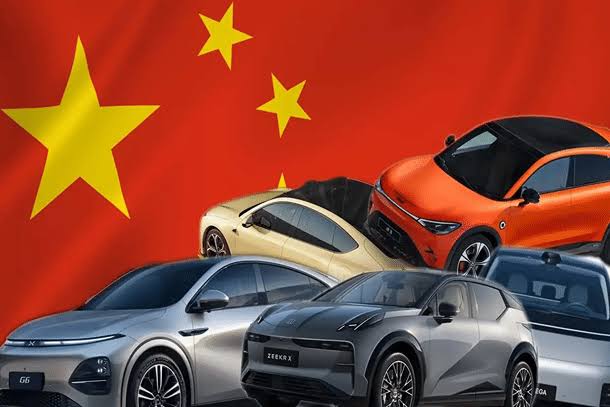
Chinese electric vehicle manufacturers are expanding their international ambitions, but their experiences in Japan and South Korea demonstrate that competitive pricing alone is not enough to win over established automotive markets. Companies such as BYD have made progress in South Korea, where consumers are increasingly considering Chinese models as alternatives to domestic brands. Japan, however, has proved more difficult, with established manufacturers, consumer preferences and a relatively slow transition towards electric vehicles creating additional barriers.
The contrast is significant because both countries have strong domestic automotive industries and consumers who have traditionally shown loyalty to local manufacturers. Chinese companies are entering markets where Hyundai, Kia, Toyota and other established brands have built reputations over several decades. They must therefore compete not only on vehicle prices and specifications but also on reliability, after-sales service, brand perception and the availability of charging infrastructure.
The different responses in the two countries also show why Chinese manufacturers cannot assume that success in Europe or other overseas markets will automatically translate into growth across Asia.
South Korea’s Electric Vehicle Market Offers a Larger Opportunity
South Korea has become a more promising market for Chinese electric vehicle manufacturers because consumer adoption of electric cars is considerably higher than in Japan. Industry data cited in recent reporting indicated that approximately one-quarter of new cars sold in South Korea during 2026 were electric vehicles, compared with around 3% in Japan.
This difference creates a more developed market for companies attempting to introduce new electric models. Consumers in South Korea are already familiar with the technology, and there is greater competition around battery performance, driving range, pricing and charging facilities. Chinese manufacturers can therefore compete for customers who are actively considering an electric vehicle rather than trying to persuade buyers to change their preferred vehicle technology altogether.
BYD’s Dolphin compact electric vehicle illustrates the appeal of competitive pricing. A buyer in Seoul reportedly chose the model at approximately $18,500 after finding that the Hyundai Casper electric vehicle she initially wanted would involve a delivery wait of more than two years. The availability of the Chinese model became an important part of the purchasing decision.
This example highlights two commercial advantages. Chinese manufacturers can offer relatively affordable vehicles, and they may also be able to deliver them more quickly when established manufacturers face production or supply constraints. For consumers who need a vehicle immediately, waiting times can influence purchasing decisions almost as much as the brand itself.
However, individual purchases do not establish that Chinese manufacturers have achieved widespread acceptance. They show that some consumers are willing to reconsider their earlier perceptions when the price, specifications and availability are attractive.
Brand Perception Remains a Major Obstacle
Chinese carmakers have spent years trying to change international perceptions of their vehicles. Earlier generations of Chinese cars were often associated with lower prices and concerns about quality, safety and durability. Manufacturers have since invested heavily in battery technology, vehicle software, manufacturing efficiency and design.
The progress is visible in the growing competitiveness of Chinese electric vehicles across several international markets. Companies such as BYD have developed large production operations and extensive product portfolios, allowing them to compete with established brands on both price and technology.
Nevertheless, changing consumer perceptions takes time. In South Korea, some buyers continue to face questions from friends and family about the safety and reliability of Chinese vehicles. This demonstrates that purchasing decisions are influenced by social attitudes as well as technical specifications.
After-sales service is another important consideration. Customers need access to spare parts, trained technicians, warranties and repair facilities. A vehicle that appears attractive at the point of purchase may become less appealing if owners are uncertain about obtaining assistance several years later.
Chinese manufacturers must therefore invest in the complete ownership experience rather than concentrating exclusively on the initial sale. Building trust requires a long-term commitment to local customers.
Japan Presents a More Difficult Market Structure
Japan’s relatively low electric vehicle adoption rate creates a different challenge for Chinese manufacturers. Consumers have access to a broad range of established domestic vehicles, including hybrid models that offer fuel efficiency without requiring the same charging arrangements as fully electric cars.
Toyota, Honda and other Japanese manufacturers have developed strong positions in hybrid technology. These vehicles have benefited from consumer familiarity, established servicing networks and the ability to operate without depending entirely on public charging infrastructure.
For many Japanese buyers, a hybrid vehicle may appear to offer a more practical balance between efficiency and convenience than a fully electric model. This reduces the immediate appeal of Chinese electric vehicles, even when they are competitively priced.
Japan’s automotive market also has established expectations around vehicle size, driving characteristics and reliability. Foreign manufacturers must adapt their products and marketing to these preferences. Chinese companies cannot rely on the specifications that have attracted buyers in Europe or South Korea without considering local requirements.
The smaller electric vehicle market also means that manufacturers may find it harder to achieve the sales volumes necessary to support a large dealer and servicing network. This creates a commercial difficulty: companies need a strong network to attract customers, but they need sufficient sales to justify the investment in that network.
Chinese Manufacturers Need More Than Low Prices
The international expansion of Chinese automakers is partly driven by the intense competition within their domestic market. China has a large number of electric vehicle manufacturers, and price competition has made it difficult for companies to maintain margins. Expanding overseas offers the possibility of accessing new customers and generating additional revenue.
However, overseas expansion brings new costs. Companies must establish distribution networks, comply with local safety and regulatory requirements, develop customer service operations and adapt products to different markets. They may also encounter import tariffs, political concerns and competition from established manufacturers with strong local relationships.
BYD and other Chinese brands have demonstrated that they can compete on technology and price, but long-term success depends on maintaining profitability. Aggressive discounts may generate initial interest but can weaken margins if competitors respond with similar offers.
There is also the question of brand positioning. If Chinese manufacturers become known mainly for inexpensive vehicles, they may struggle to establish themselves in more profitable segments. Building a premium reputation requires consistent product quality, strong customer service and a track record that consumers can trust.
The challenge is particularly important in markets such as Japan and South Korea, where domestic manufacturers have long-standing relationships with buyers.
Local Manufacturing and Dealer Networks Could Determine Future Growth
Chinese automakers are likely to need a deeper local presence to strengthen their position in both countries. Dealer networks, servicing facilities and reliable parts distribution can help reduce customer concerns about ownership. Local partnerships may also provide access to market knowledge and established business relationships.
Adapting vehicles to local requirements will be equally important. Features such as vehicle dimensions, interior layouts, software interfaces and charging compatibility can influence whether a product feels suitable for a particular market.
South Korea may offer faster opportunities because electric vehicle adoption is already relatively advanced. But domestic manufacturers are unlikely to surrender their market positions without responding. Hyundai and Kia have substantial engineering capabilities and established brands, giving them the ability to compete through new models, pricing changes and improvements in battery technology.
Japan presents a longer-term challenge. If electric vehicle adoption increases, Chinese manufacturers may find additional opportunities, but they will still need to overcome consumer preferences and the strength of domestic brands.
The contrasting experiences of South Korea and Japan show that international automotive expansion depends on much more than manufacturing scale. Chinese companies have demonstrated that their vehicles can compete on price and technology, but winning customers in established markets requires trust, local adaptation and sustained investment in the ownership experience.
(Adapted from GlobalBankingAndFinance.com)