

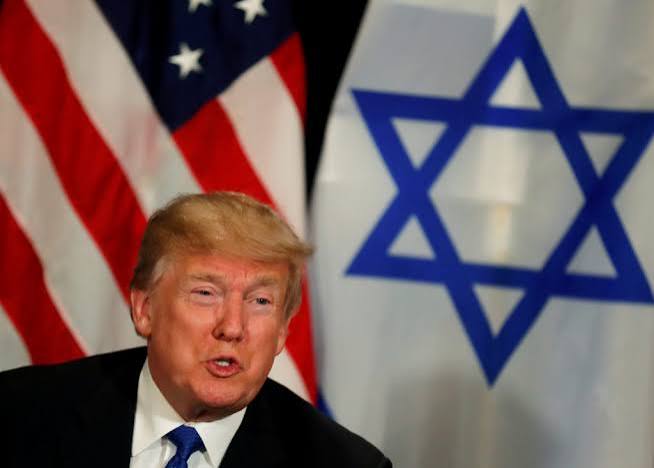
US President Donald Trump’s announcement that the United States will end its annual financial assistance to Israel by the close of 2026 has raised questions about the future of one of Washington’s most established strategic relationships. The announcement, made as Americans voted in the midterm elections, was significant not only because of the financial implications but also because Trump linked the decision to the growing domestic political difficulties surrounding American support for Israel.
The timing was particularly important. For decades, military assistance to Israel has enjoyed considerable bipartisan support in Washington. However, public attitudes have been changing, particularly among younger Americans and sections of the Democratic Party. Trump’s remarks suggest that the administration is increasingly aware that continuing an established foreign policy commitment without addressing its domestic political consequences could become an electoral liability.
A Longstanding Commitment Faces an Uncertain Future
The United States has provided Israel with substantial military assistance for decades, making it the largest cumulative recipient of American foreign assistance since the Second World War. The existing arrangement is based on a ten-year memorandum of understanding signed in 2016, covering the financial years from 2019 through 2028.
Under that agreement, Washington committed to providing approximately $38 billion over ten years. This includes $3.3 billion annually in foreign military financing and another $500 million for cooperative missile defence programmes. The assistance supports Israel’s ability to purchase American military equipment and maintain defensive capabilities, including systems developed jointly by the two countries.
Trump’s announcement that the arrangement would end after December 2026 therefore raises an important question. How does the administration intend to change a commitment that formally runs until 2028?
The president did not explain the legal or administrative mechanism through which the existing arrangement would be altered. Nor did he specify whether the proposed withdrawal would cover the entire annual allocation or particular categories of assistance. His statement that Washington would continue helping Israel if necessary also suggests that ending regular financial assistance does not necessarily mean abandoning military cooperation.
This distinction is important because American support for Israel extends well beyond direct financial transfers. Intelligence cooperation, joint defence development, weapons sales, military coordination and diplomatic backing form part of a much broader relationship.
Domestic Political Pressure Is Becoming Difficult to Ignore
One of the most revealing aspects of Trump’s announcement was his explanation of the political reasoning behind it. He indicated that Republican candidates were facing criticism from Democrats over American military assistance to Israel and that the financial commitment had become an uncomfortable issue during election campaigns.
This reflects a significant change in the American political debate. Support for Israel remains substantial, but it is no longer possible to assume that military assistance will automatically receive broad public approval without scrutiny.
A growing section of Democratic voters has questioned the scale and conditions of American military support, particularly in the context of Israel’s military operations and the wider regional conflict. Younger voters have been particularly vocal in demanding greater accountability over how American weapons and financial assistance are used.
An October poll conducted by ABC News, The Washington Post and Ipsos found that 58% of Americans supported either reducing military assistance to Israel or ending it completely. The figure suggests that the debate has moved beyond a relatively small group of political activists.
For Republicans, the issue creates an uncomfortable electoral calculation. Maintaining traditional support for Israel can satisfy established party constituencies, but it can also expose candidates to criticism from voters who believe domestic economic priorities should receive greater attention.
Trump’s remarks appear to recognise this tension. His decision to present the withdrawal as something Israel no longer needs also offers a politically convenient explanation that avoids portraying the change as a breakdown in bilateral relations.
The Strategic Relationship May Survive a Financial Change
Despite the announcement, there is little indication that Washington intends to end its broader security relationship with Israel. Trump explicitly indicated that weapons sales would continue, while leaving open the possibility of additional assistance if circumstances required it.
This suggests that the administration may be considering a different structure of cooperation rather than a complete strategic separation.
The distinction between grants and commercial weapons transactions matters considerably. Military financing provides Israel with resources to purchase defence equipment, much of it from American manufacturers. Commercial weapons sales, meanwhile, allow Washington to maintain an important defence relationship while changing the way financial assistance is delivered.
However, such a transition would not necessarily be straightforward. American military financing has supported long-term procurement arrangements and joint defence programmes. Any sudden alteration could affect planning, purchasing decisions and the financial arrangements surrounding existing contracts.
For Israel, the challenge would be to determine whether alternative funding arrangements could compensate for the loss of regular American assistance. Its defence requirements remain substantial, particularly given the continuing security challenges in the Middle East.
The Israeli government would also need clarity about whether the announcement represents an agreed policy decision or a political statement whose practical details remain under negotiation.
The Iran Conflict Complicates Washington’s Calculations
The wider regional security environment makes the announcement even more consequential. American and Israeli military interests remain closely connected, particularly in relation to Iran and the security of regional allies.
The conflict involving Iran has placed additional pressure on Washington’s foreign policy decisions. Military operations, defence expenditure, regional stability and the potential consequences of a prolonged confrontation all influence the administration’s calculations.
In this environment, reducing regular financial assistance to Israel while maintaining weapons sales could provide the White House with some political flexibility. It would allow Trump to demonstrate that he is reconsidering the financial terms of the relationship without immediately dismantling the security partnership.
There is, however, a potential contradiction. If Washington continues to regard Israel as an important regional security partner, reducing assistance during a period of heightened tensions could complicate long-term defence planning.
It could also create uncertainty among other American allies, who may question whether longstanding security commitments are becoming more vulnerable to domestic political considerations.
The immediate significance of Trump’s statement lies less in the certainty of an impending financial withdrawal than in what it reveals about the changing political environment surrounding American foreign policy.
The existing agreement runs until 2028, while the president has offered no detailed explanation of how the proposed change would be implemented. There has also been no publicly established framework explaining what would replace the existing arrangement.
That uncertainty matters for both countries. Israel needs predictable security arrangements, while Washington must balance strategic commitments against growing public scrutiny of overseas military expenditure.
The announcement also highlights a broader challenge for the American political establishment. Foreign policy decisions that once attracted relatively limited domestic opposition are increasingly being evaluated through the same economic and electoral considerations as domestic programmes.
Trump may be attempting to reduce the political cost of supporting Israel without weakening the strategic relationship itself. Whether that approach can satisfy domestic critics while reassuring Israeli policymakers remains uncertain.
What is becoming increasingly clear is that American assistance to Israel can no longer be treated as an issue entirely separate from the country’s domestic political debate.
(Source:www.cnn.com)