

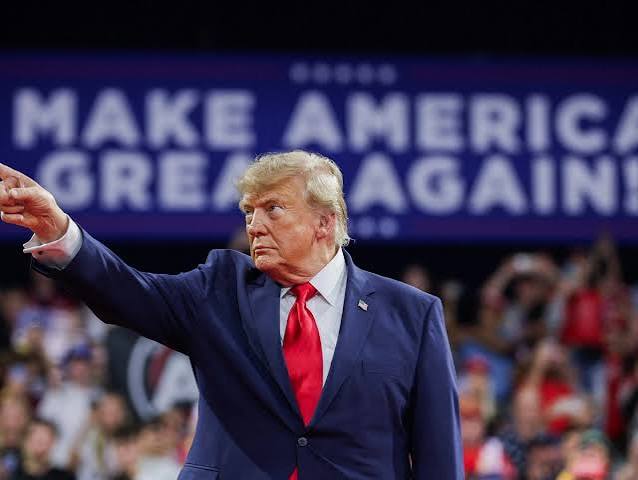
The Democratic Party’s capture of both chambers of the United States Congress in the 2026 midterm elections represents a major setback for President Donald Trump and his political agenda. The scale of the defeat is particularly significant because Democrats secured victories in several states that had appeared firmly within Republican territory, challenging assumptions about the strength of Trump’s electoral coalition.
The result is more than a change in congressional arithmetic. It reflects a growing disconnect between the president’s political priorities and the concerns of voters who helped return him to the White House in 2024. Economic dissatisfaction, the consequences of the conflict with Iran and frustration over the direction of the country combined to create an electoral environment in which Republican candidates struggled to defend their positions.
The outcome also raises questions about Trump’s ability to maintain his influence over the Republican Party as the political establishment begins looking beyond his presidency.
A Defeat That Goes Beyond the Traditional Battlegrounds
Democrats entered the election expecting to make gains, particularly in the House of Representatives. However, their performance in the Senate and several traditionally Republican states went considerably further than many political analysts had anticipated.
Victories in Texas, South Carolina, Kansas and Ohio demonstrated the breadth of the shift. Texas was particularly important, given its position as one of the largest and most influential Republican states. Democrat James Talarico defeated Republican Ken Paxton in the Senate contest, ending a decades-long Democratic losing streak in the state’s Senate elections.
In South Carolina, Democrat Annie Andrews defeated Republican Darline Graham, marking another major setback for the party. Kansas also produced a historic result, with Democrat Adam Hamilton defeating incumbent Roger Marshall. Democrats had not won a Senate seat in the state since 1932.
These results suggest that Republican candidates could no longer rely on the traditional advantages of party identification and Trump’s personal popularity to secure victories.
The losses also demonstrated the effectiveness of the Democratic decision to contest races that had previously appeared difficult to win. Instead of concentrating exclusively on established battlegrounds, the party fielded candidates across a wider range of constituencies and benefited from strong Democratic and independent voter participation.
One of the clearest messages from the election was that voters remained dissatisfied with the cost of living.
Trump returned to the White House in 2025 promising to address inflation and improve the economic position of ordinary Americans. However, the administration’s economic policies did not translate into the improvement that many voters expected.
Exit polls indicated that nearly nine in ten voters regarded the cost of living as a major consideration when deciding how to vote. Nearly two-thirds blamed Trump for high prices, while approximately three-quarters expressed anger or dissatisfaction with the direction of the country.
These figures highlight a fundamental weakness in the Republican campaign. The administration continued to defend its economic record, but many voters were judging it through their everyday financial experiences.
Higher prices for groceries, fuel and other essential goods were more immediate concerns than the political arguments dominating the campaign. Trump’s tariff policies and the economic consequences of the conflict with Iran also became important points of criticism.
The Republican strategy of presenting Democrats as politically extreme did not sufficiently address these concerns. Voters appeared more interested in whether the administration could improve their economic circumstances than in warnings about the consequences of Democratic control.
This is an important lesson for the Republican Party. Electoral support cannot be sustained indefinitely through political messaging when voters believe that their financial conditions are deteriorating.
Trump’s Personal Influence Becomes an Electoral Liability
The election also exposed the risks associated with Trump’s direct involvement in candidate selection.
During the campaign, the president supported several candidates who struggled to secure victories, including Republican contenders in South Carolina, North Carolina and Texas. Some of these candidates faced opposition within their own party, but Trump’s endorsement remained an important factor in their campaigns.
The defeats are likely to revive questions about whether personal loyalty has become more important than electoral appeal in Republican candidate selection.
Trump has maintained considerable control over the party for years, often using his influence to shape its political direction and determine which candidates receive support. However, the midterm results suggest that his endorsement may not carry the same electoral advantage in every constituency.
In some cases, his involvement may have made Republican candidates more vulnerable by connecting their campaigns directly to an unpopular national administration.
This does not mean that Trump has lost his influence among Republican voters. His political base remains an important force within the party. But the election indicates that the ability to dominate internal party politics does not necessarily translate into the ability to win broader electoral support.
The distinction could become increasingly important as Republicans begin considering the leadership and presidential succession questions that will dominate the party ahead of 2028.
The Collapse of Republican Support Among Key Voter Groups
Another significant development was the decline in Republican support among several demographic groups that contributed to Trump’s victory in 2024.
Hispanic voters were particularly important. Trump had made substantial gains among this group during the previous presidential election, helping Republicans improve their position in several competitive states.
However, the 2026 results suggest that this support was not permanent. Exit polls indicated that Republican backing among Hispanic voters fell to approximately one-third, compared with 46% in 2024.
The shift was especially consequential in Texas and parts of Florida, where Hispanic voters represent a significant proportion of the electorate.
Republicans also experienced declining support among Black men and younger voters. These developments raise questions about the durability of the coalition Trump assembled during his return to the White House.
Economic dissatisfaction appears to have played an important role, although the available results do not establish a single explanation for the movement across every demographic group.
For Democrats, the challenge will be to convert these gains into a more lasting electoral advantage rather than treating them as automatic evidence of a permanent political realignment.
A Democratic Congress Could Constrain the White House
The new congressional balance of power will significantly alter the political environment in Washington.
Democrats are expected to use their majorities to investigate the administration, examine government decisions and demand greater accountability from officials. Congressional committees could also investigate the activities of Trump’s family and political associates.
The Senate majority will give Democrats additional influence over presidential appointments. They will be able to block nominees and exercise considerable influence over the confirmation process, including any future Supreme Court vacancy.
However, congressional control does not mean that Democrats can freely implement their entire legislative programme.
Trump retains presidential veto powers, and Democrats will need to consider the procedural limitations of the Senate when pursuing major legislation. This could result in prolonged disagreements over spending, taxation, immigration and other policy priorities.
The possibility of investigations and legislative confrontation could also become a central feature of the administration’s remaining two years.
For Trump, the challenge will be to govern without the legislative support that allowed Republicans to advance his priorities during the first half of his second term.
The election has also accelerated discussions about the future of both political parties.
Trump cannot seek another presidential term under the constitutional restriction on serving more than two elected terms. As a result, the Republican Party will eventually have to determine who can inherit his political movement and appeal to voters beyond his established support base.
The midterm defeat could intensify competition among potential successors, particularly if Republican lawmakers begin questioning the effectiveness of Trump’s electoral strategy.
Democrats face a different challenge. Their victory gives them control of Congress, but it also places responsibility on the party to demonstrate that it can address the economic concerns that contributed to the Republican defeat.
Simply opposing Trump will not be enough. Voters who supported Democratic candidates because of rising living costs will expect practical results.
The election has therefore changed the political calculations for both parties. Republicans must confront the limitations of Trump’s personal influence, while Democrats must demonstrate that their electoral gains can translate into effective governance.
The decisive question for the remainder of Trump’s presidency will be whether the White House can adapt to a Congress that is no longer willing to provide automatic political support.
(Source:www.cnn.com)