

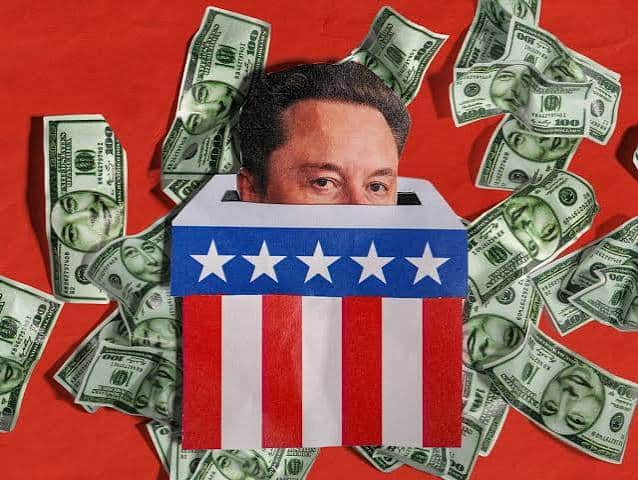
The enormous sums spent on the 2026 US Senate elections have exposed an increasingly uncomfortable reality for American political parties and wealthy donors: spending more money does not necessarily translate into electoral success. Outside political groups invested more than $2 billion in Senate contests, making the midterm elections among the most expensive in American history. Yet Republican-aligned organisations, despite spending substantially more than their Democratic counterparts, suffered significant losses, including defeats in several races where financial support had been particularly extensive.
The results raise questions about the growing influence of political action committees, billionaire donors and outside organisations in determining electoral outcomes. Money remains essential to modern American campaigning, particularly for advertising, voter mobilisation and organising operations across large constituencies. However, the 2026 results demonstrate that financial resources cannot automatically overcome weaknesses in candidate appeal, political messaging or changing voter preferences.
The central issue is not simply how much political parties spend, but whether the money reaches the right voters, supports credible candidates and addresses the concerns influencing electoral decisions.
The Billion-Dollar Cost of Losing Elections
Republican-aligned groups spent approximately 60% more than Democratic outside organisations in the Senate contests, yet Republicans lost at least seven seats. More than $1 billion was spent supporting Republican candidates who ultimately failed to win their races.
The figures are particularly striking because outside spending represents only one part of the total cost of an election. Candidates also raise and spend their own money, while political parties finance national campaign operations, voter registration and other activities. The actual financial commitment is therefore considerably larger than the amount spent by political action committees alone.
The results challenge the assumption that a sufficiently large financial campaign can compensate for weaknesses in a candidate’s electoral position. Political advertising can increase visibility, reinforce existing support and influence undecided voters, but it cannot guarantee that people will respond positively to a candidate.
The growing cost of elections also raises questions about whether American political competition is becoming excessively dependent on wealthy donors and organisations capable of spending enormous sums independently of candidates.
A campaign with substantial financial resources may enjoy a major advantage in reaching voters, but electoral success still depends on whether the message connects with the concerns of the electorate.
Texas Demonstrates the Risks of Concentrated Political Spending
Texas emerged as one of the most expensive Senate contests, with Republican-aligned groups spending approximately $316 million backing Ken Paxton. Democratic organisations spent around $109 million supporting James Talarico, whose campaign also raised more than $146 million directly.
The scale of spending illustrates how individual Senate races have become major financial battlegrounds. Texas has traditionally been an important state for Republican electoral strategy, and the considerable investment reflected expectations that the contest would be highly competitive.
However, the outcome demonstrated that financial strength alone could not secure the Republican position. The substantial gap between the money spent by the two political camps also raises questions about the efficiency of campaign expenditure.
When political organisations spend hundreds of millions of dollars in a single state, the central question should be whether the additional expenditure produces meaningful improvements in voter mobilisation and support.
There is also a wider strategic issue. Money allocated to one contest cannot necessarily be used elsewhere, particularly when spending commitments are made in advance. A campaign that attracts disproportionate financial support may therefore absorb resources that could have been more effective in closely contested states.
The Texas contest demonstrates the difficulty of allocating political resources when electoral conditions are changing rapidly.
Billionaire Donors Are Reshaping Campaign Economics
The increasing involvement of wealthy individuals in American elections has transformed the financial structure of political campaigning. Political action committees and other outside organisations can spend substantial sums supporting candidates, opposing rivals and influencing the wider political debate.
Elon Musk was among the prominent financial backers involved in the Texas Senate contest. His participation reflects the growing willingness of wealthy business figures to use their financial resources to influence electoral outcomes.
Such spending can provide candidates with access to extensive advertising and campaign infrastructure. However, it also creates questions about accountability and the relationship between political influence and economic power.
The concern is not simply that wealthy individuals contribute money to political causes. It is that a relatively small group of donors and organisations can finance campaigns on a scale that ordinary voters and smaller political organisations cannot match.
This creates an uneven political environment in which financial influence becomes an important part of determining which messages receive attention.
Nevertheless, the 2026 results show that even exceptionally wealthy donors cannot guarantee the outcomes they want. Their financial resources can increase a candidate’s visibility, but they cannot entirely control voter attitudes or the political circumstances surrounding an election.
Democratic Spending Decisions Also Carry Lessons
The results were not necessarily an indication that Democratic campaign spending was always more effective. The party also faced questions about its allocation of resources, particularly in contests where relatively small additional investments might have changed the outcome.
Democratic-aligned groups spent approximately $129,000 in Louisiana, where their candidate lost by less than two percentage points. The result has raised questions about whether the party underestimated the competitiveness of the race or failed to recognise the potential value of additional financial support.
The comparison with Texas is particularly revealing. Hundreds of millions of dollars were spent in some contests, while a relatively modest amount was allocated to Louisiana despite the eventual closeness of the result.
Campaign spending decisions are made under considerable uncertainty. Political organisations must assess polling, voter turnout, candidate performance and the likelihood that additional advertising will change the outcome. These calculations are difficult because electoral conditions can shift considerably during the final weeks of a campaign.
However, the results suggest that political organisations may need to reconsider how they assess the marginal value of campaign expenditure. Spending heavily in a high-profile contest may generate visibility, but it does not necessarily provide the greatest electoral return.
Political Money Cannot Replace Voter Confidence
One of the most important lessons from the election is that campaign expenditure and voter confidence are not interchangeable. Advertising can introduce candidates to voters, but it cannot necessarily resolve concerns about their records, policies or credibility.
Political campaigns also operate in an environment where voters receive information from multiple sources, including social media, traditional news organisations and direct communication with candidates. The influence of any individual advertising campaign is therefore limited by the wider political environment.
Large spending operations may even encounter diminishing returns. Once a candidate has achieved substantial visibility, additional advertisements may have less impact than direct engagement with voters or a more convincing policy message.
The ability to identify the issues motivating different groups of voters may ultimately matter more than the size of a campaign’s advertising budget.
For political organisations, this requires better coordination between financial resources, voter research and campaign strategy.
The Cost of American Elections Is Becoming a Democratic Concern
The growing financial scale of American elections raises questions about the sustainability of the existing campaign system. Political organisations are spending increasingly large sums to compete for a limited number of Senate seats, while wealthy individuals and outside groups have become central to financing many of these efforts.
The problem is not that political campaigns require money. National elections involve substantial organisational costs, and candidates need resources to communicate with voters. The concern is whether the growing dependence on large financial contributions is making political competition less representative.
The 2026 results offer an important reminder that political money has limits. Even a campaign supported by hundreds of millions of dollars can fail if its candidate and message do not connect with voters.
For political parties, the challenge is to improve how campaign resources are distributed and ensure that financial strength is supported by credible candidates and effective voter engagement. The election has demonstrated that winning American Senate contests requires more than simply outspending the opposition.
(Source:www.bbc.com)