

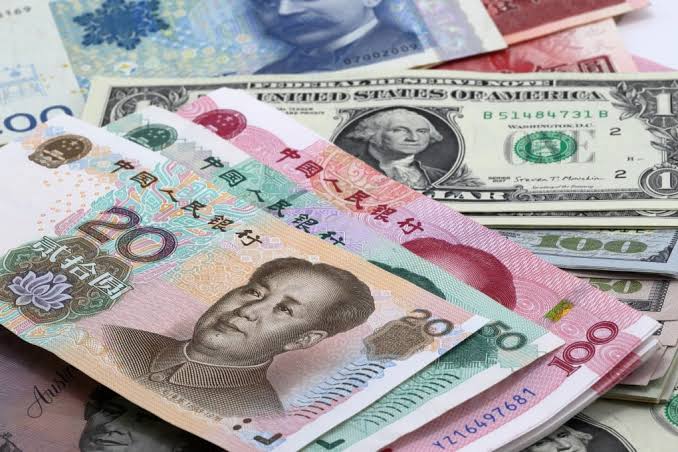
China’s strengthening currency is creating an increasingly difficult economic dilemma for Beijing. While a stronger yuan can improve the country’s international financial standing and increase the purchasing power of Chinese consumers, it is also putting pressure on exporters who depend on competitive prices to maintain overseas orders. The problem is particularly serious because international criticism of China’s currency policies is growing at a time when domestic consumption remains relatively weak and manufacturing continues to play an important role in supporting economic growth.
The currency debate exposes a contradiction in China’s economic strategy. International trading partners have long argued that the yuan is undervalued, giving Chinese manufacturers an advantage in global markets. However, a significant appreciation could make Chinese products more expensive for overseas customers, reduce manufacturers’ profit margins and potentially threaten employment. Beijing must therefore balance international expectations against the domestic economic consequences of allowing its currency to strengthen too quickly.
A Stronger Currency Is Changing Export Economics
For Chinese exporters, currency movements directly affect the competitiveness of products sold overseas. Manufacturers frequently receive payments in foreign currencies, particularly the US dollar and euro, while many of their operating expenses are incurred in yuan.
When the yuan strengthens, overseas buyers need to pay more in their own currencies for products priced in yuan, unless exporters adjust their prices. Manufacturers can absorb some of the difference by accepting lower profits, but this becomes difficult in industries where margins are already narrow.
The problem is particularly visible in labour-intensive manufacturing, including garments, textiles and other consumer goods. Companies operating in these sectors frequently compete against suppliers in countries with lower production costs. A stronger Chinese currency can therefore weaken their position even when their factories remain efficient.
Some exporters may respond by moving production to other countries, negotiating different payment arrangements or attempting to improve productivity. However, these options are not equally available to smaller manufacturers, which may lack the financial resources to reorganise supply chains or invest in automation.
The experience of individual businesses illustrates how currency appreciation can affect commercial decisions. Chinese garment exporter Chen Lifeng has warned that the stronger yuan has made his products more expensive in European markets and substantially reduced his profit margins. His concerns reflect a wider challenge facing manufacturers that depend on overseas orders to maintain production and employment.
International Pressure Complicates Beijing’s Currency Policy
China’s exchange-rate policy has long attracted criticism from trading partners who argue that the yuan has been maintained at an artificially weak level to support exports. A relatively inexpensive currency can make Chinese products more competitive internationally and contribute to the country’s large trade surplus.
European policymakers and international economic institutions have continued to raise concerns about the relationship between China’s currency valuation and its manufacturing competitiveness. Their argument is that an undervalued yuan can distort international trade by making imported products cheaper and disadvantaging manufacturers in other economies.
A stronger yuan could therefore help reduce some of these concerns. It would make Chinese imports more expensive for foreign buyers while increasing the purchasing power of Chinese households and businesses purchasing goods from abroad.
However, currency policy cannot be separated from the wider condition of the domestic economy. If household consumption remains weak, exports become even more important as a source of industrial activity and employment. A rapid appreciation could therefore undermine one of the few areas providing consistent support to economic growth.
Beijing is unlikely to view the currency solely through the lens of international trade relations. It must also consider the consequences for manufacturing companies, employment and financial stability.
Weak Domestic Consumption Makes the Situation More Difficult
The yuan’s appreciation would be easier to manage if Chinese household consumption were providing a stronger alternative source of economic growth. A more confident domestic consumer market could help manufacturers redirect some production towards local customers when overseas demand becomes less attractive.
However, domestic demand has remained a concern for Chinese policymakers. Households have been cautious about spending amid uncertainty surrounding employment, property values and future income prospects. This has limited the ability of domestic consumption to compensate for fluctuations in external demand.
The consequences extend beyond exporters. Manufacturers that lose overseas orders may reduce production, delay investment or reconsider recruitment. Lower employment growth could further weaken household confidence, creating a cycle in which economic uncertainty suppresses spending and reinforces dependence on exports.
This is one reason why currency appreciation presents a particularly difficult policy challenge. A stronger yuan may support consumer purchasing power, but the benefits will not necessarily translate into increased spending if households remain concerned about their financial circumstances.
The government must therefore consider currency management alongside measures aimed at improving household confidence, strengthening social protection and encouraging domestic consumption.
The Risk of Becoming Too Dependent on Export Competitiveness
China’s enormous manufacturing sector has benefited from extensive supply chains, large-scale production facilities, infrastructure investment and access to international markets. These advantages have allowed Chinese companies to compete across a wide range of industries, from textiles and consumer electronics to electric vehicles and advanced industrial equipment.
However, continued dependence on export competitiveness creates vulnerabilities when exchange rates, trade policies or overseas demand change.
Manufacturers that compete primarily through low prices may find it difficult to protect margins when the currency strengthens. Companies with more advanced technology, established brands and specialised products may be better positioned to absorb exchange-rate movements because their customers have fewer alternatives.
This suggests that the currency issue is also connected to China’s wider industrial transformation. Moving towards higher-value manufacturing could reduce dependence on price competition, although achieving that transition requires investment, technological development and the ability to build internationally recognised brands.
Smaller suppliers may find this adjustment much harder than large manufacturers. They often operate as subcontractors within international supply chains and have limited influence over the prices paid by overseas customers.
The challenge for Beijing is to support industrial upgrading without allowing weaker manufacturers to become casualties of a rapid currency adjustment.
Why Currency Management Could Become More Difficult
China’s central bank has several instruments available to influence exchange-rate movements, including its daily currency reference rate and measures affecting foreign-exchange transactions. However, maintaining a preferred currency level becomes more complicated when market forces are pushing in the opposite direction.
A strong trade surplus can increase demand for the yuan as exporters convert overseas earnings into domestic currency. If businesses and investors expect further appreciation, they may also accelerate the conversion of foreign-currency holdings, adding to upward pressure.
The central bank must consider these market dynamics while avoiding the impression that it is deliberately suppressing the currency to gain a trade advantage. Excessive intervention could attract further criticism from trading partners and complicate China’s broader efforts to internationalise its currency.
There is also a potential conflict between domestic and international objectives. A stronger currency could improve China’s purchasing power and reduce the cost of imported commodities and technology. Yet allowing it to appreciate too rapidly could create pressure on employment and export-oriented industries.
The country’s policymakers must therefore manage not just the direction of the exchange rate but also the speed of its movement.
The Longer-Term Challenge Is Economic Rebalancing
The yuan debate ultimately reflects a larger question about the future structure of the Chinese economy. China has developed enormous manufacturing capacity and established itself as a central supplier to international markets. However, sustaining growth through exports alone becomes more difficult when trading partners raise concerns about trade imbalances and domestic manufacturers face increasing competition.
A stronger domestic consumer market could reduce some of this dependence. It would give companies a larger source of demand and allow economic growth to become less sensitive to international currency movements.
Achieving this will require more than exchange-rate adjustments. Household confidence, income growth, employment security and the financial position of consumers will all influence spending decisions.
China’s currency dilemma therefore cannot be resolved simply by allowing the yuan to rise or attempting to prevent further appreciation. A policy that protects exporters indefinitely could prolong international trade tensions, while an excessively rapid appreciation could undermine domestic manufacturing.
The more fundamental task is to build an economy in which domestic consumption, advanced manufacturing and international trade can support growth without placing disproportionate pressure on any one sector.
(Source:www.reuters.com)