
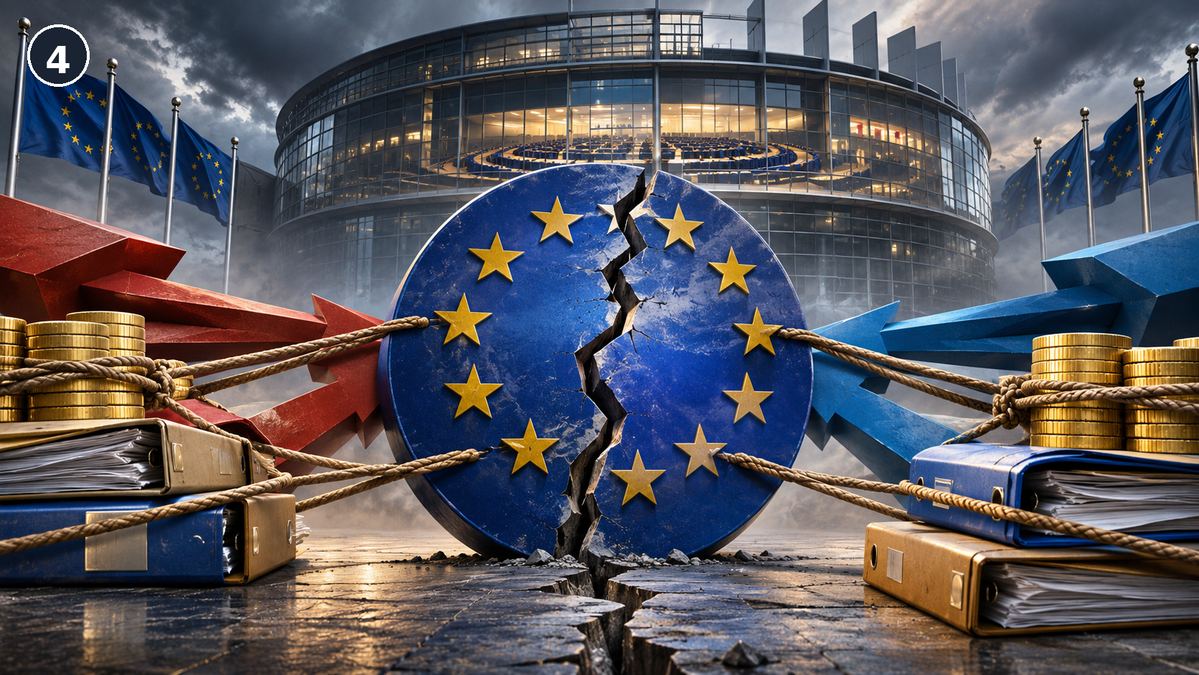
The European Union’s struggle to agree on its next seven-year budget reflects a deeper disagreement about the bloc’s political and economic priorities. What should have been a negotiation over the distribution of nearly EUR 1.6 trillion has become a contest over national financial obligations, agricultural support, regional development and Europe’s future commitment to Ukraine. The approaching French presidential election has added another layer of urgency, with several governments concerned that a change in political leadership could undermine agreements that are yet to be secured.
The proposed budget covers the 2028-2034 period and is intended to finance a wide range of European priorities, including agriculture, infrastructure, regional development, security, climate policy and international assistance. However, negotiations between the 27 member states encountered substantial resistance during the November 26-27 European Council discussions. The disagreements were serious enough for leaders to abandon plans for a second day of negotiations, leaving the most difficult decisions unresolved.
The immediate difficulty is not simply the size of the proposed budget. It concerns how much individual governments should contribute, which programmes should receive priority and whether the existing distribution of European funding should be substantially revised. These questions are politically sensitive because they affect national budgets, domestic industries and the relationship between wealthier and less prosperous member states.
Why the Budget Has Become a Political Contest
The European Union’s long-term budget is more than an accounting exercise. It determines how the bloc translates its political objectives into financial commitments over several years. The proposed framework must accommodate established spending priorities while responding to new pressures arising from defence requirements, economic competition, climate adaptation, migration and geopolitical instability.
The European Commission’s original proposal was already revised during the negotiating process. The latest figure of approximately EUR 1.582 trillion represents a scaled-down proposal, yet governments remain divided over its size and distribution. Some member states want greater spending on strategic priorities, while others are reluctant to accept higher national contributions at a time when public finances are already under pressure.
The disagreement reflects the different economic circumstances of European countries. Wealthier economies generally contribute more to the common budget, while several eastern and southern European countries depend heavily on regional funding and development programmes. Any significant redistribution therefore creates winners and losers, making agreement difficult without substantial political compromises.
Agricultural support and regional development are particularly sensitive. These programmes have historically provided financial stability to farmers, rural communities and less developed regions. Governments that depend on them are concerned that a redesigned budget could reduce their influence over how money is allocated or make access to funding more dependent on conditions established at the European level.
For countries that contribute more than they receive directly, the debate is different. Their governments face domestic pressure to control public expenditure and justify financial transfers to the European Union. The result is a familiar conflict between collective European objectives and national political interests.
France’s Election Adds Urgency to the Negotiations
The possibility of Marine Le Pen winning the French presidential election in April-May 2027 has become an important consideration in the budget negotiations. Le Pen has indicated that a government under her leadership would seek to reduce France’s contributions to the European Union and end financial assistance to Ukraine. This has raised concerns among governments that want long-term financial commitments secured before the political situation changes.
France is one of the most influential members of the European Union and a major contributor to its budget. A fundamental change in its approach to European financing could create difficulties for programmes that depend on predictable contributions from member states. The implications would extend beyond France because other governments might also use changes in national political leadership to demand revisions to existing commitments.
However, the difficulties cannot be attributed entirely to the French election. The budget dispute reflects disagreements that have existed throughout the negotiations, including differences over the size of the common budget, agricultural spending and the proposed system of national funding arrangements.
The election has nevertheless changed the political calculation. Governments seeking to protect Ukraine’s financial support and maintain continuity in European spending have an incentive to reach a legally binding agreement before the election. Their concern is that commitments left unresolved could become more vulnerable to political changes in individual member states.
This approach also raises questions about the durability of agreements negotiated under electoral pressure. A budget designed to govern European spending for seven years must be capable of surviving changes in national governments. Securing an agreement quickly may reduce immediate uncertainty, but it cannot eliminate the underlying political differences.
New Funding Sources Create Another Area of Disagreement
The European Commission has proposed introducing additional sources of revenue to reduce dependence on direct contributions from national governments. These include revenue from emissions trading, carbon border adjustments, tobacco duties, electronic waste and contributions from large companies operating within the European Union.
The proposed measures are intended to generate additional revenue while reducing pressure on national public finances. However, new revenue mechanisms also raise questions about who ultimately bears the cost. A corporate contribution could affect businesses operating across the bloc, while environmental levies may influence industrial investment and consumer prices.
The proposed corporate contribution is particularly significant because it introduces another dimension to the debate over Europe’s competitiveness. European businesses already face concerns about energy costs, regulatory requirements and competition from the United States and China. Additional financial obligations could generate resistance from companies and governments concerned about investment conditions.
There is also a question of whether the proposed revenue sources will generate sufficient and predictable income. Economic activity, trade flows and energy consumption can change considerably over seven years. Governments therefore need to assess whether the new funding arrangements can reliably support the spending commitments being discussed.
The challenge is to create a system that distributes financial responsibility fairly without undermining the competitiveness of the European economy. Reaching agreement on this issue will require governments to move beyond their immediate national interests.
Ukraine and Europe’s Strategic Priorities Complicate the Budget
Financial support for Ukraine has become another important element of the negotiations. Governments supporting Kyiv want to ensure that assistance continues despite political changes across Europe. The ongoing conflict with Russia has made long-term financial commitments an important part of the bloc’s security strategy.
The next budget will also have to accommodate higher defence expenditure and investment in European industrial capacity. These requirements compete with established spending programmes, increasing pressure on the available resources. The European Union cannot easily expand every priority without asking member states to contribute more or agreeing to reduce spending elsewhere.
This is where the budget dispute becomes particularly difficult. Governments broadly recognise the need to strengthen European security and economic resilience, but they disagree over how these objectives should be financed. Some want additional resources, while others favour reallocating existing funds.
The next round of negotiations, scheduled for December 17-18, will therefore be important. European Council President Antonio Costa will need to find a compromise on the overall budget, the distribution of resources and new funding arrangements. The final agreement will also require unanimous approval from member states before the legislative process can proceed.
The failure to reach agreement in November does not mean that the European Union is unable to settle its financial priorities. However, it demonstrates that the bloc’s political ambitions are increasingly difficult to reconcile with national budgetary constraints. The challenge is no longer simply to approve a large spending programme. It is to establish whether 27 governments can agree on a common economic and strategic direction while remaining accountable to their own voters.
(Source:www.euronews.com)