


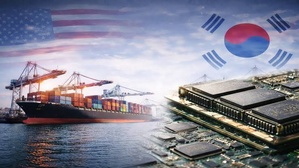
South Korea’s export performance is increasingly being shaped by the extraordinary investment cycle surrounding artificial intelligence. Economists expect the country’s exports to have risen for a sixteenth consecutive month in September, with semiconductor shipments providing the dominant source of momentum. The expected annual increase of about 62% would be slower than August’s exceptionally strong growth, but the underlying figures indicate that artificial intelligence infrastructure continues to generate unusually strong demand for Korean chips.
The importance of the semiconductor sector goes beyond South Korea’s trade balance. The country is one of the world’s most important suppliers of memory chips and related components used in computing systems. As technology companies and data-centre operators invest heavily in artificial intelligence, demand for high-performance memory and other semiconductor products has surged, giving South Korean exports an unusually direct connection to global artificial intelligence spending.
The Headline Numbers Hide a Calendar Effect
The expected September export growth looks weaker than the previous month, but the comparison is distorted by the number of working days. The September calendar contains fewer working days because of the timing of the Chuseok holiday. During the first 20 days of the month, exports rose 78.3%, while semiconductor sales increased by an extraordinary 259.4%. When adjusted for working days, overall exports were estimated to have risen almost 90%.
That distinction is important because headline export growth can make a strong economy appear to be slowing sharply when the underlying daily performance remains robust. The figures indicate that semiconductor demand has continued to expand even with fewer production and shipping days.
The strength of chip exports also shows how closely South Korea’s trade performance is now linked to the investment plans of large artificial intelligence companies. The expansion of data centres requires enormous quantities of computing equipment, and that demand is flowing through the semiconductor supply chain. As long as those investments continue, South Korean manufacturers are likely to remain major beneficiaries.
Artificial Intelligence Is Increasing Concentration
The current export boom also creates a structural vulnerability. A large share of South Korea’s export strength is being generated by a relatively concentrated group of high-value technology products. That concentration can produce extraordinary growth during an investment boom, but it also means that a downturn in semiconductor demand could have an outsized effect on the wider economy.
The present figures suggest that such a slowdown has not yet emerged. Semiconductor exports have been rising steadily since June 2025, and annual growth has remained in double digits since December. Growth reached 70.4% in June, the strongest pace in decades. The continuing investment by large artificial intelligence computing operators is supporting expectations that semiconductor demand will remain elevated.
South Korea’s trade surplus is also benefiting from the export surge. Economists expect September to produce a record monthly trade surplus of more than $38 billion, compared with about $34.8 billion in August. Imports are also expected to rise, reflecting stronger domestic demand and investment, but the gap between exports and imports remains heavily influenced by semiconductor performance.
The Bigger Test Is Sustainability
The central question for South Korea is whether artificial intelligence investment represents a durable structural expansion or an exceptionally powerful but temporary technology cycle. Semiconductor demand can change rapidly because the industry is capital intensive and sensitive to inventory levels. Manufacturers therefore need to balance current demand with future capacity so that an eventual slowdown does not create excessive supply.
For now, the evidence points to continuing strength. The first 20 days of September showed extremely rapid semiconductor export growth, while the expected trade surplus indicates that the benefits are spreading into the wider external balance. South Korea’s position in the artificial intelligence supply chain gives it a direct economic stake in the expansion of data-centre investment worldwide.
The significance of the export numbers therefore extends beyond one monthly report. They show how artificial intelligence has become an important driver of international trade, linking investment decisions in global technology companies with factory output and national economic performance thousands of kilometres away. South Korea’s immediate challenge is to use the current semiconductor boom to strengthen the broader economy while limiting the risks created by such heavy dependence on one rapidly changing technology cycle.
(Source:www.marketscreener.com)
The importance of the semiconductor sector goes beyond South Korea’s trade balance. The country is one of the world’s most important suppliers of memory chips and related components used in computing systems. As technology companies and data-centre operators invest heavily in artificial intelligence, demand for high-performance memory and other semiconductor products has surged, giving South Korean exports an unusually direct connection to global artificial intelligence spending.
The Headline Numbers Hide a Calendar Effect
The expected September export growth looks weaker than the previous month, but the comparison is distorted by the number of working days. The September calendar contains fewer working days because of the timing of the Chuseok holiday. During the first 20 days of the month, exports rose 78.3%, while semiconductor sales increased by an extraordinary 259.4%. When adjusted for working days, overall exports were estimated to have risen almost 90%.
That distinction is important because headline export growth can make a strong economy appear to be slowing sharply when the underlying daily performance remains robust. The figures indicate that semiconductor demand has continued to expand even with fewer production and shipping days.
The strength of chip exports also shows how closely South Korea’s trade performance is now linked to the investment plans of large artificial intelligence companies. The expansion of data centres requires enormous quantities of computing equipment, and that demand is flowing through the semiconductor supply chain. As long as those investments continue, South Korean manufacturers are likely to remain major beneficiaries.
Artificial Intelligence Is Increasing Concentration
The current export boom also creates a structural vulnerability. A large share of South Korea’s export strength is being generated by a relatively concentrated group of high-value technology products. That concentration can produce extraordinary growth during an investment boom, but it also means that a downturn in semiconductor demand could have an outsized effect on the wider economy.
The present figures suggest that such a slowdown has not yet emerged. Semiconductor exports have been rising steadily since June 2025, and annual growth has remained in double digits since December. Growth reached 70.4% in June, the strongest pace in decades. The continuing investment by large artificial intelligence computing operators is supporting expectations that semiconductor demand will remain elevated.
South Korea’s trade surplus is also benefiting from the export surge. Economists expect September to produce a record monthly trade surplus of more than $38 billion, compared with about $34.8 billion in August. Imports are also expected to rise, reflecting stronger domestic demand and investment, but the gap between exports and imports remains heavily influenced by semiconductor performance.
The Bigger Test Is Sustainability
The central question for South Korea is whether artificial intelligence investment represents a durable structural expansion or an exceptionally powerful but temporary technology cycle. Semiconductor demand can change rapidly because the industry is capital intensive and sensitive to inventory levels. Manufacturers therefore need to balance current demand with future capacity so that an eventual slowdown does not create excessive supply.
For now, the evidence points to continuing strength. The first 20 days of September showed extremely rapid semiconductor export growth, while the expected trade surplus indicates that the benefits are spreading into the wider external balance. South Korea’s position in the artificial intelligence supply chain gives it a direct economic stake in the expansion of data-centre investment worldwide.
The significance of the export numbers therefore extends beyond one monthly report. They show how artificial intelligence has become an important driver of international trade, linking investment decisions in global technology companies with factory output and national economic performance thousands of kilometres away. South Korea’s immediate challenge is to use the current semiconductor boom to strengthen the broader economy while limiting the risks created by such heavy dependence on one rapidly changing technology cycle.
(Source:www.marketscreener.com)
