


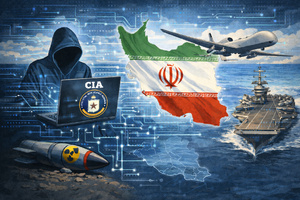
The Central Intelligence Agency has intensified its public-facing recruitment efforts aimed at Iran, releasing new Farsi-language guidance across multiple social media platforms that instructs potential sources on how to securely contact the agency. The move comes at a moment of heightened geopolitical tension, as President Donald Trump underscores the possibility of military action should diplomacy over Tehran’s nuclear program falter. Taken together, the parallel tracks of overt digital outreach and visible military posturing illustrate a layered strategy: apply pressure at the state level while opening discreet channels to individuals inside the system.
The CIA’s messaging was not subtle. Posted simultaneously on platforms including X, Instagram, Facebook, Telegram and YouTube, the Farsi-language content provided operational advice on avoiding surveillance, using disposable devices, and relying on secure networks such as Tor or trusted virtual private networks not based in adversarial jurisdictions. For an intelligence service historically defined by secrecy, the transparency of the instructions signals a calculated shift in recruitment tactics.
Intelligence Recruitment in the Age of Social Media
Modern espionage increasingly unfolds in the digital realm. Intelligence agencies once relied heavily on face-to-face cultivation, diplomatic cover, or academic and business exchanges to identify and recruit sources. Today, encrypted communications, anonymizing tools, and social platforms offer new avenues for contact, especially in closed societies where traditional access is limited.
Iran presents a unique challenge. The country maintains extensive internal security structures and monitors communications closely. Yet it also has a technologically literate population with significant social media engagement, even as authorities restrict and filter content. By publishing clear instructions in Farsi on how to initiate secure communication, the CIA is attempting to lower the barrier for potential sources who may already harbor grievances or possess access to sensitive information.
The guidance to avoid work devices, use new hardware, and shield digital footprints reflects awareness of Iran’s cyber capabilities. Tehran has invested heavily in cyber defense and surveillance infrastructure, often responding aggressively to perceived foreign interference. The CIA’s public instructions, therefore, serve not only as recruitment tools but as signals of technical sophistication, reassuring would-be informants that operational security is a priority.
Such campaigns are not unprecedented. In recent years, U.S. intelligence agencies have released similar content targeting audiences in China, Russia, and North Korea. The approach acknowledges that information control is no longer absolute and that individuals inside authoritarian systems may seek discreet channels to external actors.
Strategic Context: Pressure and Leverage
The renewed recruitment push coincides with escalating rhetoric from Washington. President Trump has reiterated that the United States will not allow Iran to obtain a nuclear weapon, pairing diplomatic overtures with warnings of severe consequences if negotiations collapse. Military deployments in the region reinforce the seriousness of those statements.
In this environment, intelligence gathering becomes even more critical. Accurate insight into Iran’s nuclear activities, missile programs, and internal political deliberations can shape policy decisions. As the stakes rise, so does the value of human intelligence—information provided by individuals with direct access to decision-making circles, research facilities, or security institutions.
The CIA’s outreach can therefore be interpreted as an effort to strengthen situational awareness at a moment when miscalculation could trigger broader conflict. While satellite imagery and electronic intercepts offer important data, they rarely capture the nuances of intent, factional debates, or internal constraints that human sources can provide.
Simultaneously, the campaign sends a psychological message. By publicly inviting Iranians to share information, Washington underscores that it distinguishes between the government and the populace. The outreach implies that cooperation is possible at the individual level even if relations at the state level remain adversarial.
Domestic Unrest and Information Gaps
The recruitment drive also unfolds against a backdrop of domestic turbulence within Iran. Recent protests and crackdowns have drawn international attention, with rights groups reporting significant casualties and arrests. Economic hardship exacerbated by sanctions has intensified public dissatisfaction.
In such contexts, intelligence agencies often assess whether internal dynamics could influence foreign policy decisions. Are security forces unified? Are economic pressures altering elite calculations? Are there divisions within leadership circles over the nuclear program or regional engagements? Answers to these questions shape diplomatic and military planning.
By expanding outreach, the CIA may be seeking to tap into those currents. Individuals motivated by economic frustration, political disagreement, or personal grievances may be more receptive to contact. The explicit instructions about anonymity and digital hygiene suggest recognition of the personal risks involved.
At the same time, the campaign carries inherent dangers. Iranian authorities have historically accused foreign intelligence services of inciting unrest and have prosecuted individuals on espionage charges. Public recruitment efforts could prompt intensified counterintelligence measures, making internal environments more restrictive.
The Interplay of Diplomacy and Covert Activity
The timing of the outreach, alongside scheduled nuclear negotiations, illustrates the complex interplay between overt diplomacy and covert intelligence operations. Even as envoys prepare to meet in neutral venues to discuss enrichment limits and sanctions relief, intelligence services continue to pursue information advantages.
This duality is not contradictory. Negotiations often proceed in parallel with intelligence collection, each informing the other. Insight into negotiating positions, internal constraints, and potential red lines can strengthen a country’s leverage at the table. Conversely, diplomatic progress can alter intelligence priorities.
The public nature of the CIA’s appeal also reflects confidence that transparency in recruitment messaging will not necessarily derail diplomatic channels. In an era where digital content circulates globally within seconds, attempting to conceal such outreach would likely be futile. Instead, the agency appears to embrace visibility, framing its efforts as consistent with broader national security objectives.
Evolving Tools of Statecraft
The CIA’s Farsi-language campaign underscores how intelligence services adapt to technological and geopolitical change. Social media, encryption tools, and anonymizing networks have transformed both the risks and opportunities of espionage. What once required clandestine meetings in shadowed corners can now begin with a secure digital message.
For Washington, the outreach complements a broader strategy that blends deterrence, diplomacy, sanctions, and information operations. For Tehran, it represents another dimension of pressure at a time when external threats and internal challenges converge.
Whether the campaign yields actionable intelligence remains unknown. Recruitment efforts are inherently uncertain, dependent on trust, timing, and personal calculus. Yet the decision to launch a visible, technically detailed appeal in Farsi signals that U.S. policymakers view human intelligence as indispensable amid rising tension.
As military options are debated and diplomatic windows narrow or widen, the quiet contest for information continues. In that contest, a smartphone, a secure network, and a carefully crafted message can become instruments of statecraft as consequential as ships and aircraft in distant waters.
(Sourcewww.theprint.in)
The CIA’s messaging was not subtle. Posted simultaneously on platforms including X, Instagram, Facebook, Telegram and YouTube, the Farsi-language content provided operational advice on avoiding surveillance, using disposable devices, and relying on secure networks such as Tor or trusted virtual private networks not based in adversarial jurisdictions. For an intelligence service historically defined by secrecy, the transparency of the instructions signals a calculated shift in recruitment tactics.
Intelligence Recruitment in the Age of Social Media
Modern espionage increasingly unfolds in the digital realm. Intelligence agencies once relied heavily on face-to-face cultivation, diplomatic cover, or academic and business exchanges to identify and recruit sources. Today, encrypted communications, anonymizing tools, and social platforms offer new avenues for contact, especially in closed societies where traditional access is limited.
Iran presents a unique challenge. The country maintains extensive internal security structures and monitors communications closely. Yet it also has a technologically literate population with significant social media engagement, even as authorities restrict and filter content. By publishing clear instructions in Farsi on how to initiate secure communication, the CIA is attempting to lower the barrier for potential sources who may already harbor grievances or possess access to sensitive information.
The guidance to avoid work devices, use new hardware, and shield digital footprints reflects awareness of Iran’s cyber capabilities. Tehran has invested heavily in cyber defense and surveillance infrastructure, often responding aggressively to perceived foreign interference. The CIA’s public instructions, therefore, serve not only as recruitment tools but as signals of technical sophistication, reassuring would-be informants that operational security is a priority.
Such campaigns are not unprecedented. In recent years, U.S. intelligence agencies have released similar content targeting audiences in China, Russia, and North Korea. The approach acknowledges that information control is no longer absolute and that individuals inside authoritarian systems may seek discreet channels to external actors.
Strategic Context: Pressure and Leverage
The renewed recruitment push coincides with escalating rhetoric from Washington. President Trump has reiterated that the United States will not allow Iran to obtain a nuclear weapon, pairing diplomatic overtures with warnings of severe consequences if negotiations collapse. Military deployments in the region reinforce the seriousness of those statements.
In this environment, intelligence gathering becomes even more critical. Accurate insight into Iran’s nuclear activities, missile programs, and internal political deliberations can shape policy decisions. As the stakes rise, so does the value of human intelligence—information provided by individuals with direct access to decision-making circles, research facilities, or security institutions.
The CIA’s outreach can therefore be interpreted as an effort to strengthen situational awareness at a moment when miscalculation could trigger broader conflict. While satellite imagery and electronic intercepts offer important data, they rarely capture the nuances of intent, factional debates, or internal constraints that human sources can provide.
Simultaneously, the campaign sends a psychological message. By publicly inviting Iranians to share information, Washington underscores that it distinguishes between the government and the populace. The outreach implies that cooperation is possible at the individual level even if relations at the state level remain adversarial.
Domestic Unrest and Information Gaps
The recruitment drive also unfolds against a backdrop of domestic turbulence within Iran. Recent protests and crackdowns have drawn international attention, with rights groups reporting significant casualties and arrests. Economic hardship exacerbated by sanctions has intensified public dissatisfaction.
In such contexts, intelligence agencies often assess whether internal dynamics could influence foreign policy decisions. Are security forces unified? Are economic pressures altering elite calculations? Are there divisions within leadership circles over the nuclear program or regional engagements? Answers to these questions shape diplomatic and military planning.
By expanding outreach, the CIA may be seeking to tap into those currents. Individuals motivated by economic frustration, political disagreement, or personal grievances may be more receptive to contact. The explicit instructions about anonymity and digital hygiene suggest recognition of the personal risks involved.
At the same time, the campaign carries inherent dangers. Iranian authorities have historically accused foreign intelligence services of inciting unrest and have prosecuted individuals on espionage charges. Public recruitment efforts could prompt intensified counterintelligence measures, making internal environments more restrictive.
The Interplay of Diplomacy and Covert Activity
The timing of the outreach, alongside scheduled nuclear negotiations, illustrates the complex interplay between overt diplomacy and covert intelligence operations. Even as envoys prepare to meet in neutral venues to discuss enrichment limits and sanctions relief, intelligence services continue to pursue information advantages.
This duality is not contradictory. Negotiations often proceed in parallel with intelligence collection, each informing the other. Insight into negotiating positions, internal constraints, and potential red lines can strengthen a country’s leverage at the table. Conversely, diplomatic progress can alter intelligence priorities.
The public nature of the CIA’s appeal also reflects confidence that transparency in recruitment messaging will not necessarily derail diplomatic channels. In an era where digital content circulates globally within seconds, attempting to conceal such outreach would likely be futile. Instead, the agency appears to embrace visibility, framing its efforts as consistent with broader national security objectives.
Evolving Tools of Statecraft
The CIA’s Farsi-language campaign underscores how intelligence services adapt to technological and geopolitical change. Social media, encryption tools, and anonymizing networks have transformed both the risks and opportunities of espionage. What once required clandestine meetings in shadowed corners can now begin with a secure digital message.
For Washington, the outreach complements a broader strategy that blends deterrence, diplomacy, sanctions, and information operations. For Tehran, it represents another dimension of pressure at a time when external threats and internal challenges converge.
Whether the campaign yields actionable intelligence remains unknown. Recruitment efforts are inherently uncertain, dependent on trust, timing, and personal calculus. Yet the decision to launch a visible, technically detailed appeal in Farsi signals that U.S. policymakers view human intelligence as indispensable amid rising tension.
As military options are debated and diplomatic windows narrow or widen, the quiet contest for information continues. In that contest, a smartphone, a secure network, and a carefully crafted message can become instruments of statecraft as consequential as ships and aircraft in distant waters.
(Sourcewww.theprint.in)
