


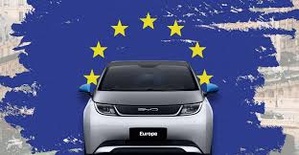
Europe’s new car market extended its recovery for a fifth consecutive month in November, with rising electric vehicle registrations providing the clearest source of momentum. While overall volumes remain well below pre-pandemic norms, the direction of travel has become more consistent, signalling that demand is stabilising after years of supply disruptions, inflation shocks, and regulatory uncertainty. The latest rise in sales underscores how electrification is increasingly doing the heavy lifting for the region’s auto industry, even as manufacturers and policymakers recalibrate their long-term strategies.
The rebound is uneven across markets and brands, but the pattern is unmistakable: electrified vehicles are capturing a growing share of registrations, offsetting softer demand for traditional combustion models. That shift has allowed total sales to rise modestly even as affordability pressures and higher financing costs continue to constrain consumers. In effect, Europe’s car market is expanding not through volume growth alone, but through structural change in what buyers are choosing to purchase.
EV Adoption Becomes the Primary Growth Engine
The strongest driver behind November’s gains was a surge in electric vehicle registrations across several major markets, including Germany, Italy, and Spain. Battery electric vehicles alone reached more than one-fifth of registrations in the European Union, while the share climbed higher in the United Kingdom and approached saturation levels in Norway. This expansion reflects years of investment finally translating into consumer uptake, supported by broader model availability and improved charging infrastructure.
Crucially, the growth in EVs is no longer confined to early adopters or niche segments. Mid-range electric models are increasingly competing with internal combustion cars on total cost of ownership, particularly in countries where incentives and lower running costs soften the upfront price gap. As a result, EV sales are contributing not just incremental growth, but resilience during periods when overall demand might otherwise stall.
The trend is reinforced by hybrid vehicles, which continue to attract buyers seeking a transition technology amid lingering concerns over charging access and resale values. Together, battery electric, hybrid electric, and plug-in hybrid models now account for nearly two-thirds of EU registrations, marking a decisive shift in the market’s composition.
Manufacturers Navigate Diverging Fortunes
The headline rise in sales masks contrasting performances among Europe’s largest automakers. Registrations increased at groups such as **Volkswagen** and **Renault**, reflecting their broad EV and hybrid lineups as well as strong domestic market positions. Their gains suggest that scale and platform flexibility are proving advantageous as electrification accelerates.
By contrast, sales slipped at **Stellantis** after several months of growth, highlighting how sensitive momentum remains to model cycles and regional exposure. The mixed results underline that electrification alone does not guarantee success; execution, pricing, and brand alignment continue to matter.
Competition is also intensifying from outside Europe. Registrations of **BYD** surged sharply, reflecting the growing presence of Chinese manufacturers in the region’s EV market. Their rapid gains illustrate how competitive pricing and aggressive expansion strategies are reshaping the landscape, even as European firms lobby for protection against imports.
Meanwhile, **Tesla** saw registrations decline year-on-year despite strong performance in Norway. The drop highlights how volatile monthly data can be for brands reliant on delivery cycles, but it also reflects a market where competition has broadened and consumers now have more electric options than ever before.
Policy Shifts Create Short-Term Noise, Not Long-Term Reversal
The rise in EV-led sales comes at a politically sensitive moment for Europe’s green agenda. Recent signals from the **European Commission** suggesting flexibility around the 2035 phase-out of combustion engines were widely interpreted as a retreat from earlier commitments. Automakers have welcomed the breathing room, arguing that regulatory targets have outpaced consumer readiness and profitability constraints.
Yet the November data suggest that demand dynamics are moving ahead of policy adjustments rather than being derailed by them. Analysts broadly agree that while regulatory timelines may shift, the long-term trajectory toward electrification remains intact. Investments already sunk into EV platforms, factories, and supply chains make a wholesale reversal unlikely, regardless of near-term political compromises.
Instead, policy recalibration appears aimed at smoothing the transition rather than halting it. By easing pressure on manufacturers struggling with margins, authorities may inadvertently support more sustainable EV adoption, allowing firms to balance affordability with compliance.
Why Sales Are Rising Despite Economic Headwinds
The fifth consecutive month of growth is notable given the broader economic backdrop. Higher interest rates have pushed up car financing costs, while inflation has strained household budgets across much of Europe. Under such conditions, a sustained recovery in car sales might appear counterintuitive.
Part of the explanation lies in pent-up demand. Years of supply constraints left many consumers postponing purchases, creating a backlog that is now being gradually released. As production normalises and delivery times shorten, buyers who delayed decisions during the pandemic are returning to showrooms.
Another factor is the shifting appeal of EVs themselves. Lower running costs, exemptions from urban restrictions, and improved performance have made electric cars more attractive even in a high-cost environment. For some households, the long-term savings associated with EV ownership help justify the upfront expense, particularly when paired with targeted incentives.
The Role of Market Leaders and Regional Differences
Sales growth remains uneven across Europe, reflecting differences in infrastructure, incentives, and consumer attitudes. Northern and Western European markets continue to lead EV adoption, while southern and eastern regions are catching up more slowly. Nevertheless, the spread of growth into markets such as Italy and Spain suggests that electrification is broadening geographically.
Industry data compiled by **ACEA** show that while overall volumes remain subdued compared with pre-2020 levels, the composition of sales has fundamentally changed. Electric and hybrid vehicles now dominate incremental growth, making them the central determinant of whether the market expands or contracts in any given month.
This shift places pressure on manufacturers that lag in electrification, while rewarding those able to offer competitive electric models at scale. It also intensifies debates over trade policy, as European firms face mounting competition from imported EVs.
A Recovery Built on Transformation Rather Than Volume
November’s rise in new car sales does not signal a return to the boom years of Europe’s auto market. Instead, it points to a recovery rooted in transformation. Electrification has become the industry’s stabilising force, cushioning demand against economic uncertainty and policy volatility.
As the market heads into the new year, the durability of this trend will depend on whether manufacturers can sustain EV momentum without eroding profitability, and whether consumers continue to embrace electric options amid shifting incentives. What is already clear, however, is that Europe’s fifth straight month of growth owes less to cyclical rebound and more to a structural change in what Europeans are buying.
(Source:www.investing.com)
The rebound is uneven across markets and brands, but the pattern is unmistakable: electrified vehicles are capturing a growing share of registrations, offsetting softer demand for traditional combustion models. That shift has allowed total sales to rise modestly even as affordability pressures and higher financing costs continue to constrain consumers. In effect, Europe’s car market is expanding not through volume growth alone, but through structural change in what buyers are choosing to purchase.
EV Adoption Becomes the Primary Growth Engine
The strongest driver behind November’s gains was a surge in electric vehicle registrations across several major markets, including Germany, Italy, and Spain. Battery electric vehicles alone reached more than one-fifth of registrations in the European Union, while the share climbed higher in the United Kingdom and approached saturation levels in Norway. This expansion reflects years of investment finally translating into consumer uptake, supported by broader model availability and improved charging infrastructure.
Crucially, the growth in EVs is no longer confined to early adopters or niche segments. Mid-range electric models are increasingly competing with internal combustion cars on total cost of ownership, particularly in countries where incentives and lower running costs soften the upfront price gap. As a result, EV sales are contributing not just incremental growth, but resilience during periods when overall demand might otherwise stall.
The trend is reinforced by hybrid vehicles, which continue to attract buyers seeking a transition technology amid lingering concerns over charging access and resale values. Together, battery electric, hybrid electric, and plug-in hybrid models now account for nearly two-thirds of EU registrations, marking a decisive shift in the market’s composition.
Manufacturers Navigate Diverging Fortunes
The headline rise in sales masks contrasting performances among Europe’s largest automakers. Registrations increased at groups such as **Volkswagen** and **Renault**, reflecting their broad EV and hybrid lineups as well as strong domestic market positions. Their gains suggest that scale and platform flexibility are proving advantageous as electrification accelerates.
By contrast, sales slipped at **Stellantis** after several months of growth, highlighting how sensitive momentum remains to model cycles and regional exposure. The mixed results underline that electrification alone does not guarantee success; execution, pricing, and brand alignment continue to matter.
Competition is also intensifying from outside Europe. Registrations of **BYD** surged sharply, reflecting the growing presence of Chinese manufacturers in the region’s EV market. Their rapid gains illustrate how competitive pricing and aggressive expansion strategies are reshaping the landscape, even as European firms lobby for protection against imports.
Meanwhile, **Tesla** saw registrations decline year-on-year despite strong performance in Norway. The drop highlights how volatile monthly data can be for brands reliant on delivery cycles, but it also reflects a market where competition has broadened and consumers now have more electric options than ever before.
Policy Shifts Create Short-Term Noise, Not Long-Term Reversal
The rise in EV-led sales comes at a politically sensitive moment for Europe’s green agenda. Recent signals from the **European Commission** suggesting flexibility around the 2035 phase-out of combustion engines were widely interpreted as a retreat from earlier commitments. Automakers have welcomed the breathing room, arguing that regulatory targets have outpaced consumer readiness and profitability constraints.
Yet the November data suggest that demand dynamics are moving ahead of policy adjustments rather than being derailed by them. Analysts broadly agree that while regulatory timelines may shift, the long-term trajectory toward electrification remains intact. Investments already sunk into EV platforms, factories, and supply chains make a wholesale reversal unlikely, regardless of near-term political compromises.
Instead, policy recalibration appears aimed at smoothing the transition rather than halting it. By easing pressure on manufacturers struggling with margins, authorities may inadvertently support more sustainable EV adoption, allowing firms to balance affordability with compliance.
Why Sales Are Rising Despite Economic Headwinds
The fifth consecutive month of growth is notable given the broader economic backdrop. Higher interest rates have pushed up car financing costs, while inflation has strained household budgets across much of Europe. Under such conditions, a sustained recovery in car sales might appear counterintuitive.
Part of the explanation lies in pent-up demand. Years of supply constraints left many consumers postponing purchases, creating a backlog that is now being gradually released. As production normalises and delivery times shorten, buyers who delayed decisions during the pandemic are returning to showrooms.
Another factor is the shifting appeal of EVs themselves. Lower running costs, exemptions from urban restrictions, and improved performance have made electric cars more attractive even in a high-cost environment. For some households, the long-term savings associated with EV ownership help justify the upfront expense, particularly when paired with targeted incentives.
The Role of Market Leaders and Regional Differences
Sales growth remains uneven across Europe, reflecting differences in infrastructure, incentives, and consumer attitudes. Northern and Western European markets continue to lead EV adoption, while southern and eastern regions are catching up more slowly. Nevertheless, the spread of growth into markets such as Italy and Spain suggests that electrification is broadening geographically.
Industry data compiled by **ACEA** show that while overall volumes remain subdued compared with pre-2020 levels, the composition of sales has fundamentally changed. Electric and hybrid vehicles now dominate incremental growth, making them the central determinant of whether the market expands or contracts in any given month.
This shift places pressure on manufacturers that lag in electrification, while rewarding those able to offer competitive electric models at scale. It also intensifies debates over trade policy, as European firms face mounting competition from imported EVs.
A Recovery Built on Transformation Rather Than Volume
November’s rise in new car sales does not signal a return to the boom years of Europe’s auto market. Instead, it points to a recovery rooted in transformation. Electrification has become the industry’s stabilising force, cushioning demand against economic uncertainty and policy volatility.
As the market heads into the new year, the durability of this trend will depend on whether manufacturers can sustain EV momentum without eroding profitability, and whether consumers continue to embrace electric options amid shifting incentives. What is already clear, however, is that Europe’s fifth straight month of growth owes less to cyclical rebound and more to a structural change in what Europeans are buying.
(Source:www.investing.com)
