


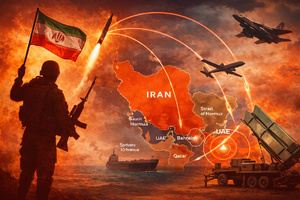
The evolving stance of Gulf states toward the ongoing conflict with Iran reflects a deeper strategic recalibration, where the objective has shifted beyond ending hostilities to fundamentally reshaping the region’s security architecture. For policymakers across the Gulf, a ceasefire alone is increasingly viewed as insufficient if it leaves intact the very capabilities that enabled repeated disruptions, coercion, and instability.
This shift is rooted in a growing recognition that the conflict is not an isolated crisis but the culmination of long-standing structural imbalances. Iran’s ability to project power through missiles, drones, and proxy networks has, over time, created a persistent vulnerability for Gulf economies and security systems. As a result, Gulf governments are now pressing the United States to ensure that any post-conflict arrangement directly addresses these capabilities rather than temporarily suspending them.
The urgency of this position is shaped by repeated exposure to risk. Energy infrastructure, maritime routes, and civilian targets across the Gulf have been subjected to attacks or threats, reinforcing the perception that unresolved military capacity in Iran translates directly into future instability. In this context, the debate is no longer about conflict termination but about whether the conditions that made the conflict possible will continue to exist.
From Crisis Management to Structural Deterrence
Gulf states are increasingly framing the conflict as a test of whether deterrence can be institutionalized rather than episodic. Previous diplomatic arrangements, particularly those focused narrowly on nuclear constraints, are seen as insufficient because they left other dimensions of Iran’s military strategy untouched. Missiles, drones, and proxy warfare remained active tools of influence, allowing Tehran to exert pressure even under formal agreements.
This experience has shaped current demands for a broader and more enforceable framework. Gulf officials are advocating for mechanisms that go beyond declaratory commitments, emphasizing verification, enforcement, and long-term constraints on Iran’s operational capabilities. The goal is to prevent a scenario in which hostilities pause only to re-emerge under similar conditions.
Central to this approach is the concept of deterrence through limitation. By reducing Iran’s ability to deploy long-range missiles and unmanned systems, Gulf states believe the threshold for conflict can be raised significantly. This is not merely about reducing immediate threats but about altering the strategic calculus that has allowed Iran to leverage asymmetric tools against more economically exposed neighbors.
The emphasis on enforceability reflects a broader skepticism toward agreements that rely on mutual trust without robust monitoring. Gulf policymakers argue that without clear mechanisms to ensure compliance, any settlement risks becoming a temporary reprieve rather than a durable solution.
Energy Security and the Strait of Hormuz as Strategic Fault Lines
The strategic importance of the Strait of Hormuz lies at the center of Gulf concerns, not only as a transit route for global energy supplies but as a geopolitical pressure point that Iran has repeatedly demonstrated its ability to influence. The disruption of shipping lanes, even temporarily, has immediate global repercussions, affecting oil prices, supply chains, and broader economic stability.
For Gulf economies, which are deeply integrated into global energy markets, the vulnerability of this chokepoint represents an existential risk. The ability of Iran to threaten or restrict access to the strait effectively grants it leverage that extends far beyond the battlefield. This dynamic has reinforced the argument that any post-war framework must include guarantees preventing the militarization of critical maritime routes.
The demand for such guarantees is not limited to physical security but extends to the broader concept of economic stability. Gulf states are seeking assurances that energy flows cannot be used as a bargaining tool in future conflicts. This reflects a recognition that economic disruption can be as strategically impactful as direct military engagement.
At the same time, the experience of recent disruptions has highlighted the interconnected nature of regional and global systems. Even localized incidents in the strait have triggered ripple effects across international markets, underscoring the need for a more resilient and predictable security environment.
Diverging Risk Thresholds Within the Gulf
While Gulf states share a common concern about Iran’s capabilities, their approaches to managing the conflict reveal nuanced differences shaped by economic exposure, geographic proximity, and strategic priorities. Some states emphasize the urgency of de-escalation to minimize immediate economic fallout, particularly in sectors such as trade, tourism, and energy exports.
Others, however, are increasingly willing to accept short-term risks in pursuit of long-term structural change. These states argue that allowing Iran to retain significant military capabilities would perpetuate a cycle of instability, ultimately imposing greater costs over time. This divergence does not represent a fundamental split but rather a spectrum of strategic calculations within a broadly aligned framework.
Despite these differences, there is a growing convergence around the principle that Gulf security must be explicitly integrated into any agreement. The notion that external powers can negotiate outcomes without fully accounting for regional vulnerabilities is being actively challenged. Gulf states are asserting a more direct role in shaping the terms of engagement, reflecting both increased confidence and accumulated experience.
This evolving posture is also influencing relationships with external partners. The expectation is no longer limited to protection but extends to partnership in designing and enforcing a new security architecture. This shift marks a transition from reactive alignment to proactive strategic engagement.
Persistent Threat Perception and the Limits of Partial Degradation
The continued existence of Iranian missile and drone capabilities, even after sustained military operations, reinforces Gulf skepticism about the effectiveness of partial measures. Intelligence assessments indicating that only a portion of these capabilities can be conclusively neutralized underscore the difficulty of achieving complete disarmament through conventional means.
From a Gulf perspective, this uncertainty translates into ongoing risk. Even a reduced arsenal retains the capacity to inflict significant damage, particularly when deployed against high-value infrastructure or critical maritime routes. The asymmetric nature of these threats means that a relatively small number of operational systems can have disproportionate strategic impact.
This reality shapes the insistence on comprehensive degradation rather than incremental reduction. Gulf policymakers argue that unless Iran’s capabilities are significantly constrained, the region will remain exposed to periodic escalation. The persistence of even limited capabilities is seen as sufficient to sustain a cycle of tension and disruption.
At the same time, the resilience of Iran’s military infrastructure—particularly its use of underground facilities and dispersed assets—highlights the challenges facing any effort to fully eliminate these threats. This reinforces the argument that military action alone is unlikely to produce a definitive outcome, necessitating a combination of operational pressure and structural agreements.
Toward a Reconfigured Regional Order
The current moment represents more than a conflict-driven adjustment; it signals a broader rethinking of how security is defined and maintained in the Gulf. The emphasis on degrading Iran’s capabilities reflects a desire to move beyond reactive crisis management toward a more stable and predictable regional order.
This vision involves not only limiting specific military tools but also redefining the rules governing their use. By embedding constraints within a broader framework of accountability and enforcement, Gulf states aim to reduce the likelihood of future conflicts while preserving their economic and strategic interests.
The outcome of this process will depend on the alignment between regional priorities and external decision-making. As Gulf states assert a more prominent role in shaping the post-conflict environment, the effectiveness of any agreement will hinge on its ability to address the underlying drivers of instability rather than merely its symptoms.
In this context, the insistence on degrading Iran’s capabilities is less about immediate victory and more about long-term transformation—an effort to ensure that the conditions enabling conflict are systematically dismantled rather than temporarily suppressed.
(Source:www.rteutwrs.com)
This shift is rooted in a growing recognition that the conflict is not an isolated crisis but the culmination of long-standing structural imbalances. Iran’s ability to project power through missiles, drones, and proxy networks has, over time, created a persistent vulnerability for Gulf economies and security systems. As a result, Gulf governments are now pressing the United States to ensure that any post-conflict arrangement directly addresses these capabilities rather than temporarily suspending them.
The urgency of this position is shaped by repeated exposure to risk. Energy infrastructure, maritime routes, and civilian targets across the Gulf have been subjected to attacks or threats, reinforcing the perception that unresolved military capacity in Iran translates directly into future instability. In this context, the debate is no longer about conflict termination but about whether the conditions that made the conflict possible will continue to exist.
From Crisis Management to Structural Deterrence
Gulf states are increasingly framing the conflict as a test of whether deterrence can be institutionalized rather than episodic. Previous diplomatic arrangements, particularly those focused narrowly on nuclear constraints, are seen as insufficient because they left other dimensions of Iran’s military strategy untouched. Missiles, drones, and proxy warfare remained active tools of influence, allowing Tehran to exert pressure even under formal agreements.
This experience has shaped current demands for a broader and more enforceable framework. Gulf officials are advocating for mechanisms that go beyond declaratory commitments, emphasizing verification, enforcement, and long-term constraints on Iran’s operational capabilities. The goal is to prevent a scenario in which hostilities pause only to re-emerge under similar conditions.
Central to this approach is the concept of deterrence through limitation. By reducing Iran’s ability to deploy long-range missiles and unmanned systems, Gulf states believe the threshold for conflict can be raised significantly. This is not merely about reducing immediate threats but about altering the strategic calculus that has allowed Iran to leverage asymmetric tools against more economically exposed neighbors.
The emphasis on enforceability reflects a broader skepticism toward agreements that rely on mutual trust without robust monitoring. Gulf policymakers argue that without clear mechanisms to ensure compliance, any settlement risks becoming a temporary reprieve rather than a durable solution.
Energy Security and the Strait of Hormuz as Strategic Fault Lines
The strategic importance of the Strait of Hormuz lies at the center of Gulf concerns, not only as a transit route for global energy supplies but as a geopolitical pressure point that Iran has repeatedly demonstrated its ability to influence. The disruption of shipping lanes, even temporarily, has immediate global repercussions, affecting oil prices, supply chains, and broader economic stability.
For Gulf economies, which are deeply integrated into global energy markets, the vulnerability of this chokepoint represents an existential risk. The ability of Iran to threaten or restrict access to the strait effectively grants it leverage that extends far beyond the battlefield. This dynamic has reinforced the argument that any post-war framework must include guarantees preventing the militarization of critical maritime routes.
The demand for such guarantees is not limited to physical security but extends to the broader concept of economic stability. Gulf states are seeking assurances that energy flows cannot be used as a bargaining tool in future conflicts. This reflects a recognition that economic disruption can be as strategically impactful as direct military engagement.
At the same time, the experience of recent disruptions has highlighted the interconnected nature of regional and global systems. Even localized incidents in the strait have triggered ripple effects across international markets, underscoring the need for a more resilient and predictable security environment.
Diverging Risk Thresholds Within the Gulf
While Gulf states share a common concern about Iran’s capabilities, their approaches to managing the conflict reveal nuanced differences shaped by economic exposure, geographic proximity, and strategic priorities. Some states emphasize the urgency of de-escalation to minimize immediate economic fallout, particularly in sectors such as trade, tourism, and energy exports.
Others, however, are increasingly willing to accept short-term risks in pursuit of long-term structural change. These states argue that allowing Iran to retain significant military capabilities would perpetuate a cycle of instability, ultimately imposing greater costs over time. This divergence does not represent a fundamental split but rather a spectrum of strategic calculations within a broadly aligned framework.
Despite these differences, there is a growing convergence around the principle that Gulf security must be explicitly integrated into any agreement. The notion that external powers can negotiate outcomes without fully accounting for regional vulnerabilities is being actively challenged. Gulf states are asserting a more direct role in shaping the terms of engagement, reflecting both increased confidence and accumulated experience.
This evolving posture is also influencing relationships with external partners. The expectation is no longer limited to protection but extends to partnership in designing and enforcing a new security architecture. This shift marks a transition from reactive alignment to proactive strategic engagement.
Persistent Threat Perception and the Limits of Partial Degradation
The continued existence of Iranian missile and drone capabilities, even after sustained military operations, reinforces Gulf skepticism about the effectiveness of partial measures. Intelligence assessments indicating that only a portion of these capabilities can be conclusively neutralized underscore the difficulty of achieving complete disarmament through conventional means.
From a Gulf perspective, this uncertainty translates into ongoing risk. Even a reduced arsenal retains the capacity to inflict significant damage, particularly when deployed against high-value infrastructure or critical maritime routes. The asymmetric nature of these threats means that a relatively small number of operational systems can have disproportionate strategic impact.
This reality shapes the insistence on comprehensive degradation rather than incremental reduction. Gulf policymakers argue that unless Iran’s capabilities are significantly constrained, the region will remain exposed to periodic escalation. The persistence of even limited capabilities is seen as sufficient to sustain a cycle of tension and disruption.
At the same time, the resilience of Iran’s military infrastructure—particularly its use of underground facilities and dispersed assets—highlights the challenges facing any effort to fully eliminate these threats. This reinforces the argument that military action alone is unlikely to produce a definitive outcome, necessitating a combination of operational pressure and structural agreements.
Toward a Reconfigured Regional Order
The current moment represents more than a conflict-driven adjustment; it signals a broader rethinking of how security is defined and maintained in the Gulf. The emphasis on degrading Iran’s capabilities reflects a desire to move beyond reactive crisis management toward a more stable and predictable regional order.
This vision involves not only limiting specific military tools but also redefining the rules governing their use. By embedding constraints within a broader framework of accountability and enforcement, Gulf states aim to reduce the likelihood of future conflicts while preserving their economic and strategic interests.
The outcome of this process will depend on the alignment between regional priorities and external decision-making. As Gulf states assert a more prominent role in shaping the post-conflict environment, the effectiveness of any agreement will hinge on its ability to address the underlying drivers of instability rather than merely its symptoms.
In this context, the insistence on degrading Iran’s capabilities is less about immediate victory and more about long-term transformation—an effort to ensure that the conditions enabling conflict are systematically dismantled rather than temporarily suppressed.
(Source:www.rteutwrs.com)
