


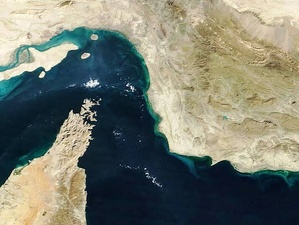
The sharp decline in commercial traffic through the Strait of Hormuz is becoming one of the clearest indicators of how deeply the Middle East conflict has disrupted the global energy system. Only a small number of commodity vessels crossed the waterway over the latest weekend, compared with more than 100 commercial vessels a day before the conflict. Yet the decline in visible shipping has not produced an equivalent collapse in oil exports, creating a striking gap between maritime activity and actual energy flows.
That gap is important because it shows that the consequences of the conflict cannot be measured simply by counting ships. Tankers are using less visible routes, some vessels are operating with tracking systems switched off, and Gulf producers are adjusting export patterns to keep crude moving. At the same time, attacks on Saudi infrastructure have forced Riyadh to reconsider how much oil it can safely send through Hormuz rather than alternative routes. The result is a severely weakened but not completely paralysed energy corridor.
Shipping Has Fallen Far Faster Than Oil Exports
Before the current conflict, the Strait of Hormuz handled roughly 125 large commercial vessels a day, including oil tankers, gas carriers, bulk carriers and container ships. Recent tracking data showed only 12 commodity vessels passing through during one weekend, while traffic on individual days earlier in September fell to just three or four vessels. These figures are significantly below normal levels, although they do not capture every ship because some vessels have switched off their automatic identification systems.
The difference between visible traffic and actual trade is therefore becoming increasingly important. A ship that disappears from tracking data has not necessarily stopped moving. Some tankers are travelling without broadcasting their positions, while other vessels are taking more cautious approaches to entering or leaving the Gulf. This makes shipping data less straightforward than during normal market conditions and increases uncertainty for traders, insurers and governments attempting to assess the real scale of disruption.
The Strait remains critical because it is the main maritime outlet for crude produced by several Gulf countries. The International Energy Agency estimates that around 20 million barrels of oil a day normally pass through the waterway, representing about a quarter of global seaborne oil trade. Most of this oil is destined for Asian markets, making countries such as China, India, Japan and South Korea particularly exposed to prolonged disruption.
Saudi Arabia Is Being Forced Back Toward Hormuz
Saudi Arabia's changing export strategy illustrates why the conflict has not produced a complete shutdown of Gulf oil supplies. The kingdom had previously relied more heavily on its East-West pipeline and the Red Sea port of Yanbu to move crude without sending it through Hormuz. However, attacks affecting the pipeline have disrupted that alternative, increasing the importance of the Gulf route at precisely the moment when maritime security there has deteriorated.
Saudi crude exports consequently recovered to more than four million barrels per day in September after falling to about 2.4 million barrels per day in August. Shipping data also showed a substantial increase in Saudi oil moving through Hormuz, with Saudi Arabia accounting for about half of the crude carried by 13 tankers that exited the strait during the week beginning September 13.
This creates a difficult strategic contradiction for Riyadh. The kingdom needs alternative export routes when Hormuz becomes dangerous, but attacks on infrastructure serving the Red Sea route reduce the usefulness of those alternatives. The more vulnerable the alternative system becomes, the greater the pressure to keep using Hormuz despite the security risks.
That does not mean Saudi Arabia has no options. Existing pipelines can redirect some crude away from the strait, while other Gulf producers also possess limited alternative infrastructure. However, the available capacity is considerably smaller than the volume normally handled through Hormuz, meaning alternative routes can reduce exposure without completely replacing the waterway.
Two Chokepoints Are Now Affecting the Same Market
The wider danger comes from the fact that Hormuz is not the only maritime chokepoint under pressure. The Bab el-Mandeb Strait, linking the Red Sea with the Gulf of Aden, has also become increasingly vulnerable following the expansion of Houthi control along Yemen's western coast. Recent attacks on Saudi targets have further complicated the security environment surrounding Red Sea shipping.
The significance of this development is geographical. Hormuz provides the principal maritime exit from the Gulf, while Bab el-Mandeb is an important gateway between the Red Sea and the wider Indian Ocean. Disruption at both locations therefore limits the ability of energy companies and shipping operators to compensate for problems at one route by shifting activity to another.
This is especially important for Saudi Arabia. The kingdom has historically had more flexibility than some neighbouring producers because of its pipeline infrastructure and access to both Gulf and Red Sea export facilities. But when attacks affect its land-based infrastructure while maritime threats simultaneously increase, that flexibility becomes much narrower.
Energy Markets Are Absorbing the Risk Differently
The decline in vessel movements might normally be expected to produce an immediate and proportional collapse in oil supplies. That has not happened. Analysts recently estimated Middle Eastern oil flows at about 17.1 million barrels per day over a ten-day period, only moderately below the 2025 average. Saudi Arabia's recovery in exports has been an important factor behind that resilience.
The resilience, however, should not be confused with normality. Shipping is operating under exceptional conditions, some cargoes are moving through less transparent channels, and producers are adjusting routes to compensate for damaged infrastructure. These adaptations can maintain supply for a period, but they can also increase transportation costs, insurance risks and uncertainty over delivery schedules.
Natural gas faces a particularly difficult problem because the alternatives are more limited. Qatar and the United Arab Emirates rely heavily on Hormuz for liquefied natural gas exports, and the International Energy Agency estimates that almost one-fifth of global liquefied natural gas trade normally passes through the strait. Unlike some crude oil shipments, these gas exports have few practical alternative routes.
The Real Risk Is Prolonged Uncertainty
The most consequential feature of the current disruption may therefore be its duration rather than the number of vessels crossing on any single day. A temporary reduction in traffic can be absorbed through inventories, alternative supplies and changes in shipping patterns. A prolonged disruption is more difficult because infrastructure cannot be expanded quickly enough to replace the capacity of a major international energy corridor.
The OECD has estimated that the Hormuz crisis has produced one of the most significant maritime energy disruptions of recent years, affecting both oil and liquefied natural gas movements and creating wider supply-chain consequences. The economic effect extends beyond energy prices because shipping delays and rerouting also influence freight costs, insurance and the availability of industrial inputs.
There is another important complication: the available data are becoming harder to interpret. Automatic identification systems are being switched off by some vessels, while covert transfers and less visible movements make conventional tracking less comprehensive. This means that headline vessel counts can understate actual activity, but they can also conceal the increased risks under which that activity is taking place.
The Strait of Hormuz is therefore revealing the broader structure of the current crisis. The conflict has not simply stopped energy exports; it has made the movement of energy more expensive, uncertain and dependent on a shrinking number of viable routes. Saudi Arabia's increased reliance on Hormuz after damage to alternative infrastructure demonstrates how quickly supposedly separate parts of the regional energy network can become connected.
As long as military tensions remain unresolved and both Hormuz and the Red Sea approaches remain vulnerable, the principal concern for global energy markets is not necessarily an immediate disappearance of all Gulf supplies. It is the erosion of the reliable transport system that allows those supplies to reach consumers predictably. That distinction explains why oil flows can remain relatively strong while maritime traffic collapses, and why the economic consequences of the conflict can continue even when physical supply has not yet fallen by the same proportion.
(Source:www.usnews.com)
That gap is important because it shows that the consequences of the conflict cannot be measured simply by counting ships. Tankers are using less visible routes, some vessels are operating with tracking systems switched off, and Gulf producers are adjusting export patterns to keep crude moving. At the same time, attacks on Saudi infrastructure have forced Riyadh to reconsider how much oil it can safely send through Hormuz rather than alternative routes. The result is a severely weakened but not completely paralysed energy corridor.
Shipping Has Fallen Far Faster Than Oil Exports
Before the current conflict, the Strait of Hormuz handled roughly 125 large commercial vessels a day, including oil tankers, gas carriers, bulk carriers and container ships. Recent tracking data showed only 12 commodity vessels passing through during one weekend, while traffic on individual days earlier in September fell to just three or four vessels. These figures are significantly below normal levels, although they do not capture every ship because some vessels have switched off their automatic identification systems.
The difference between visible traffic and actual trade is therefore becoming increasingly important. A ship that disappears from tracking data has not necessarily stopped moving. Some tankers are travelling without broadcasting their positions, while other vessels are taking more cautious approaches to entering or leaving the Gulf. This makes shipping data less straightforward than during normal market conditions and increases uncertainty for traders, insurers and governments attempting to assess the real scale of disruption.
The Strait remains critical because it is the main maritime outlet for crude produced by several Gulf countries. The International Energy Agency estimates that around 20 million barrels of oil a day normally pass through the waterway, representing about a quarter of global seaborne oil trade. Most of this oil is destined for Asian markets, making countries such as China, India, Japan and South Korea particularly exposed to prolonged disruption.
Saudi Arabia Is Being Forced Back Toward Hormuz
Saudi Arabia's changing export strategy illustrates why the conflict has not produced a complete shutdown of Gulf oil supplies. The kingdom had previously relied more heavily on its East-West pipeline and the Red Sea port of Yanbu to move crude without sending it through Hormuz. However, attacks affecting the pipeline have disrupted that alternative, increasing the importance of the Gulf route at precisely the moment when maritime security there has deteriorated.
Saudi crude exports consequently recovered to more than four million barrels per day in September after falling to about 2.4 million barrels per day in August. Shipping data also showed a substantial increase in Saudi oil moving through Hormuz, with Saudi Arabia accounting for about half of the crude carried by 13 tankers that exited the strait during the week beginning September 13.
This creates a difficult strategic contradiction for Riyadh. The kingdom needs alternative export routes when Hormuz becomes dangerous, but attacks on infrastructure serving the Red Sea route reduce the usefulness of those alternatives. The more vulnerable the alternative system becomes, the greater the pressure to keep using Hormuz despite the security risks.
That does not mean Saudi Arabia has no options. Existing pipelines can redirect some crude away from the strait, while other Gulf producers also possess limited alternative infrastructure. However, the available capacity is considerably smaller than the volume normally handled through Hormuz, meaning alternative routes can reduce exposure without completely replacing the waterway.
Two Chokepoints Are Now Affecting the Same Market
The wider danger comes from the fact that Hormuz is not the only maritime chokepoint under pressure. The Bab el-Mandeb Strait, linking the Red Sea with the Gulf of Aden, has also become increasingly vulnerable following the expansion of Houthi control along Yemen's western coast. Recent attacks on Saudi targets have further complicated the security environment surrounding Red Sea shipping.
The significance of this development is geographical. Hormuz provides the principal maritime exit from the Gulf, while Bab el-Mandeb is an important gateway between the Red Sea and the wider Indian Ocean. Disruption at both locations therefore limits the ability of energy companies and shipping operators to compensate for problems at one route by shifting activity to another.
This is especially important for Saudi Arabia. The kingdom has historically had more flexibility than some neighbouring producers because of its pipeline infrastructure and access to both Gulf and Red Sea export facilities. But when attacks affect its land-based infrastructure while maritime threats simultaneously increase, that flexibility becomes much narrower.
Energy Markets Are Absorbing the Risk Differently
The decline in vessel movements might normally be expected to produce an immediate and proportional collapse in oil supplies. That has not happened. Analysts recently estimated Middle Eastern oil flows at about 17.1 million barrels per day over a ten-day period, only moderately below the 2025 average. Saudi Arabia's recovery in exports has been an important factor behind that resilience.
The resilience, however, should not be confused with normality. Shipping is operating under exceptional conditions, some cargoes are moving through less transparent channels, and producers are adjusting routes to compensate for damaged infrastructure. These adaptations can maintain supply for a period, but they can also increase transportation costs, insurance risks and uncertainty over delivery schedules.
Natural gas faces a particularly difficult problem because the alternatives are more limited. Qatar and the United Arab Emirates rely heavily on Hormuz for liquefied natural gas exports, and the International Energy Agency estimates that almost one-fifth of global liquefied natural gas trade normally passes through the strait. Unlike some crude oil shipments, these gas exports have few practical alternative routes.
The Real Risk Is Prolonged Uncertainty
The most consequential feature of the current disruption may therefore be its duration rather than the number of vessels crossing on any single day. A temporary reduction in traffic can be absorbed through inventories, alternative supplies and changes in shipping patterns. A prolonged disruption is more difficult because infrastructure cannot be expanded quickly enough to replace the capacity of a major international energy corridor.
The OECD has estimated that the Hormuz crisis has produced one of the most significant maritime energy disruptions of recent years, affecting both oil and liquefied natural gas movements and creating wider supply-chain consequences. The economic effect extends beyond energy prices because shipping delays and rerouting also influence freight costs, insurance and the availability of industrial inputs.
There is another important complication: the available data are becoming harder to interpret. Automatic identification systems are being switched off by some vessels, while covert transfers and less visible movements make conventional tracking less comprehensive. This means that headline vessel counts can understate actual activity, but they can also conceal the increased risks under which that activity is taking place.
The Strait of Hormuz is therefore revealing the broader structure of the current crisis. The conflict has not simply stopped energy exports; it has made the movement of energy more expensive, uncertain and dependent on a shrinking number of viable routes. Saudi Arabia's increased reliance on Hormuz after damage to alternative infrastructure demonstrates how quickly supposedly separate parts of the regional energy network can become connected.
As long as military tensions remain unresolved and both Hormuz and the Red Sea approaches remain vulnerable, the principal concern for global energy markets is not necessarily an immediate disappearance of all Gulf supplies. It is the erosion of the reliable transport system that allows those supplies to reach consumers predictably. That distinction explains why oil flows can remain relatively strong while maritime traffic collapses, and why the economic consequences of the conflict can continue even when physical supply has not yet fallen by the same proportion.
(Source:www.usnews.com)
