


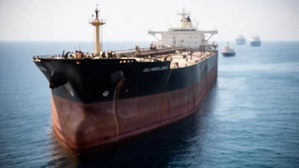
The disruption of both the Strait of Hormuz and the Bab el-Mandeb Strait has created an unusually complex challenge for global oil transportation, forcing exporters to rely on longer and significantly more expensive shipping routes. Saudi Arabia, one of the world's largest crude exporters, has become the clearest example of how simultaneous security threats at two strategic maritime corridors can rapidly increase transport costs even without a major reduction in oil production.
The latest developments have compelled the kingdom to redirect crude shipments through Egypt's Suez Canal after earlier rerouting exports away from the Persian Gulf because of disruptions around Hormuz. However, attacks and security threats in the Red Sea have also undermined that alternative, leaving exporters with fewer practical options for serving their largest customers in Asia. The result is a logistics chain that is considerably longer, more expensive and operationally more complicated than the routes normally used by the global oil trade.
The financial consequences extend well beyond additional sailing distance. Longer voyages increase fuel consumption, reduce the number of trips each tanker can complete annually, tighten the availability of vessels and raise freight rates across the market. Shipping companies must also account for higher insurance premiums, canal transit charges and scheduling disruptions, all of which contribute to higher transportation costs that eventually influence energy markets and downstream fuel prices.
Why Two Simultaneous Disruptions Carry Greater Financial Impact
The Strait of Hormuz has long been recognised as one of the world's most important energy corridors because a substantial share of globally traded crude passes through it each day. When security conditions around the strait deteriorated earlier this year, Saudi Arabia shifted much of its export activity toward its Red Sea facilities, allowing shipments to bypass the Gulf while maintaining deliveries to international buyers. That adjustment initially appeared capable of preserving export volumes despite the regional conflict.
The emergence of fresh threats around the Bab el-Mandeb Strait fundamentally changed that calculation. Commercial vessels using Saudi ports or transiting the southern entrance to the Red Sea suddenly faced a second high-risk corridor. Several tankers altered course or reversed their voyages, reflecting the growing concern among shipowners, insurers and charterers that operating through another conflict zone could expose vessels and crews to unacceptable risks.
Unlike a disruption affecting only one maritime passage, simultaneous pressure on both routes leaves exporters with very limited alternatives. Instead of switching from one corridor to another, shipping companies must redesign entire voyages, extending sailing distances by thousands of nautical miles. The longer routes consume additional fuel, increase crew and operating expenses and reduce fleet efficiency, creating costs that accumulate throughout the supply chain rather than remaining confined to individual voyages.
Longer Voyages Multiply Operating Expenses
The additional distance required to reach Asian markets illustrates why transport costs rise so sharply. A tanker sailing from Saudi Arabia's Red Sea port of Yanbu to Taiwan through the Bab el-Mandeb Strait normally completes the voyage in about 19 days. Once that route becomes unsafe, vessels using the Suez Canal before sailing through the Mediterranean and around the Cape of Good Hope require roughly 48 days to reach the same destination.
The increase in travel time almost doubles fuel expenditure alone. Industry calculations indicate that fuel costs rise from approximately $1.26 million to about $2.87 million for a single voyage, while passage through the Suez Canal adds roughly another $1 million in transit charges. These expenses are incurred before accounting for higher insurance premiums, crew costs, maintenance requirements and the commercial value of keeping a tanker occupied for nearly an extra month.
Longer sailing schedules also reduce fleet productivity. A vessel spending additional weeks on each journey completes fewer voyages over the course of a year, effectively reducing available tanker capacity even if the number of ships remains unchanged. As available tonnage tightens, freight markets typically respond with higher charter rates, increasing transportation costs for other cargoes and reinforcing upward pressure across international shipping markets.
Alternative Routes Bring Fresh Operational Challenges
Finding an alternative route does not eliminate the logistical difficulties created by the disruption of Hormuz and the Bab el-Mandeb Strait. While the Suez Canal provides a vital connection between the Red Sea and the Mediterranean, it also introduces operational constraints that do not exist on the shorter route through the Red Sea. Some of the world's largest crude carriers cannot transit the canal fully loaded because of draft limitations, forcing exporters to modify loading plans and introduce additional handling procedures before cargoes can continue towards their final destinations.
One option available to Saudi Arabia is the Sumed Pipeline in Egypt, which links the Ain Sokhna terminal on the Red Sea with the Sidi Kerir terminal on the Mediterranean. Instead of taking a fully loaded tanker through the Suez Canal, exporters can partially unload crude into the pipeline, transport it across Egypt and reload it onto another tanker on the Mediterranean coast. Although this system allows larger export volumes to bypass canal restrictions, it also increases handling operations, extends turnaround times and adds another layer of logistical coordination to the export process.
The pipeline nevertheless has finite capacity and cannot replace every export route simultaneously. Saudi Arabia exports around seven million barrels of crude a day, while the Sumed Pipeline is capable of transporting only about 2.5 million barrels daily. This means the pipeline can reduce some of the pressure created by maritime disruptions but cannot fully compensate if both Hormuz and the Bab el-Mandeb remain constrained for an extended period. Exporters must therefore balance available pipeline capacity, tanker schedules and destination requirements while attempting to maintain uninterrupted supplies to international customers.
Higher Costs Extend Beyond Individual Tankers
The financial impact of longer shipping routes extends well beyond the additional expenses incurred by a single voyage. Every tanker that spends several extra weeks at sea completes fewer annual trips, effectively reducing available shipping capacity without any reduction in the size of the global tanker fleet. As vessel availability tightens, charter rates typically rise, increasing transportation costs for refiners and commodity traders seeking ships to move crude between producing and consuming regions.
The burden is particularly significant because Asia has become the principal destination for Saudi crude exports. In previous decades, much of the kingdom's oil was shipped to Europe and North America, making the Suez Canal a more direct commercial route. Today, however, many cargoes must continue beyond the Mediterranean and sail around the Cape of Good Hope before heading across the Indian Ocean towards Asian markets. The additional distance transforms what was once an alternative export corridor into a considerably longer and more expensive trading route.
The latest disruptions illustrate how geopolitical instability at a small number of maritime chokepoints can influence the wider economics of global energy trade even when oil production remains largely unaffected. Security concerns, rather than shortages of crude, have become the primary factor driving higher transportation costs, longer delivery schedules and reduced fleet efficiency. As exporters continue adapting to evolving security conditions, the cost of moving oil is increasingly being shaped by the resilience of international shipping routes as much as by the volume of crude available for export.
(Source:www.tradingview.com)
The latest developments have compelled the kingdom to redirect crude shipments through Egypt's Suez Canal after earlier rerouting exports away from the Persian Gulf because of disruptions around Hormuz. However, attacks and security threats in the Red Sea have also undermined that alternative, leaving exporters with fewer practical options for serving their largest customers in Asia. The result is a logistics chain that is considerably longer, more expensive and operationally more complicated than the routes normally used by the global oil trade.
The financial consequences extend well beyond additional sailing distance. Longer voyages increase fuel consumption, reduce the number of trips each tanker can complete annually, tighten the availability of vessels and raise freight rates across the market. Shipping companies must also account for higher insurance premiums, canal transit charges and scheduling disruptions, all of which contribute to higher transportation costs that eventually influence energy markets and downstream fuel prices.
Why Two Simultaneous Disruptions Carry Greater Financial Impact
The Strait of Hormuz has long been recognised as one of the world's most important energy corridors because a substantial share of globally traded crude passes through it each day. When security conditions around the strait deteriorated earlier this year, Saudi Arabia shifted much of its export activity toward its Red Sea facilities, allowing shipments to bypass the Gulf while maintaining deliveries to international buyers. That adjustment initially appeared capable of preserving export volumes despite the regional conflict.
The emergence of fresh threats around the Bab el-Mandeb Strait fundamentally changed that calculation. Commercial vessels using Saudi ports or transiting the southern entrance to the Red Sea suddenly faced a second high-risk corridor. Several tankers altered course or reversed their voyages, reflecting the growing concern among shipowners, insurers and charterers that operating through another conflict zone could expose vessels and crews to unacceptable risks.
Unlike a disruption affecting only one maritime passage, simultaneous pressure on both routes leaves exporters with very limited alternatives. Instead of switching from one corridor to another, shipping companies must redesign entire voyages, extending sailing distances by thousands of nautical miles. The longer routes consume additional fuel, increase crew and operating expenses and reduce fleet efficiency, creating costs that accumulate throughout the supply chain rather than remaining confined to individual voyages.
Longer Voyages Multiply Operating Expenses
The additional distance required to reach Asian markets illustrates why transport costs rise so sharply. A tanker sailing from Saudi Arabia's Red Sea port of Yanbu to Taiwan through the Bab el-Mandeb Strait normally completes the voyage in about 19 days. Once that route becomes unsafe, vessels using the Suez Canal before sailing through the Mediterranean and around the Cape of Good Hope require roughly 48 days to reach the same destination.
The increase in travel time almost doubles fuel expenditure alone. Industry calculations indicate that fuel costs rise from approximately $1.26 million to about $2.87 million for a single voyage, while passage through the Suez Canal adds roughly another $1 million in transit charges. These expenses are incurred before accounting for higher insurance premiums, crew costs, maintenance requirements and the commercial value of keeping a tanker occupied for nearly an extra month.
Longer sailing schedules also reduce fleet productivity. A vessel spending additional weeks on each journey completes fewer voyages over the course of a year, effectively reducing available tanker capacity even if the number of ships remains unchanged. As available tonnage tightens, freight markets typically respond with higher charter rates, increasing transportation costs for other cargoes and reinforcing upward pressure across international shipping markets.
Alternative Routes Bring Fresh Operational Challenges
Finding an alternative route does not eliminate the logistical difficulties created by the disruption of Hormuz and the Bab el-Mandeb Strait. While the Suez Canal provides a vital connection between the Red Sea and the Mediterranean, it also introduces operational constraints that do not exist on the shorter route through the Red Sea. Some of the world's largest crude carriers cannot transit the canal fully loaded because of draft limitations, forcing exporters to modify loading plans and introduce additional handling procedures before cargoes can continue towards their final destinations.
One option available to Saudi Arabia is the Sumed Pipeline in Egypt, which links the Ain Sokhna terminal on the Red Sea with the Sidi Kerir terminal on the Mediterranean. Instead of taking a fully loaded tanker through the Suez Canal, exporters can partially unload crude into the pipeline, transport it across Egypt and reload it onto another tanker on the Mediterranean coast. Although this system allows larger export volumes to bypass canal restrictions, it also increases handling operations, extends turnaround times and adds another layer of logistical coordination to the export process.
The pipeline nevertheless has finite capacity and cannot replace every export route simultaneously. Saudi Arabia exports around seven million barrels of crude a day, while the Sumed Pipeline is capable of transporting only about 2.5 million barrels daily. This means the pipeline can reduce some of the pressure created by maritime disruptions but cannot fully compensate if both Hormuz and the Bab el-Mandeb remain constrained for an extended period. Exporters must therefore balance available pipeline capacity, tanker schedules and destination requirements while attempting to maintain uninterrupted supplies to international customers.
Higher Costs Extend Beyond Individual Tankers
The financial impact of longer shipping routes extends well beyond the additional expenses incurred by a single voyage. Every tanker that spends several extra weeks at sea completes fewer annual trips, effectively reducing available shipping capacity without any reduction in the size of the global tanker fleet. As vessel availability tightens, charter rates typically rise, increasing transportation costs for refiners and commodity traders seeking ships to move crude between producing and consuming regions.
The burden is particularly significant because Asia has become the principal destination for Saudi crude exports. In previous decades, much of the kingdom's oil was shipped to Europe and North America, making the Suez Canal a more direct commercial route. Today, however, many cargoes must continue beyond the Mediterranean and sail around the Cape of Good Hope before heading across the Indian Ocean towards Asian markets. The additional distance transforms what was once an alternative export corridor into a considerably longer and more expensive trading route.
The latest disruptions illustrate how geopolitical instability at a small number of maritime chokepoints can influence the wider economics of global energy trade even when oil production remains largely unaffected. Security concerns, rather than shortages of crude, have become the primary factor driving higher transportation costs, longer delivery schedules and reduced fleet efficiency. As exporters continue adapting to evolving security conditions, the cost of moving oil is increasingly being shaped by the resilience of international shipping routes as much as by the volume of crude available for export.
(Source:www.tradingview.com)
