


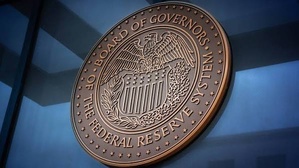
The Federal Reserve has entered a more difficult phase of monetary policy, where restoring control over inflation increasingly requires it to accept greater uncertainty for financial markets. Its latest decision to raise the federal funds rate by a quarter percentage point to a range of 3.75 percent to 4 percent marks the first increase since 2023 and signals a significant change from the easing expectations that shaped markets earlier in 2026.
The decision was unanimous, giving the central bank a clear institutional position at a time when inflation remains well above its 2 percent objective. The Federal Reserve's latest projections show that officials expect inflation to remain elevated through 2026 before moving closer to the target in subsequent years. Core personal consumption expenditure inflation is projected at 3.4 percent for 2026, considerably above the central bank's longer-term objective.
That combination of persistent inflation and a strong economy has narrowed the Federal Reserve's room for delay. Economic activity continues to expand at a solid pace, consumer spending remains resilient and productivity and business investment have been strong. With employment also holding up relatively well, policymakers have greater scope to concentrate on price stability rather than immediately prioritising lower borrowing costs.
The result is a monetary policy environment in which investors are having to reconsider assumptions about the direction of interest rates.
Inflation Has Changed the Federal Reserve's Priorities
The central problem facing the Federal Reserve is no longer simply whether inflation is falling. It is whether inflation is falling quickly enough to justify a return to easier monetary policy. The latest data indicate that the decline has been slower than policymakers would prefer, with underlying price pressures remaining persistent despite earlier monetary tightening.
Energy prices have complicated that challenge. The conflict involving Iran and the wider Middle East has pushed oil prices higher at different stages, increasing costs across transportation, manufacturing and other parts of the economy. These pressures are particularly difficult for a central bank because interest rates cannot directly increase oil production or resolve geopolitical disruptions.
Nevertheless, the Federal Reserve must consider the broader inflationary consequences. A temporary energy shock can become more persistent if businesses pass higher costs to consumers and workers demand higher wages in response. That possibility makes policymakers more cautious about assuming that current inflation will automatically disappear once energy markets stabilise.
The latest rate increase therefore reflects an attempt to prevent elevated inflation from becoming entrenched. The central bank has also made clear that future decisions will depend heavily on incoming economic information rather than a predetermined sequence of increases. That approach gives policymakers flexibility, but it also creates uncertainty for investors.
A Stronger Fed Comes With Greater Market Uncertainty
Financial markets generally respond not only to the level of interest rates but also to expectations about where rates are heading. Earlier expectations of monetary easing encouraged investors to position themselves for lower borrowing costs, stronger valuations and improved conditions for interest-rate-sensitive assets.
The latest Federal Reserve decision has disrupted that assumption. Policymakers' projections point to another rate increase during 2026, while the median projection for the federal funds rate remains above the level previously anticipated by markets. The message is therefore not simply that rates have risen once. It is that the period of monetary easing expected by some investors may be further away than previously assumed.
This matters particularly for government bonds. Longer-term Treasury yields reflect expectations about future inflation, economic growth, government borrowing and monetary policy. If investors believe inflation will remain elevated, they may demand higher yields to hold longer-duration debt.
Higher yields can then affect the wider financial system. Mortgage rates, corporate borrowing costs and the valuation of future corporate earnings can all respond to movements in Treasury yields. Companies that depend heavily on cheap financing can face greater pressure, while highly valued assets become more sensitive to changes in discount rates. The uncertainty is therefore broader than the immediate quarter-point increase.
The Fed Is Rebuilding Policy Credibility
The political environment makes the Federal Reserve's decision particularly significant. President Donald Trump has repeatedly argued for lower interest rates, while the central bank has moved in the opposite direction because of continuing inflation.
For investors, the important issue is not the political disagreement itself but whether monetary policy continues to be determined primarily by economic conditions. A central bank that appears reluctant to tighten policy because of political pressure could face a loss of credibility. That could make inflation expectations harder to control and potentially increase borrowing costs over the longer term.
The unanimous vote provides a clear signal that the Federal Reserve's governing body currently shares the view that inflation requires a firmer response. The decision also establishes an important institutional distinction between political preferences for cheaper borrowing and the central bank's assessment of price stability.
That distinction can support confidence in the Federal Reserve's independence. Yet credibility does not mean markets will immediately become comfortable with its policy direction. Investors still need to determine how far the central bank is prepared to go. This is where the new uncertainty becomes particularly important.
Data Dependence Makes the Next Move Harder to Predict
Federal Reserve Chair Kevin Warsh has avoided providing a fixed roadmap for future interest rates. Instead, the central bank has emphasised economic data and changing conditions. That means inflation, employment, consumer spending, energy prices and economic growth will all influence the next decision.
For policymakers, this approach reduces the risk of committing to a rate path that later becomes inappropriate. Economic conditions can change quickly, particularly when geopolitical developments are influencing energy markets and inflation.
For investors, however, the absence of detailed forward guidance makes portfolio planning more difficult. Markets must continually reassess expectations as new economic information arrives. A stronger inflation reading can produce expectations of another rate increase, while weaker employment or spending data could revive expectations of a pause. This can produce greater volatility in both stocks and bonds even when the Federal Reserve itself is moving cautiously.
Small companies and other businesses that rely more heavily on borrowing can be particularly sensitive to prolonged higher rates. Large companies with stronger balance sheets and substantial cash reserves may have greater capacity to absorb higher financing costs, although equity valuations across the market remain sensitive to changes in interest-rate expectations.
Higher Rates Could Test an Apparently Resilient Economy
The Federal Reserve's latest projections suggest that policymakers do not currently expect a major economic contraction from tighter monetary policy. The median projection for real economic growth in 2026 has increased to 2.3 percent, while the unemployment rate is projected at 4.1 percent. That provides the central bank with some justification for maintaining a restrictive stance. If economic activity remains resilient, policymakers can focus more heavily on inflation without facing the immediate pressure of a sharply weakening labour market.
But monetary policy operates with delays. Higher interest rates can take time to influence housing activity, business investment, consumer borrowing and corporate financing decisions. A policy that appears manageable today could therefore exert greater pressure on the economy several quarters later.
This creates a delicate balancing problem. Moving too slowly could allow inflation to persist, while tightening too aggressively could weaken demand after the economy has already begun responding to higher borrowing costs. The Federal Reserve's credibility will ultimately depend not only on its willingness to raise rates but also on its ability to judge that balance accurately.
For investors, the central question has consequently shifted. The issue is no longer simply whether the Federal Reserve is willing to fight inflation. Its latest decision has demonstrated that willingness. The greater uncertainty now concerns how much additional tightening will be required before policymakers are satisfied that inflation is moving sustainably toward the 2 percent objective, and how financial markets and the wider economy will respond if that process takes longer than expected.
(Source:www.tradingview.com)
The decision was unanimous, giving the central bank a clear institutional position at a time when inflation remains well above its 2 percent objective. The Federal Reserve's latest projections show that officials expect inflation to remain elevated through 2026 before moving closer to the target in subsequent years. Core personal consumption expenditure inflation is projected at 3.4 percent for 2026, considerably above the central bank's longer-term objective.
That combination of persistent inflation and a strong economy has narrowed the Federal Reserve's room for delay. Economic activity continues to expand at a solid pace, consumer spending remains resilient and productivity and business investment have been strong. With employment also holding up relatively well, policymakers have greater scope to concentrate on price stability rather than immediately prioritising lower borrowing costs.
The result is a monetary policy environment in which investors are having to reconsider assumptions about the direction of interest rates.
Inflation Has Changed the Federal Reserve's Priorities
The central problem facing the Federal Reserve is no longer simply whether inflation is falling. It is whether inflation is falling quickly enough to justify a return to easier monetary policy. The latest data indicate that the decline has been slower than policymakers would prefer, with underlying price pressures remaining persistent despite earlier monetary tightening.
Energy prices have complicated that challenge. The conflict involving Iran and the wider Middle East has pushed oil prices higher at different stages, increasing costs across transportation, manufacturing and other parts of the economy. These pressures are particularly difficult for a central bank because interest rates cannot directly increase oil production or resolve geopolitical disruptions.
Nevertheless, the Federal Reserve must consider the broader inflationary consequences. A temporary energy shock can become more persistent if businesses pass higher costs to consumers and workers demand higher wages in response. That possibility makes policymakers more cautious about assuming that current inflation will automatically disappear once energy markets stabilise.
The latest rate increase therefore reflects an attempt to prevent elevated inflation from becoming entrenched. The central bank has also made clear that future decisions will depend heavily on incoming economic information rather than a predetermined sequence of increases. That approach gives policymakers flexibility, but it also creates uncertainty for investors.
A Stronger Fed Comes With Greater Market Uncertainty
Financial markets generally respond not only to the level of interest rates but also to expectations about where rates are heading. Earlier expectations of monetary easing encouraged investors to position themselves for lower borrowing costs, stronger valuations and improved conditions for interest-rate-sensitive assets.
The latest Federal Reserve decision has disrupted that assumption. Policymakers' projections point to another rate increase during 2026, while the median projection for the federal funds rate remains above the level previously anticipated by markets. The message is therefore not simply that rates have risen once. It is that the period of monetary easing expected by some investors may be further away than previously assumed.
This matters particularly for government bonds. Longer-term Treasury yields reflect expectations about future inflation, economic growth, government borrowing and monetary policy. If investors believe inflation will remain elevated, they may demand higher yields to hold longer-duration debt.
Higher yields can then affect the wider financial system. Mortgage rates, corporate borrowing costs and the valuation of future corporate earnings can all respond to movements in Treasury yields. Companies that depend heavily on cheap financing can face greater pressure, while highly valued assets become more sensitive to changes in discount rates. The uncertainty is therefore broader than the immediate quarter-point increase.
The Fed Is Rebuilding Policy Credibility
The political environment makes the Federal Reserve's decision particularly significant. President Donald Trump has repeatedly argued for lower interest rates, while the central bank has moved in the opposite direction because of continuing inflation.
For investors, the important issue is not the political disagreement itself but whether monetary policy continues to be determined primarily by economic conditions. A central bank that appears reluctant to tighten policy because of political pressure could face a loss of credibility. That could make inflation expectations harder to control and potentially increase borrowing costs over the longer term.
The unanimous vote provides a clear signal that the Federal Reserve's governing body currently shares the view that inflation requires a firmer response. The decision also establishes an important institutional distinction between political preferences for cheaper borrowing and the central bank's assessment of price stability.
That distinction can support confidence in the Federal Reserve's independence. Yet credibility does not mean markets will immediately become comfortable with its policy direction. Investors still need to determine how far the central bank is prepared to go. This is where the new uncertainty becomes particularly important.
Data Dependence Makes the Next Move Harder to Predict
Federal Reserve Chair Kevin Warsh has avoided providing a fixed roadmap for future interest rates. Instead, the central bank has emphasised economic data and changing conditions. That means inflation, employment, consumer spending, energy prices and economic growth will all influence the next decision.
For policymakers, this approach reduces the risk of committing to a rate path that later becomes inappropriate. Economic conditions can change quickly, particularly when geopolitical developments are influencing energy markets and inflation.
For investors, however, the absence of detailed forward guidance makes portfolio planning more difficult. Markets must continually reassess expectations as new economic information arrives. A stronger inflation reading can produce expectations of another rate increase, while weaker employment or spending data could revive expectations of a pause. This can produce greater volatility in both stocks and bonds even when the Federal Reserve itself is moving cautiously.
Small companies and other businesses that rely more heavily on borrowing can be particularly sensitive to prolonged higher rates. Large companies with stronger balance sheets and substantial cash reserves may have greater capacity to absorb higher financing costs, although equity valuations across the market remain sensitive to changes in interest-rate expectations.
Higher Rates Could Test an Apparently Resilient Economy
The Federal Reserve's latest projections suggest that policymakers do not currently expect a major economic contraction from tighter monetary policy. The median projection for real economic growth in 2026 has increased to 2.3 percent, while the unemployment rate is projected at 4.1 percent. That provides the central bank with some justification for maintaining a restrictive stance. If economic activity remains resilient, policymakers can focus more heavily on inflation without facing the immediate pressure of a sharply weakening labour market.
But monetary policy operates with delays. Higher interest rates can take time to influence housing activity, business investment, consumer borrowing and corporate financing decisions. A policy that appears manageable today could therefore exert greater pressure on the economy several quarters later.
This creates a delicate balancing problem. Moving too slowly could allow inflation to persist, while tightening too aggressively could weaken demand after the economy has already begun responding to higher borrowing costs. The Federal Reserve's credibility will ultimately depend not only on its willingness to raise rates but also on its ability to judge that balance accurately.
For investors, the central question has consequently shifted. The issue is no longer simply whether the Federal Reserve is willing to fight inflation. Its latest decision has demonstrated that willingness. The greater uncertainty now concerns how much additional tightening will be required before policymakers are satisfied that inflation is moving sustainably toward the 2 percent objective, and how financial markets and the wider economy will respond if that process takes longer than expected.
(Source:www.tradingview.com)
