
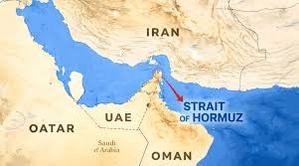
The announcement of a ceasefire between the United States and Iran was expected to restore a degree of normalcy to one of the world’s most critical maritime corridors. Instead, the Strait of Hormuz has remained unusually constrained, with ship movements far below pre-conflict levels and a lingering sense of operational uncertainty shaping every transit decision. The slowdown is not merely a temporary disruption but reflects a deeper recalibration of control, risk perception, and geopolitical signaling that continues to define the strait’s functioning even in the absence of active hostilities.
In practical terms, the ceasefire has halted direct military escalation but has not dismantled the conditions that made navigation through Hormuz precarious. Traffic volumes remain sharply reduced compared to historical averages, with only a fraction of the usual number of vessels moving through the passage. This contraction is less about physical blockage and more about a layered deterrence environment where formal peace coexists with informal restrictions, warnings, and strategic ambiguity. Shipping companies, insurers, and governments are responding not to a clear reopening, but to a corridor that remains politically conditioned and operationally fragile.
Strategic Assertion Through Controlled Navigation Corridors
At the heart of the slowdown lies Iran’s post-ceasefire strategy of asserting maritime control without overt confrontation. By directing vessels to follow specific routes, particularly those aligned with its territorial waters, Tehran has effectively reshaped navigation patterns in the strait. This move serves multiple purposes. It reinforces sovereignty claims, allows for tighter monitoring of maritime traffic, and introduces a structured dependence on Iranian coordination mechanisms.
The rerouting of vessels around Larak Island exemplifies this approach. While framed as a safety measure to avoid potential naval mine zones, the directive simultaneously channels global shipping through corridors under Iranian oversight. Such measures blur the line between security protocol and geopolitical leverage. Ships that deviate from these routes—or are perceived as politically sensitive—face heightened scrutiny or even denial of passage.
This controlled navigation framework has created a bottleneck effect. Even vessels willing to comply must navigate a more complex and time-consuming process, leading to delays and reduced throughput. The result is a de facto throttling of one of the world’s busiest oil transit points, achieved not through blockade but through procedural constraint.
Persistent Risk Premiums and the Psychology of Uncertainty
Beyond physical routing changes, the persistence of risk perceptions has played a decisive role in keeping Hormuz near standstill. Maritime trade depends heavily on predictability, and the recent conflict has fundamentally altered the psychological landscape for ship operators. Insurance premiums for vessels transiting the region have surged, reflecting the perceived likelihood of renewed disruption or targeted incidents.
Even after the ceasefire, reports of ships being turned back mid-transit or subjected to additional checks have reinforced caution. The distinction between authorized and unauthorized vessels remains fluid, particularly for ships linked—directly or indirectly—to countries involved in the conflict. This ambiguity has discouraged operators from committing to voyages through Hormuz unless absolutely necessary.
The result is a self-reinforcing cycle. Reduced traffic signals instability, which in turn justifies continued caution among shipping firms. Unlike conventional disruptions caused by weather or technical failures, this form of uncertainty is rooted in political signaling and cannot be easily quantified or mitigated. As long as the perception of selective enforcement or sudden escalation persists, shipping volumes are unlikely to recover quickly.
Energy Market Shockwaves and Structural Supply Adjustments
The near standstill in Hormuz has had profound implications for global energy markets, extending far beyond the immediate region. With a significant portion of the world’s oil supply typically passing through the strait, even partial disruption has triggered sharp price increases and forced a reconfiguration of supply chains. Asian economies, heavily dependent on Gulf oil, have been particularly exposed, facing both higher costs and logistical delays.
The situation has also accelerated longer-term structural adjustments. Countries have begun tapping strategic petroleum reserves, while energy companies are exploring alternative shipping routes and sourcing arrangements. However, these measures are inherently limited. Few viable alternatives exist that can fully replace the volume and efficiency of Hormuz, making the strait’s constrained operation a critical pressure point in the global energy system.
At the same time, speculation about potential transit fees or toll mechanisms has added another layer of complexity. Even the possibility of such charges introduces uncertainty into pricing models and contractual agreements. Resistance from Western governments underscores the broader stakes involved, as acceptance of such measures could set precedents for the politicization of other key maritime chokepoints.
Ceasefire Without Normalization: A Controlled Equilibrium
What has emerged in the aftermath of the ceasefire is not a return to normal maritime operations but a controlled equilibrium defined by limited access and strategic oversight. The agreement to halt hostilities included provisions to reopen the strait, yet the implementation of that objective has been shaped by competing interests and unresolved tensions.
Iran’s approach reflects a broader strategic calculus: maintaining leverage without provoking direct confrontation. By allowing partial movement while retaining the ability to influence or restrict flows, Tehran preserves its role as a gatekeeper in global energy logistics. This posture also sends a signal to both regional and international actors about the enduring importance of geopolitical alignment in securing access to critical infrastructure.
For global shipping, the implications are significant. The Strait of Hormuz is no longer operating as a neutral transit corridor but as a politically mediated space where access is contingent on compliance, coordination, and perceived alignment. This shift challenges long-standing assumptions about freedom of navigation and introduces a new paradigm in which maritime chokepoints can be managed through indirect control mechanisms.
The persistence of reduced traffic despite the ceasefire highlights the limits of diplomatic agreements in restoring operational normalcy. Without clear, enforceable guarantees and a broader easing of geopolitical tensions, the factors constraining Hormuz are likely to endure. The strait’s near standstill is therefore not an anomaly but a reflection of a deeper transformation in how strategic waterways are contested and controlled in an increasingly fragmented global order.
(Source:www.aljazeera.com)