


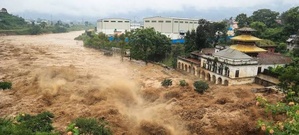
Nepal could face a reconstruction bill of $4 billion to $5 billion after a catastrophic flood swept through its northern border region, according to Finance Minister Swarnim Wagle. The estimate is still preliminary, with authorities continuing to assess the extent of the damage, but even the lower figure would amount to a substantial share of Nepal's annual economic output. The scale of the potential bill reflects the destruction of transport links, settlements, electricity infrastructure and other assets rather than damage to homes alone.
The disaster followed a glacier-related collapse on August 26 that sent enormous quantities of rock, ice, mud and water through Himalayan river systems. The resulting floods and debris flows destroyed or damaged communities along river valleys and disrupted important infrastructure connecting Nepal with its northern border. More than 600 deaths have been reported across Nepal and Tibet, while thousands of people remain unaccounted for. Rescue operations have also been complicated by damaged roads, difficult terrain and continuing risks in the affected areas.
The economic cost is therefore still developing. The government's $4 billion to $5 billion estimate is an early assessment, and the final requirement will depend on the condition of infrastructure that remains inaccessible and the cost of restoring damaged electricity and transport facilities.
Infrastructure losses explain the scale of the estimate
The immediate economic problem is the concentration of destruction in infrastructure that supports several parts of Nepal's economy. Roads and bridges have been swept away in areas where mountainous terrain already makes transport expensive and difficult. Their loss can isolate communities, delay relief operations and interrupt the movement of goods between local markets and larger economic centres.
Damage to electricity infrastructure presents a separate problem. Nepal has invested heavily in hydropower, both to meet domestic electricity demand and to develop electricity exports. Reports indicate that projects representing more than 12 percent of the country's national generating capacity were affected by the disaster. The direct repair bill is only one part of that loss. Electricity generation can also remain below normal levels while damaged facilities are repaired, reducing revenue and affecting businesses and households that depend on reliable power.
The location of several affected projects is particularly important. Hydropower facilities are often built along rivers in steep valleys because those locations provide the water flows required for generation. The same geography can expose them to landslides, flash floods and sudden flows carrying large quantities of rock and debris. The latest disaster has therefore highlighted the financial consequences of infrastructure located in areas where extreme events can cause damage across several connected facilities at once.
The destruction of roads and bridges can further increase reconstruction costs because equipment and construction materials must reach remote mountain locations. A damaged bridge may require substantial additional road work before heavy machinery can reach a project site. This means that rebuilding one facility can depend on restoring several other pieces of infrastructure first.
The comparison with the 2015 earthquake has limits
Finance Minister Wagle has indicated that the reconstruction requirement should be considerably lower than the approximately $9 billion spent following Nepal's 2015 earthquake. That comparison provides some context, but the two disasters have different economic and physical characteristics.
The 2015 earthquake affected a much broader area and destroyed more than 500,000 homes, while causing losses estimated at roughly one third of Nepal's economy. The latest floods have produced severe destruction along particular river and mountain corridors, with particularly heavy damage to roads, bridges, settlements and hydropower facilities.
A smaller reconstruction estimate does not necessarily mean that the current disaster will have a limited economic effect. The importance of damaged infrastructure matters as much as the physical value of the assets themselves. A road serving a remote community may have a relatively low replacement cost but become economically critical if its destruction cuts off access to markets and essential services.
The same applies to hydropower. The loss of generating capacity can affect the economy beyond the immediate cost of repairing a power station. Reduced electricity production can affect industrial activity, government revenue and electricity exports, depending on how long facilities remain offline.
For this reason, the eventual economic assessment will need to account for both physical destruction and interruptions to economic activity. The current $4 billion to $5 billion figure should therefore be treated as an early indication of the financial scale rather than a final measure of the disaster.
Tourism and trade face additional pressure
Nepal's tourism industry is another area exposed to the consequences of the floods. Mountain tourism depends heavily on functioning roads, bridges, airports, trekking routes, accommodation and communication networks. Damage to these systems can make particular destinations difficult to reach even when the wider tourism industry remains operational.
The affected region is also connected to cross-border movement between Nepal and China. Damage around border infrastructure can disrupt trade as well as tourism and pilgrimage travel. When roads and border facilities are damaged simultaneously, restoring normal commercial activity requires more than repairing individual structures. Transport links on both sides of the affected corridor need to become operational.
This creates a potential secondary cost for Nepal. Even after the immediate emergency ends, businesses can face reduced revenues if tourists postpone travel or if traders cannot move goods normally. The duration of these disruptions will be important in determining how far the disaster affects economic activity beyond the areas directly hit by flooding.
Nepal's dependence on remittances provides an important source of household income, but remittances cannot directly replace destroyed public infrastructure. Money sent home by workers abroad can support families and local consumption, while the government still has to finance roads, bridges, power facilities and public services damaged by the disaster.
Rebuilding will require decisions about future risk
The most difficult financial issue will come after the initial damage assessment: how Nepal should spend the reconstruction money. Replacing damaged infrastructure at its previous standard may restore services more quickly, but rebuilding in locations exposed to similar hazards could leave the country facing repeated repair bills.
The latest disaster is particularly significant because Himalayan glaciers and high-altitude landscapes are changing, while large infrastructure projects are increasingly being developed in mountain valleys. Scientists have warned that glacier-related hazards are difficult to predict precisely and that sudden failures can send large volumes of water, ice and debris downstream with little time for communities to respond.
That does not mean every future flood can be attributed to climate change, and the precise causes of the latest collapse are still being assessed. It does, however, strengthen the case for better monitoring of glaciers, river systems and unstable slopes in areas where large settlements and infrastructure are located downstream.
For Nepal, this means reconstruction costs cannot be considered only in terms of replacing what has been destroyed. Decisions about the location, design and protection of roads, bridges and hydropower facilities will influence whether the same assets remain vulnerable to future disasters.
The immediate priority remains rescue, relief and restoring basic services. But once the emergency phase passes, the government's ability to finance the estimated $4 billion to $5 billion recovery programme will become a major economic issue. The final figure could change as assessments continue, but the preliminary estimate already indicates that the floods have created a reconstruction challenge large enough to affect national spending priorities for years.
(Source:www.tbsnews.net)
The disaster followed a glacier-related collapse on August 26 that sent enormous quantities of rock, ice, mud and water through Himalayan river systems. The resulting floods and debris flows destroyed or damaged communities along river valleys and disrupted important infrastructure connecting Nepal with its northern border. More than 600 deaths have been reported across Nepal and Tibet, while thousands of people remain unaccounted for. Rescue operations have also been complicated by damaged roads, difficult terrain and continuing risks in the affected areas.
The economic cost is therefore still developing. The government's $4 billion to $5 billion estimate is an early assessment, and the final requirement will depend on the condition of infrastructure that remains inaccessible and the cost of restoring damaged electricity and transport facilities.
Infrastructure losses explain the scale of the estimate
The immediate economic problem is the concentration of destruction in infrastructure that supports several parts of Nepal's economy. Roads and bridges have been swept away in areas where mountainous terrain already makes transport expensive and difficult. Their loss can isolate communities, delay relief operations and interrupt the movement of goods between local markets and larger economic centres.
Damage to electricity infrastructure presents a separate problem. Nepal has invested heavily in hydropower, both to meet domestic electricity demand and to develop electricity exports. Reports indicate that projects representing more than 12 percent of the country's national generating capacity were affected by the disaster. The direct repair bill is only one part of that loss. Electricity generation can also remain below normal levels while damaged facilities are repaired, reducing revenue and affecting businesses and households that depend on reliable power.
The location of several affected projects is particularly important. Hydropower facilities are often built along rivers in steep valleys because those locations provide the water flows required for generation. The same geography can expose them to landslides, flash floods and sudden flows carrying large quantities of rock and debris. The latest disaster has therefore highlighted the financial consequences of infrastructure located in areas where extreme events can cause damage across several connected facilities at once.
The destruction of roads and bridges can further increase reconstruction costs because equipment and construction materials must reach remote mountain locations. A damaged bridge may require substantial additional road work before heavy machinery can reach a project site. This means that rebuilding one facility can depend on restoring several other pieces of infrastructure first.
The comparison with the 2015 earthquake has limits
Finance Minister Wagle has indicated that the reconstruction requirement should be considerably lower than the approximately $9 billion spent following Nepal's 2015 earthquake. That comparison provides some context, but the two disasters have different economic and physical characteristics.
The 2015 earthquake affected a much broader area and destroyed more than 500,000 homes, while causing losses estimated at roughly one third of Nepal's economy. The latest floods have produced severe destruction along particular river and mountain corridors, with particularly heavy damage to roads, bridges, settlements and hydropower facilities.
A smaller reconstruction estimate does not necessarily mean that the current disaster will have a limited economic effect. The importance of damaged infrastructure matters as much as the physical value of the assets themselves. A road serving a remote community may have a relatively low replacement cost but become economically critical if its destruction cuts off access to markets and essential services.
The same applies to hydropower. The loss of generating capacity can affect the economy beyond the immediate cost of repairing a power station. Reduced electricity production can affect industrial activity, government revenue and electricity exports, depending on how long facilities remain offline.
For this reason, the eventual economic assessment will need to account for both physical destruction and interruptions to economic activity. The current $4 billion to $5 billion figure should therefore be treated as an early indication of the financial scale rather than a final measure of the disaster.
Tourism and trade face additional pressure
Nepal's tourism industry is another area exposed to the consequences of the floods. Mountain tourism depends heavily on functioning roads, bridges, airports, trekking routes, accommodation and communication networks. Damage to these systems can make particular destinations difficult to reach even when the wider tourism industry remains operational.
The affected region is also connected to cross-border movement between Nepal and China. Damage around border infrastructure can disrupt trade as well as tourism and pilgrimage travel. When roads and border facilities are damaged simultaneously, restoring normal commercial activity requires more than repairing individual structures. Transport links on both sides of the affected corridor need to become operational.
This creates a potential secondary cost for Nepal. Even after the immediate emergency ends, businesses can face reduced revenues if tourists postpone travel or if traders cannot move goods normally. The duration of these disruptions will be important in determining how far the disaster affects economic activity beyond the areas directly hit by flooding.
Nepal's dependence on remittances provides an important source of household income, but remittances cannot directly replace destroyed public infrastructure. Money sent home by workers abroad can support families and local consumption, while the government still has to finance roads, bridges, power facilities and public services damaged by the disaster.
Rebuilding will require decisions about future risk
The most difficult financial issue will come after the initial damage assessment: how Nepal should spend the reconstruction money. Replacing damaged infrastructure at its previous standard may restore services more quickly, but rebuilding in locations exposed to similar hazards could leave the country facing repeated repair bills.
The latest disaster is particularly significant because Himalayan glaciers and high-altitude landscapes are changing, while large infrastructure projects are increasingly being developed in mountain valleys. Scientists have warned that glacier-related hazards are difficult to predict precisely and that sudden failures can send large volumes of water, ice and debris downstream with little time for communities to respond.
That does not mean every future flood can be attributed to climate change, and the precise causes of the latest collapse are still being assessed. It does, however, strengthen the case for better monitoring of glaciers, river systems and unstable slopes in areas where large settlements and infrastructure are located downstream.
For Nepal, this means reconstruction costs cannot be considered only in terms of replacing what has been destroyed. Decisions about the location, design and protection of roads, bridges and hydropower facilities will influence whether the same assets remain vulnerable to future disasters.
The immediate priority remains rescue, relief and restoring basic services. But once the emergency phase passes, the government's ability to finance the estimated $4 billion to $5 billion recovery programme will become a major economic issue. The final figure could change as assessments continue, but the preliminary estimate already indicates that the floods have created a reconstruction challenge large enough to affect national spending priorities for years.
(Source:www.tbsnews.net)
