


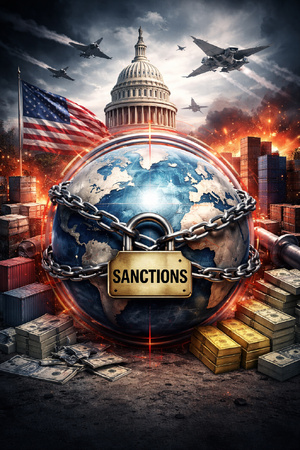
The decision by the Trump administration to place international judges, prosecutors, and a United Nations human rights expert on the same sanctions list as terrorists and organized criminals marked a sharp and consequential shift in how global justice is treated by the United States. What had once been a realm of diplomatic pressure, funding disputes, and rhetorical condemnation was reclassified as a matter of economic warfare and national security enforcement. The move did not merely target institutions; it redefined accountability itself as a hostile act when it intersected with U.S. power, allied governments, or major American corporations.
At the center of this confrontation stood Francesca Albanese, a U.N.-mandated expert whose work on Gaza and the West Bank collided with Washington’s increasingly muscular approach to international law. Her sanctioning, alongside judges and prosecutors from the International Criminal Court, revealed not an isolated dispute but a coherent strategy: neutralize global legal mechanisms before they can be used against U.S. interests, allies, or political leaders.
Recasting Accountability as Economic and Political Warfare
U.S. sanctions have traditionally been reserved for actors accused of terrorism, weapons proliferation, or transnational crime. By extending those tools to international civil servants and jurists, the Trump administration effectively recoded legal scrutiny as an act of aggression. The justification rested on the claim that investigations into alleged war crimes by Israel or the United States were “illegitimate” and violated American sovereignty. Yet the scale and severity of the sanctions told a deeper story about power and deterrence.
By freezing assets, blocking banking access, and criminalizing routine professional interactions, Washington sent a warning not only to those already under sanction but to the broader ecosystem of international law. Judges, prosecutors, rapporteurs, and even civil society groups were placed on notice that pursuing cases touching U.S. allies or personnel could carry personal and financial ruin. The designation of these individuals on the Treasury Department’s most severe blacklist transformed abstract legal risk into immediate, lived consequences.
This was not about winning a legal argument. It was about making participation in global justice so costly that institutions would hesitate to act at all.
Corporate Pressure and the Expansion of Sanctions Logic
The clash intensified when Albanese issued confidential letters to major U.S. corporations warning that their business activities could be examined for links to alleged violations in Gaza and the occupied territories. Her approach followed established U.N. practice: notify entities of potential findings before publication, invite responses, and incorporate them into official reporting. What changed was how those letters were interpreted in Washington.
Rather than being treated as part of a human rights review process, the correspondence was reframed as coercion against American business. Companies with deep ties to defense, energy, technology, and logistics reportedly sought help from the White House, arguing that the threat of reputational damage or legal exposure crossed into economic warfare. In response, the administration folded corporate protection into its sanctions strategy, treating the defense of U.S. firms as inseparable from national security.
This fusion of state power and corporate interest expanded the scope of sanctions far beyond their original purpose. It suggested that scrutiny of supply chains, military contracts, or data services could itself be sanctionable if it risked constraining American commercial activity abroad.
Diplomatic Immunity Under Strain
A critical fault line in the sanctions campaign concerned diplomatic immunity. U.N. special rapporteurs operate as independent experts, protected by international conventions precisely because their work often angers powerful states. Stripping that protection through unilateral sanctions challenged a foundational principle of multilateral governance: that investigators must be shielded from retaliation to function credibly.
Internal debates within the U.S. government reflected the stakes. Career diplomats reportedly warned that sanctioning a U.N. mandate holder could trigger reciprocal measures against American officials overseas. Political appointees, however, pressed ahead, arguing that immunity should not shield what they characterized as politically motivated activism.
The result was a precedent that blurred the line between lawful dissent and punishable conduct. Once immunity could be disregarded by a major power, the security of international experts everywhere became contingent, not guaranteed.
The ICC as a Preemptive Target
The campaign against the ICC unfolded with similar logic but higher strategic stakes. Although the United States has never accepted the court’s jurisdiction, it has historically tolerated its existence so long as investigations remained distant from U.S. personnel or close allies. That tolerance eroded as indictments and arrest warrants signaled a willingness to pursue cases involving Israel and, potentially, past U.S. military operations.
Sanctioning judges and prosecutors was less about halting specific cases than about crippling institutional capacity. The ICC depends on international banking, travel, cooperation agreements, and staff mobility. Cutting off senior figures from the global financial system disrupted investigations far beyond the immediate targets, slowing work on conflicts unrelated to the United States.
The message was unmistakable: accountability would be tolerated only where it posed no risk to American power or political leadership.
Personal Consequences as Policy Instruments
For those sanctioned, the effects were immediate and intimate. Bank accounts were closed, credit cards canceled, assets frozen, and travel restricted. Professional isolation followed as colleagues, universities, and organizations sought legal clearance before even hosting virtual appearances. Security concerns intensified as public rhetoric portrayed human rights work as extremist activity.
These outcomes were not collateral damage; they were part of the deterrent design. Sanctions functioned as psychological as well as financial pressure, demonstrating how swiftly a respected international career could be transformed into personal vulnerability. The chilling effect extended outward, shaping the calculations of others who might otherwise engage with sensitive investigations.
The sanctions campaign aligned with a wider withdrawal from multilateral institutions and norms. Funding cuts, unpaid U.N. dues, and the creation of alternative diplomatic forums signaled a preference for unilateral or selectively multilateral action. In this worldview, global institutions are acceptable only insofar as they reinforce U.S. priorities, not when they impose limits.
By casting international law as outdated or hostile, the administration reframed restraint itself as weakness. Sanctions became the tool not only to punish adversaries but to discipline institutions designed to check state power.
Redefining the Boundaries of Global Justice
The long-term implications extend beyond any single administration. Once sanctions are normalized as a response to legal scrutiny, future governments may inherit a system where global justice operates under constant threat of retaliation. Smaller states, lacking U.S. leverage, may follow suit, eroding the fragile consensus that allows international law to function at all.
What emerged from this confrontation was a stark recalibration of power. Courts, rapporteurs, and civil society actors were no longer neutral arbiters but potential enemies if their findings intersected with geopolitical interests. In that environment, justice becomes conditional, accountability selective, and the line between law enforcement and political coercion dangerously thin.
The transformation of court staff and U.N. experts into sanctionable targets marked a defining moment: the point at which the pursuit of global justice itself was treated as a security threat, and the architecture built to restrain the powerful was recast as an adversary to be subdued.
(Source:www.reuters.com)
At the center of this confrontation stood Francesca Albanese, a U.N.-mandated expert whose work on Gaza and the West Bank collided with Washington’s increasingly muscular approach to international law. Her sanctioning, alongside judges and prosecutors from the International Criminal Court, revealed not an isolated dispute but a coherent strategy: neutralize global legal mechanisms before they can be used against U.S. interests, allies, or political leaders.
Recasting Accountability as Economic and Political Warfare
U.S. sanctions have traditionally been reserved for actors accused of terrorism, weapons proliferation, or transnational crime. By extending those tools to international civil servants and jurists, the Trump administration effectively recoded legal scrutiny as an act of aggression. The justification rested on the claim that investigations into alleged war crimes by Israel or the United States were “illegitimate” and violated American sovereignty. Yet the scale and severity of the sanctions told a deeper story about power and deterrence.
By freezing assets, blocking banking access, and criminalizing routine professional interactions, Washington sent a warning not only to those already under sanction but to the broader ecosystem of international law. Judges, prosecutors, rapporteurs, and even civil society groups were placed on notice that pursuing cases touching U.S. allies or personnel could carry personal and financial ruin. The designation of these individuals on the Treasury Department’s most severe blacklist transformed abstract legal risk into immediate, lived consequences.
This was not about winning a legal argument. It was about making participation in global justice so costly that institutions would hesitate to act at all.
Corporate Pressure and the Expansion of Sanctions Logic
The clash intensified when Albanese issued confidential letters to major U.S. corporations warning that their business activities could be examined for links to alleged violations in Gaza and the occupied territories. Her approach followed established U.N. practice: notify entities of potential findings before publication, invite responses, and incorporate them into official reporting. What changed was how those letters were interpreted in Washington.
Rather than being treated as part of a human rights review process, the correspondence was reframed as coercion against American business. Companies with deep ties to defense, energy, technology, and logistics reportedly sought help from the White House, arguing that the threat of reputational damage or legal exposure crossed into economic warfare. In response, the administration folded corporate protection into its sanctions strategy, treating the defense of U.S. firms as inseparable from national security.
This fusion of state power and corporate interest expanded the scope of sanctions far beyond their original purpose. It suggested that scrutiny of supply chains, military contracts, or data services could itself be sanctionable if it risked constraining American commercial activity abroad.
Diplomatic Immunity Under Strain
A critical fault line in the sanctions campaign concerned diplomatic immunity. U.N. special rapporteurs operate as independent experts, protected by international conventions precisely because their work often angers powerful states. Stripping that protection through unilateral sanctions challenged a foundational principle of multilateral governance: that investigators must be shielded from retaliation to function credibly.
Internal debates within the U.S. government reflected the stakes. Career diplomats reportedly warned that sanctioning a U.N. mandate holder could trigger reciprocal measures against American officials overseas. Political appointees, however, pressed ahead, arguing that immunity should not shield what they characterized as politically motivated activism.
The result was a precedent that blurred the line between lawful dissent and punishable conduct. Once immunity could be disregarded by a major power, the security of international experts everywhere became contingent, not guaranteed.
The ICC as a Preemptive Target
The campaign against the ICC unfolded with similar logic but higher strategic stakes. Although the United States has never accepted the court’s jurisdiction, it has historically tolerated its existence so long as investigations remained distant from U.S. personnel or close allies. That tolerance eroded as indictments and arrest warrants signaled a willingness to pursue cases involving Israel and, potentially, past U.S. military operations.
Sanctioning judges and prosecutors was less about halting specific cases than about crippling institutional capacity. The ICC depends on international banking, travel, cooperation agreements, and staff mobility. Cutting off senior figures from the global financial system disrupted investigations far beyond the immediate targets, slowing work on conflicts unrelated to the United States.
The message was unmistakable: accountability would be tolerated only where it posed no risk to American power or political leadership.
Personal Consequences as Policy Instruments
For those sanctioned, the effects were immediate and intimate. Bank accounts were closed, credit cards canceled, assets frozen, and travel restricted. Professional isolation followed as colleagues, universities, and organizations sought legal clearance before even hosting virtual appearances. Security concerns intensified as public rhetoric portrayed human rights work as extremist activity.
These outcomes were not collateral damage; they were part of the deterrent design. Sanctions functioned as psychological as well as financial pressure, demonstrating how swiftly a respected international career could be transformed into personal vulnerability. The chilling effect extended outward, shaping the calculations of others who might otherwise engage with sensitive investigations.
The sanctions campaign aligned with a wider withdrawal from multilateral institutions and norms. Funding cuts, unpaid U.N. dues, and the creation of alternative diplomatic forums signaled a preference for unilateral or selectively multilateral action. In this worldview, global institutions are acceptable only insofar as they reinforce U.S. priorities, not when they impose limits.
By casting international law as outdated or hostile, the administration reframed restraint itself as weakness. Sanctions became the tool not only to punish adversaries but to discipline institutions designed to check state power.
Redefining the Boundaries of Global Justice
The long-term implications extend beyond any single administration. Once sanctions are normalized as a response to legal scrutiny, future governments may inherit a system where global justice operates under constant threat of retaliation. Smaller states, lacking U.S. leverage, may follow suit, eroding the fragile consensus that allows international law to function at all.
What emerged from this confrontation was a stark recalibration of power. Courts, rapporteurs, and civil society actors were no longer neutral arbiters but potential enemies if their findings intersected with geopolitical interests. In that environment, justice becomes conditional, accountability selective, and the line between law enforcement and political coercion dangerously thin.
The transformation of court staff and U.N. experts into sanctionable targets marked a defining moment: the point at which the pursuit of global justice itself was treated as a security threat, and the architecture built to restrain the powerful was recast as an adversary to be subdued.
(Source:www.reuters.com)
