


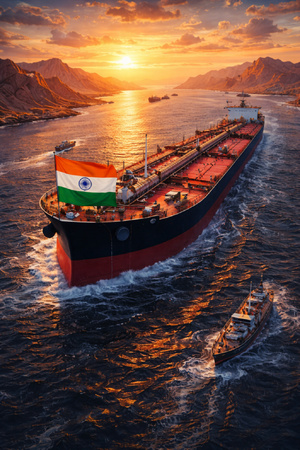
India’s energy security strategy has long depended on maintaining stable access to the narrow maritime corridor that connects the Persian Gulf with global oil markets. As geopolitical tensions periodically threaten shipping in the Strait of Hormuz, the ability of Indian-flagged vessels to navigate the waterway has become a central concern for policymakers in New Delhi. Recent indications that Iran may allow Indian-flagged tankers to transit the strait, combined with the arrival of the first tanker carrying Middle Eastern crude to India amid heightened regional tensions, illustrate how diplomacy, strategic caution, and mutual economic dependence intersect in one of the world’s most sensitive energy corridors.
The development underscores the broader reality that India’s relationship with Iran—while complex and occasionally constrained by global geopolitics—remains anchored in practical interests tied to trade routes, maritime security, and long-term energy flows. In moments of crisis, these pragmatic considerations often guide decision-making on both sides, shaping arrangements that allow critical commercial shipping to continue even as regional tensions escalate.
Hormuz as the Lifeline of India’s Energy Imports
The Strait of Hormuz is among the most strategically vital shipping lanes in the global energy system. Roughly one-fifth of the world’s oil supply passes through the narrow passage between Iran and Oman, making it a focal point of geopolitical competition and economic vulnerability. For India, the strait carries even greater significance because a substantial share of the country’s crude oil imports originates in the Gulf region.
As the world’s third-largest consumer of crude oil, India relies heavily on maritime shipments from producers such as Saudi Arabia, Iraq, the United Arab Emirates, and Kuwait. Tankers carrying these supplies must pass through Hormuz before reaching Indian ports along the western coast. Any disruption in this corridor immediately raises concerns about supply shortages, rising transportation costs, and volatility in domestic fuel markets.
Periods of conflict or military escalation in the Persian Gulf have historically triggered fears that the strait could be blocked or that commercial shipping could become entangled in regional hostilities. Such disruptions can ripple across global markets, pushing oil prices higher and forcing importing nations like India to seek emergency alternatives.
Against this backdrop, assurances regarding the safety of Indian shipping take on strategic importance. Even informal understandings that allow vessels carrying energy supplies to pass without interference can help stabilize trade flows and reassure markets that the corridor remains functional.
Diplomatic Engagement and Maritime Assurances
Diplomacy often becomes the primary tool for navigating the complex security environment surrounding Hormuz. India and Iran maintain a longstanding dialogue that extends beyond energy trade to include regional connectivity projects, port development, and maritime cooperation. This relationship provides channels through which concerns about shipping safety can be communicated during times of tension.
Conversations between senior officials frequently address practical issues related to maritime traffic, including the safety of seafarers and the protection of cargo shipments. In situations where military activity increases the risk of confrontation, diplomatic exchanges can help clarify expectations and reduce the likelihood that commercial vessels become unintended targets.
The arrival of a crude tanker at an Indian port after transiting the strait during a volatile period illustrates how such diplomatic engagement can translate into tangible outcomes. Even when official statements remain cautious, the movement of vessels through the corridor signals that mechanisms exist—formal or informal—to manage risks and maintain the flow of trade.
For India, ensuring that its flagged ships can operate safely in international waters is both an economic necessity and a matter of national responsibility. Indian-registered vessels transport significant volumes of energy cargo, and hundreds of Indian sailors serve aboard ships navigating the Gulf region. Their safety becomes an additional factor in the government’s diplomatic calculations.
Strategic Interests Behind Iran’s Calculations
Iran’s approach to shipping in the Strait of Hormuz has often reflected a delicate balance between strategic signaling and economic pragmatism. The country sits along the northern coastline of the strait and possesses the capability to influence maritime traffic through military deployments or surveillance activities. During periods of confrontation with Western powers, Tehran has occasionally used this leverage to highlight its strategic importance.
At the same time, Iran has strong incentives to avoid actions that could permanently disrupt commercial shipping or alienate countries that maintain constructive relations with it. Nations such as India have historically pursued relatively balanced foreign policies in the region, maintaining engagement with Iran even while expanding ties with other Gulf states and Western partners.
Allowing Indian-flagged vessels to transit the strait can therefore serve multiple purposes for Tehran. It signals that Iran differentiates between geopolitical adversaries and countries with which it maintains diplomatic or economic cooperation. It also demonstrates that the country does not seek to halt global energy trade altogether, but rather to influence strategic narratives surrounding regional security.
In this context, selective assurances for certain national fleets may represent a calibrated approach—one that preserves Iran’s strategic leverage while avoiding a complete shutdown of maritime commerce.
The Role of Commercial Shipping in Regional Stability
Beyond the immediate concerns of oil supply, the continued movement of tankers through the Strait of Hormuz plays a stabilizing role in global markets. When vessels continue to arrive at ports despite heightened tensions, it signals that trade networks remain intact and that energy supply chains are functioning.
Shipping companies, insurers, and commodity traders closely monitor vessel traffic in the region. Even a brief slowdown in tanker movements can push freight rates higher and trigger speculative pressure on oil prices. Conversely, the safe arrival of cargo shipments helps calm market anxieties.
The tanker carrying crude from the Gulf to India during a period of regional tension demonstrates the resilience of these trade networks. While military developments and diplomatic disputes may shape headlines, the daily mechanics of global commerce often continue through negotiated arrangements and cautious navigation.
For importing nations, this continuity is essential. Energy planners in India constantly assess supply routes and maintain contingency options—including increased purchases from alternative producers—but the efficiency of the Gulf shipping corridor makes it difficult to replace entirely.
India’s Broader Energy Security Strategy
India’s dependence on imported crude has led policymakers to pursue a multifaceted energy strategy designed to reduce vulnerability to geopolitical shocks. Diversifying supply sources, building strategic petroleum reserves, and expanding renewable energy capacity all form part of this long-term approach.
However, the physical geography of energy trade means that the Persian Gulf remains central to India’s oil supply. Even as imports from countries such as Russia increase, shipments from the Middle East continue to play a major role in meeting the country’s energy needs.
This reality makes maritime diplomacy a crucial component of India’s foreign policy. Engagement with Gulf states, coordination with naval forces responsible for protecting shipping lanes, and communication with regional actors such as Iran all contribute to safeguarding the flow of energy resources.
In times of crisis, these relationships can help prevent disruptions that might otherwise ripple through the global economy. The ability to maintain dialogue with multiple regional players allows India to navigate complex geopolitical landscapes while prioritizing the continuity of its energy imports.
Maritime Security and the Human Dimension
The safety of seafarers also remains a central concern in discussions about shipping through conflict-prone regions. Thousands of Indian nationals work aboard merchant vessels operating across the Persian Gulf and the wider Indian Ocean. Their presence underscores the human dimension of maritime trade, where geopolitical tensions can directly affect civilian crews navigating international waters.
Government agencies, shipping companies, and maritime authorities coordinate closely to track vessel movements and respond to emergencies. Communication channels between embassies, port authorities, and shipping operators help ensure that sailors receive assistance when necessary.
This network of coordination reflects the broader effort to manage risks associated with global shipping. Even in volatile environments, the combination of diplomatic engagement and operational planning can allow commercial vessels to continue their journeys while minimizing threats to crews and cargo.
A Persistent Balance Between Conflict and Commerce
The developments surrounding tanker movements through the Strait of Hormuz illustrate a recurring pattern in global energy politics. Strategic rivalries and regional conflicts often create uncertainty, yet the demands of international commerce exert a powerful counterforce that encourages restraint and negotiation.
For countries like India, maintaining access to critical shipping lanes requires constant diplomatic engagement and careful monitoring of regional dynamics. For Iran, managing the balance between strategic signaling and economic pragmatism remains a key element of its approach to maritime security.
As long as the global economy relies heavily on energy flows from the Gulf, the Strait of Hormuz will remain both a potential flashpoint and a vital artery of international trade. Within this environment, the passage of tankers carrying crude to distant markets serves as a reminder that even amid geopolitical tension, the mechanisms of commerce continue to operate through diplomacy, coordination, and strategic calculation.
(Source:www.brecoder.com)
The development underscores the broader reality that India’s relationship with Iran—while complex and occasionally constrained by global geopolitics—remains anchored in practical interests tied to trade routes, maritime security, and long-term energy flows. In moments of crisis, these pragmatic considerations often guide decision-making on both sides, shaping arrangements that allow critical commercial shipping to continue even as regional tensions escalate.
Hormuz as the Lifeline of India’s Energy Imports
The Strait of Hormuz is among the most strategically vital shipping lanes in the global energy system. Roughly one-fifth of the world’s oil supply passes through the narrow passage between Iran and Oman, making it a focal point of geopolitical competition and economic vulnerability. For India, the strait carries even greater significance because a substantial share of the country’s crude oil imports originates in the Gulf region.
As the world’s third-largest consumer of crude oil, India relies heavily on maritime shipments from producers such as Saudi Arabia, Iraq, the United Arab Emirates, and Kuwait. Tankers carrying these supplies must pass through Hormuz before reaching Indian ports along the western coast. Any disruption in this corridor immediately raises concerns about supply shortages, rising transportation costs, and volatility in domestic fuel markets.
Periods of conflict or military escalation in the Persian Gulf have historically triggered fears that the strait could be blocked or that commercial shipping could become entangled in regional hostilities. Such disruptions can ripple across global markets, pushing oil prices higher and forcing importing nations like India to seek emergency alternatives.
Against this backdrop, assurances regarding the safety of Indian shipping take on strategic importance. Even informal understandings that allow vessels carrying energy supplies to pass without interference can help stabilize trade flows and reassure markets that the corridor remains functional.
Diplomatic Engagement and Maritime Assurances
Diplomacy often becomes the primary tool for navigating the complex security environment surrounding Hormuz. India and Iran maintain a longstanding dialogue that extends beyond energy trade to include regional connectivity projects, port development, and maritime cooperation. This relationship provides channels through which concerns about shipping safety can be communicated during times of tension.
Conversations between senior officials frequently address practical issues related to maritime traffic, including the safety of seafarers and the protection of cargo shipments. In situations where military activity increases the risk of confrontation, diplomatic exchanges can help clarify expectations and reduce the likelihood that commercial vessels become unintended targets.
The arrival of a crude tanker at an Indian port after transiting the strait during a volatile period illustrates how such diplomatic engagement can translate into tangible outcomes. Even when official statements remain cautious, the movement of vessels through the corridor signals that mechanisms exist—formal or informal—to manage risks and maintain the flow of trade.
For India, ensuring that its flagged ships can operate safely in international waters is both an economic necessity and a matter of national responsibility. Indian-registered vessels transport significant volumes of energy cargo, and hundreds of Indian sailors serve aboard ships navigating the Gulf region. Their safety becomes an additional factor in the government’s diplomatic calculations.
Strategic Interests Behind Iran’s Calculations
Iran’s approach to shipping in the Strait of Hormuz has often reflected a delicate balance between strategic signaling and economic pragmatism. The country sits along the northern coastline of the strait and possesses the capability to influence maritime traffic through military deployments or surveillance activities. During periods of confrontation with Western powers, Tehran has occasionally used this leverage to highlight its strategic importance.
At the same time, Iran has strong incentives to avoid actions that could permanently disrupt commercial shipping or alienate countries that maintain constructive relations with it. Nations such as India have historically pursued relatively balanced foreign policies in the region, maintaining engagement with Iran even while expanding ties with other Gulf states and Western partners.
Allowing Indian-flagged vessels to transit the strait can therefore serve multiple purposes for Tehran. It signals that Iran differentiates between geopolitical adversaries and countries with which it maintains diplomatic or economic cooperation. It also demonstrates that the country does not seek to halt global energy trade altogether, but rather to influence strategic narratives surrounding regional security.
In this context, selective assurances for certain national fleets may represent a calibrated approach—one that preserves Iran’s strategic leverage while avoiding a complete shutdown of maritime commerce.
The Role of Commercial Shipping in Regional Stability
Beyond the immediate concerns of oil supply, the continued movement of tankers through the Strait of Hormuz plays a stabilizing role in global markets. When vessels continue to arrive at ports despite heightened tensions, it signals that trade networks remain intact and that energy supply chains are functioning.
Shipping companies, insurers, and commodity traders closely monitor vessel traffic in the region. Even a brief slowdown in tanker movements can push freight rates higher and trigger speculative pressure on oil prices. Conversely, the safe arrival of cargo shipments helps calm market anxieties.
The tanker carrying crude from the Gulf to India during a period of regional tension demonstrates the resilience of these trade networks. While military developments and diplomatic disputes may shape headlines, the daily mechanics of global commerce often continue through negotiated arrangements and cautious navigation.
For importing nations, this continuity is essential. Energy planners in India constantly assess supply routes and maintain contingency options—including increased purchases from alternative producers—but the efficiency of the Gulf shipping corridor makes it difficult to replace entirely.
India’s Broader Energy Security Strategy
India’s dependence on imported crude has led policymakers to pursue a multifaceted energy strategy designed to reduce vulnerability to geopolitical shocks. Diversifying supply sources, building strategic petroleum reserves, and expanding renewable energy capacity all form part of this long-term approach.
However, the physical geography of energy trade means that the Persian Gulf remains central to India’s oil supply. Even as imports from countries such as Russia increase, shipments from the Middle East continue to play a major role in meeting the country’s energy needs.
This reality makes maritime diplomacy a crucial component of India’s foreign policy. Engagement with Gulf states, coordination with naval forces responsible for protecting shipping lanes, and communication with regional actors such as Iran all contribute to safeguarding the flow of energy resources.
In times of crisis, these relationships can help prevent disruptions that might otherwise ripple through the global economy. The ability to maintain dialogue with multiple regional players allows India to navigate complex geopolitical landscapes while prioritizing the continuity of its energy imports.
Maritime Security and the Human Dimension
The safety of seafarers also remains a central concern in discussions about shipping through conflict-prone regions. Thousands of Indian nationals work aboard merchant vessels operating across the Persian Gulf and the wider Indian Ocean. Their presence underscores the human dimension of maritime trade, where geopolitical tensions can directly affect civilian crews navigating international waters.
Government agencies, shipping companies, and maritime authorities coordinate closely to track vessel movements and respond to emergencies. Communication channels between embassies, port authorities, and shipping operators help ensure that sailors receive assistance when necessary.
This network of coordination reflects the broader effort to manage risks associated with global shipping. Even in volatile environments, the combination of diplomatic engagement and operational planning can allow commercial vessels to continue their journeys while minimizing threats to crews and cargo.
A Persistent Balance Between Conflict and Commerce
The developments surrounding tanker movements through the Strait of Hormuz illustrate a recurring pattern in global energy politics. Strategic rivalries and regional conflicts often create uncertainty, yet the demands of international commerce exert a powerful counterforce that encourages restraint and negotiation.
For countries like India, maintaining access to critical shipping lanes requires constant diplomatic engagement and careful monitoring of regional dynamics. For Iran, managing the balance between strategic signaling and economic pragmatism remains a key element of its approach to maritime security.
As long as the global economy relies heavily on energy flows from the Gulf, the Strait of Hormuz will remain both a potential flashpoint and a vital artery of international trade. Within this environment, the passage of tankers carrying crude to distant markets serves as a reminder that even amid geopolitical tension, the mechanisms of commerce continue to operate through diplomacy, coordination, and strategic calculation.
(Source:www.brecoder.com)
