


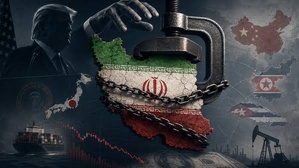
The United States is preparing a new phase of economic pressure against Iran that could prove more consequential than another round of sanctions imposed directly on Iranian companies. Washington is moving toward targeting the countries, financial institutions and businesses that keep Iran connected to international markets, attempting to make continued trade with Tehran increasingly expensive and difficult.
The strategy comes after months of military confrontation and economic disruption that have already weakened Iran's economy. Treasury Secretary Scott Bessent has signalled that the new measures will be aimed not only at Iran itself but also at foreign entities that continue providing the country with commercial and financial lifelines. The measures are expected to be detailed by the Treasury Department as Washington seeks to increase pressure without immediately returning to large scale military operations.
Iran has responded by threatening an escalation of its own. A senior Iranian security official warned that if the economic campaign continues, Tehran could halt oil exports from the Gulf and treat countries supporting the American measures as participants in an economic war. That threat is particularly significant because the conflict is already disrupting shipping through the Strait of Hormuz, one of the world's most important energy corridors.
The confrontation is therefore evolving into a contest over economic access. Washington is trying to close the channels through which Iran earns foreign currency and conducts international trade, while Tehran is threatening to make the consequences of that strategy global by putting additional pressure on energy supplies.
Washington’s Strategy Goes Beyond Iranian Companies
The central weakness of previous sanctions regimes has been Iran's ability to maintain commercial relationships with countries willing to continue trading with it. Sanctioning an Iranian oil company is considerably less effective if another country's refinery continues buying the oil through intermediaries and alternative payment arrangements.
The United States has increasingly responded by targeting the networks surrounding Iranian commerce. Earlier American measures have focused on front companies, shipping networks, vessels and individuals involved in moving Iranian oil and generating revenue for the country's military establishment. In July, the Treasury Department sanctioned more than 50 individuals, companies and vessels connected with an Iranian shipping network that Washington said played a major role in the country's oil exports and sanctions evasion.
That approach provides Washington with a much broader mechanism of pressure. Instead of attempting to eliminate every Iranian transaction, American authorities can make the supporting infrastructure increasingly risky for banks, traders, insurers and shipping companies.
The financial system is particularly important. International companies generally need access to banking, insurance and dollar based transactions to conduct large scale trade. Even businesses that have no direct relationship with the United States can become vulnerable if their transactions pass through institutions exposed to American financial restrictions.
This gives Washington considerable leverage. The threat is not simply that a company will lose its Iranian business. It is that continuing that business could jeopardise its access to a much larger global financial system.
China Is The Critical Test
The effectiveness of the strategy will depend heavily on China. Chinese buyers have accounted for the overwhelming majority of Iran's seaborne oil exports, making China the country's most important remaining energy customer. Iranian crude has continued reaching Chinese independent refiners through trading structures designed to reduce exposure to American restrictions.
That relationship creates a fundamental problem for Washington. The United States can make Iranian oil more difficult to sell, but completely eliminating the trade would require convincing Chinese companies to abandon a commercially attractive source of discounted crude.
China has also consistently opposed unilateral American sanctions and has argued that economic pressure is not a substitute for diplomacy. Beijing therefore has little incentive to accept Washington's position automatically, particularly when Iranian oil provides Chinese refiners with another source of supply.
The United States could respond by imposing secondary sanctions on Chinese companies involved in Iranian trade. That would increase the cost for those businesses, but it would also introduce a new complication into an already difficult United States China relationship.
Washington therefore faces a delicate calculation. If the sanctions are too weak, Iran may continue exporting enough oil to sustain its economy. If they are too aggressive against Chinese businesses, the dispute could become another source of conflict between Washington and Beijing.
Iran’s Oil Threat Could Raise The Cost For Everyone
Tehran's response highlights the second major weakness in Washington's strategy: Iran does not have to defeat the sanctions economically to make them costly. It can attempt to retaliate by threatening energy infrastructure and shipping.
Iran has warned that continued economic pressure could lead it to halt oil exports from the Gulf. Such a step would be economically painful for Tehran itself because oil remains one of its most important sources of export revenue, but the threat has significance because of the importance of the Strait of Hormuz.
Before the current disruption, the waterway carried a substantial share of global oil and liquefied natural gas shipments. Traffic has already fallen sharply during the conflict, increasing concerns about shipping delays, insurance costs and alternative supply routes.
The immediate market reaction also shows why the threat matters even without an actual shutdown. Oil prices rose strongly last week as traders assessed the possibility of additional disruption, although prices then fell on Monday as investors took profits ahead of the expected American announcement.
That volatility demonstrates an important feature of energy markets: physical shortages do not have to occur before prices respond. Expectations about future supply can move prices substantially.
For Washington, that creates a dilemma. Economic sanctions are intended to weaken Iran, but if Tehran responds by threatening energy supplies, the resulting increase in oil prices can create costs for consumers and businesses far beyond Iran.
Sanctions Are Powerful Because Iran Needs Foreign Currency
The economic logic behind Washington's campaign rests on Iran's dependence on foreign currency. Iran needs export earnings to pay for imports, maintain industrial activity and support government finances. Oil therefore remains central to the country's ability to function internationally.
Iran entered the current conflict with significant economic weaknesses, including high inflation, currency pressure, energy shortages and the effects of years of sanctions. Damage to infrastructure and disruption to trade have added another layer of economic pressure.
Reducing oil revenue can therefore have consequences beyond the energy sector. Lower export earnings can weaken the currency, increase the cost of imports and make it harder for the government to finance reconstruction.
But this does not mean sanctions automatically produce political concessions. Iran has lived under extensive American sanctions for decades and has developed methods of circumventing restrictions. Informal trading networks, intermediary companies and alternative payment mechanisms have allowed Iranian commerce to continue despite substantial limitations.
The question for Washington is consequently one of scale. It needs to reduce Iran's ability to circumvent sanctions faster than Tehran can develop alternative channels.
The UAE And Regional Trade Routes Matter
The United States is also focusing on Iran's commercial connections with regional financial centres. The United Arab Emirates has historically been an important gateway for Iranian trade, particularly through Dubai's role as a regional commercial and financial centre. Any reduction in those channels could make Iranian imports and exports considerably more complicated. Iranian businesses would have to rely on longer supply chains, additional intermediaries and more expensive payment arrangements.
That is precisely the type of friction American sanctions are designed to create. Washington does not necessarily need to prevent every Iranian transaction. Making legitimate international commerce expensive, slow and risky can itself reduce the amount of economic activity Iran is able to conduct. The United Arab Emirates has already suspended financial and economic transactions with Iran during the current escalation, adding another potential constraint on Tehran's commercial network.
The sanctions campaign is ultimately testing how many countries Washington can persuade to participate in isolating Iran. The United States has considerable influence over the international financial system, but it cannot independently control every trade relationship involving Tehran.
China remains the largest challenge, while other regional economies have their own interests in maintaining commercial relationships with Iran. Countries that depend on Iranian energy or use Iran as a trade corridor may be reluctant to accept measures that damage their own economies.
This is why the new sanctions could become a diplomatic test as much as an economic one. Washington is effectively asking other governments and companies to choose between continuing business with Iran and avoiding exposure to American financial penalties.
For Iran, the objective is the opposite: preserve enough international trade to prevent complete economic isolation. The country does not necessarily need unrestricted access to global markets if it can maintain a smaller network of customers, intermediaries and financial channels.
That makes the coming phase of the confrontation fundamentally different from a simple sanctions announcement. The United States is attempting to turn Iran's economic relationships into vulnerabilities, while Iran is trying to ensure that those relationships remain sufficiently strong to keep its economy functioning.
The result could be an increasingly fragmented system in which Iranian oil continues to reach selected buyers, but at greater financial, logistical and political cost. Washington may succeed in reducing Tehran's revenue without completely eliminating its exports, while Iran may retaliate without fully closing the Strait of Hormuz. The real measure of the American strategy will therefore be whether it can change the behaviour of Iran's trading partners. If major buyers, banks and regional commercial centres retreat from Tehran, the pressure on Iran could become substantially stronger. If they continue finding ways to trade, Washington may discover that financial power can impose severe economic damage but cannot easily produce complete isolation.
That is the central battle now emerging: not simply whether Iran can survive another round of sanctions, but whether the United States can persuade the rest of the world to make survival economically much harder.
(Source:www.aljazeera.com)
The strategy comes after months of military confrontation and economic disruption that have already weakened Iran's economy. Treasury Secretary Scott Bessent has signalled that the new measures will be aimed not only at Iran itself but also at foreign entities that continue providing the country with commercial and financial lifelines. The measures are expected to be detailed by the Treasury Department as Washington seeks to increase pressure without immediately returning to large scale military operations.
Iran has responded by threatening an escalation of its own. A senior Iranian security official warned that if the economic campaign continues, Tehran could halt oil exports from the Gulf and treat countries supporting the American measures as participants in an economic war. That threat is particularly significant because the conflict is already disrupting shipping through the Strait of Hormuz, one of the world's most important energy corridors.
The confrontation is therefore evolving into a contest over economic access. Washington is trying to close the channels through which Iran earns foreign currency and conducts international trade, while Tehran is threatening to make the consequences of that strategy global by putting additional pressure on energy supplies.
Washington’s Strategy Goes Beyond Iranian Companies
The central weakness of previous sanctions regimes has been Iran's ability to maintain commercial relationships with countries willing to continue trading with it. Sanctioning an Iranian oil company is considerably less effective if another country's refinery continues buying the oil through intermediaries and alternative payment arrangements.
The United States has increasingly responded by targeting the networks surrounding Iranian commerce. Earlier American measures have focused on front companies, shipping networks, vessels and individuals involved in moving Iranian oil and generating revenue for the country's military establishment. In July, the Treasury Department sanctioned more than 50 individuals, companies and vessels connected with an Iranian shipping network that Washington said played a major role in the country's oil exports and sanctions evasion.
That approach provides Washington with a much broader mechanism of pressure. Instead of attempting to eliminate every Iranian transaction, American authorities can make the supporting infrastructure increasingly risky for banks, traders, insurers and shipping companies.
The financial system is particularly important. International companies generally need access to banking, insurance and dollar based transactions to conduct large scale trade. Even businesses that have no direct relationship with the United States can become vulnerable if their transactions pass through institutions exposed to American financial restrictions.
This gives Washington considerable leverage. The threat is not simply that a company will lose its Iranian business. It is that continuing that business could jeopardise its access to a much larger global financial system.
China Is The Critical Test
The effectiveness of the strategy will depend heavily on China. Chinese buyers have accounted for the overwhelming majority of Iran's seaborne oil exports, making China the country's most important remaining energy customer. Iranian crude has continued reaching Chinese independent refiners through trading structures designed to reduce exposure to American restrictions.
That relationship creates a fundamental problem for Washington. The United States can make Iranian oil more difficult to sell, but completely eliminating the trade would require convincing Chinese companies to abandon a commercially attractive source of discounted crude.
China has also consistently opposed unilateral American sanctions and has argued that economic pressure is not a substitute for diplomacy. Beijing therefore has little incentive to accept Washington's position automatically, particularly when Iranian oil provides Chinese refiners with another source of supply.
The United States could respond by imposing secondary sanctions on Chinese companies involved in Iranian trade. That would increase the cost for those businesses, but it would also introduce a new complication into an already difficult United States China relationship.
Washington therefore faces a delicate calculation. If the sanctions are too weak, Iran may continue exporting enough oil to sustain its economy. If they are too aggressive against Chinese businesses, the dispute could become another source of conflict between Washington and Beijing.
Iran’s Oil Threat Could Raise The Cost For Everyone
Tehran's response highlights the second major weakness in Washington's strategy: Iran does not have to defeat the sanctions economically to make them costly. It can attempt to retaliate by threatening energy infrastructure and shipping.
Iran has warned that continued economic pressure could lead it to halt oil exports from the Gulf. Such a step would be economically painful for Tehran itself because oil remains one of its most important sources of export revenue, but the threat has significance because of the importance of the Strait of Hormuz.
Before the current disruption, the waterway carried a substantial share of global oil and liquefied natural gas shipments. Traffic has already fallen sharply during the conflict, increasing concerns about shipping delays, insurance costs and alternative supply routes.
The immediate market reaction also shows why the threat matters even without an actual shutdown. Oil prices rose strongly last week as traders assessed the possibility of additional disruption, although prices then fell on Monday as investors took profits ahead of the expected American announcement.
That volatility demonstrates an important feature of energy markets: physical shortages do not have to occur before prices respond. Expectations about future supply can move prices substantially.
For Washington, that creates a dilemma. Economic sanctions are intended to weaken Iran, but if Tehran responds by threatening energy supplies, the resulting increase in oil prices can create costs for consumers and businesses far beyond Iran.
Sanctions Are Powerful Because Iran Needs Foreign Currency
The economic logic behind Washington's campaign rests on Iran's dependence on foreign currency. Iran needs export earnings to pay for imports, maintain industrial activity and support government finances. Oil therefore remains central to the country's ability to function internationally.
Iran entered the current conflict with significant economic weaknesses, including high inflation, currency pressure, energy shortages and the effects of years of sanctions. Damage to infrastructure and disruption to trade have added another layer of economic pressure.
Reducing oil revenue can therefore have consequences beyond the energy sector. Lower export earnings can weaken the currency, increase the cost of imports and make it harder for the government to finance reconstruction.
But this does not mean sanctions automatically produce political concessions. Iran has lived under extensive American sanctions for decades and has developed methods of circumventing restrictions. Informal trading networks, intermediary companies and alternative payment mechanisms have allowed Iranian commerce to continue despite substantial limitations.
The question for Washington is consequently one of scale. It needs to reduce Iran's ability to circumvent sanctions faster than Tehran can develop alternative channels.
The UAE And Regional Trade Routes Matter
The United States is also focusing on Iran's commercial connections with regional financial centres. The United Arab Emirates has historically been an important gateway for Iranian trade, particularly through Dubai's role as a regional commercial and financial centre. Any reduction in those channels could make Iranian imports and exports considerably more complicated. Iranian businesses would have to rely on longer supply chains, additional intermediaries and more expensive payment arrangements.
That is precisely the type of friction American sanctions are designed to create. Washington does not necessarily need to prevent every Iranian transaction. Making legitimate international commerce expensive, slow and risky can itself reduce the amount of economic activity Iran is able to conduct. The United Arab Emirates has already suspended financial and economic transactions with Iran during the current escalation, adding another potential constraint on Tehran's commercial network.
The sanctions campaign is ultimately testing how many countries Washington can persuade to participate in isolating Iran. The United States has considerable influence over the international financial system, but it cannot independently control every trade relationship involving Tehran.
China remains the largest challenge, while other regional economies have their own interests in maintaining commercial relationships with Iran. Countries that depend on Iranian energy or use Iran as a trade corridor may be reluctant to accept measures that damage their own economies.
This is why the new sanctions could become a diplomatic test as much as an economic one. Washington is effectively asking other governments and companies to choose between continuing business with Iran and avoiding exposure to American financial penalties.
For Iran, the objective is the opposite: preserve enough international trade to prevent complete economic isolation. The country does not necessarily need unrestricted access to global markets if it can maintain a smaller network of customers, intermediaries and financial channels.
That makes the coming phase of the confrontation fundamentally different from a simple sanctions announcement. The United States is attempting to turn Iran's economic relationships into vulnerabilities, while Iran is trying to ensure that those relationships remain sufficiently strong to keep its economy functioning.
The result could be an increasingly fragmented system in which Iranian oil continues to reach selected buyers, but at greater financial, logistical and political cost. Washington may succeed in reducing Tehran's revenue without completely eliminating its exports, while Iran may retaliate without fully closing the Strait of Hormuz. The real measure of the American strategy will therefore be whether it can change the behaviour of Iran's trading partners. If major buyers, banks and regional commercial centres retreat from Tehran, the pressure on Iran could become substantially stronger. If they continue finding ways to trade, Washington may discover that financial power can impose severe economic damage but cannot easily produce complete isolation.
That is the central battle now emerging: not simply whether Iran can survive another round of sanctions, but whether the United States can persuade the rest of the world to make survival economically much harder.
(Source:www.aljazeera.com)
