

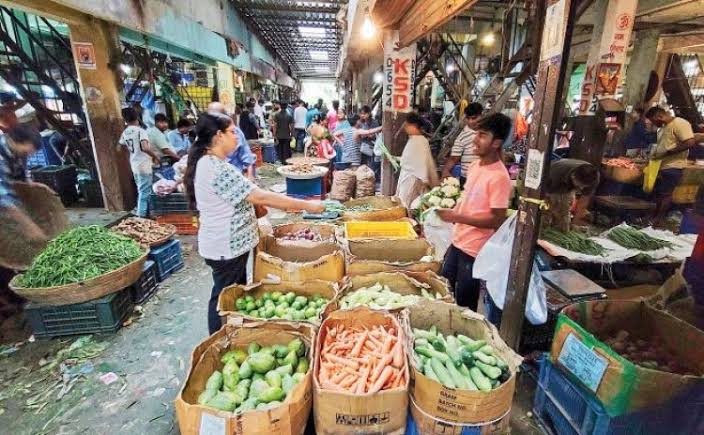
India’s inflation outlook is becoming increasingly difficult for policymakers as rising food prices threaten to push retail inflation close to the upper limit of the Reserve Bank of India’s target range. The pressure is significant because food accounts for nearly 40% of the consumer price index, making the cost of essential items a major influence on the overall inflation figure. A Reuters poll of 36 economists estimated that annual consumer inflation could rise to 5.93% in October, compared with 5.54% in September.
The forecast comes after several months of pressure on food supplies. An uneven and deficient monsoon has affected the availability of important agricultural products, while higher international prices have increased the cost of imported commodities, particularly edible oils. Onion prices have nearly doubled since the beginning of the year, and increases in meat, milk and eggs suggest that households are facing pressure across several food categories rather than from one isolated shortage.
The concern for the RBI is not simply that inflation may rise for one month. Persistent increases in food prices can influence household spending, business costs and public expectations about the future cost of living. If these pressures spread into other parts of the economy, controlling inflation could become more difficult even after the immediate supply disruptions ease.
The Food Supply Problem Behind Rising Prices
The monsoon remains a major influence on India’s agricultural output, despite improvements in irrigation and farming technology. Rainfall that is deficient or unevenly distributed can affect crop development, harvesting schedules and the availability of produce in wholesale markets. The national rainfall figure alone does not always reveal the extent of the problem, because agricultural conditions can differ considerably between states and even between neighbouring districts.
The impact is particularly visible in vegetables such as onions, whose prices can change sharply when supplies tighten. Onions are widely used in Indian cooking, and sudden increases affect households across income groups. Their importance in everyday consumption means that price movements can quickly become a political and economic concern.
The rise in protein-rich foods adds another dimension. Meat, milk and eggs are not affected by the same production cycle as vegetables, but their prices can respond to higher feed, transport and distribution costs. When several categories become more expensive at the same time, households have fewer opportunities to substitute cheaper products without changing their diets.
Food inflation is therefore not merely an agricultural issue. It is closely connected to transport networks, storage facilities, wholesale markets, imports and the ability of the supply chain to move products efficiently from farms to consumers. Weakness at any of these stages can increase the final price paid by households.
The RBI Has Limited Direct Control Over Food Prices
The Reserve Bank’s inflation target is 4%, with a tolerance band of 2% to 6%. An October reading of 5.93%, if confirmed, would leave inflation very close to the upper boundary. The forecast is particularly important because inflation has already remained above the central bank’s medium-term target for several months.
However, interest-rate policy cannot directly resolve a shortage of onions, milk or other agricultural products. Raising borrowing costs may reduce demand in parts of the economy, but it cannot immediately improve rainfall, increase crop yields or repair weaknesses in food distribution. This creates a difficult choice for the RBI: it must prevent inflation from becoming entrenched without imposing unnecessary pressure on economic activity.
The risk is that a temporary supply shock could gradually influence the wider price environment. Businesses facing higher food, transport and operating costs may increase the prices of their own products and services. Workers may also seek higher wages if household expenses continue rising. Such developments can make inflation more persistent, even when the original pressure came from agricultural supply.
The RBI must therefore assess not only the headline inflation figure but also the duration and spread of price increases. If food inflation begins affecting broader pricing behaviour, the central bank may have less room to wait for supply conditions to improve.
Households and Small Businesses Face the Immediate Impact
The effect of food inflation is particularly severe for lower-income households, which spend a larger proportion of their earnings on essential goods. A rise in the price of frequently purchased items can reduce the money available for education, transport, healthcare and other expenses. Even when the overall inflation rate appears manageable, families may experience a much sharper increase in their everyday cost of living.
Small restaurants, food retailers and catering businesses face a different but related problem. They must decide whether to absorb higher ingredient costs or pass them on to customers. Raising menu prices may discourage customers, while absorbing the increase can reduce already narrow profit margins. Businesses that depend on regular purchases of vegetables, cooking oils and dairy products can be particularly exposed to sudden price movements.
Food-processing companies also face pressure when raw materials become more expensive. Their ability to pass on the additional costs depends on competition, consumer demand and the availability of alternative suppliers. If higher procurement prices persist, the impact can eventually reach packaged food products and other retail categories.
The consequences can extend beyond the food sector. When households spend more on essential items, they may reduce discretionary purchases, affecting retailers and consumer-facing businesses. Sustained food inflation can therefore weaken demand in parts of the economy even when employment and income conditions remain relatively stable.
Global Markets Are Adding to Domestic Pressure
India’s dependence on imports for certain agricultural commodities makes domestic food prices sensitive to international markets. Edible oils are an important example. When global prices rise, import costs can increase even if domestic demand and production remain unchanged. Currency movements, shipping costs and supply disruptions can add further pressure.
The government can use trade measures, import adjustments and stock management to address shortages, but these tools have limitations. Imports may take time to arrive, and international prices may already be elevated. Export restrictions can help preserve domestic supplies in some circumstances, but they may also affect farmers’ earnings and create uncertainty for traders.
This makes the management of food inflation a balancing exercise. Policymakers must protect consumers from excessive price increases while avoiding measures that discourage agricultural production or disrupt the incentives of farmers and suppliers.
Improving storage, transport and market infrastructure is a longer-term requirement. Better cold-chain facilities and more efficient distribution can reduce wastage and make supplies less vulnerable to local disruptions. These investments will not eliminate the effects of a poor monsoon, but they can reduce the extent to which supply problems translate into sharp retail price increases.
December Rate Expectations Will Depend on the Inflation Data
The October estimate is based on an economists’ poll, not the official inflation release. The government was scheduled to publish the October consumer price index on November 12. The actual figure, its composition and the direction of food prices will be important for the RBI’s next policy decision.
Economists were already considering the possibility of another rate increase, with expectations that the repo rate could rise to 5.75% in December. However, the central bank will need to distinguish between a temporary food-price shock and a more persistent inflation problem. A moderation in supplies and prices could reduce the pressure for immediate action, while further increases across food categories could strengthen the case for tightening.
The broader issue is that India’s inflation challenge cannot be resolved through monetary policy alone. Interest rates can influence demand and expectations, but food affordability depends heavily on agricultural resilience, storage, distribution and the management of imports. The October forecast is a reminder that price stability remains closely linked to the country’s ability to keep essential food supplies available and affordable.
(Source:www.reuters.com)