


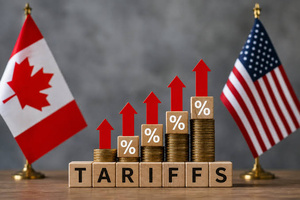
Canada has responded to the latest United States tariffs with a carefully targeted retaliation designed to do more than simply match Washington’s measures. The Canadian government has announced tariffs of 15, 25 and 50 percent on about C$27.6 billion, or roughly US$20 billion, of United States goods, with the measures scheduled to take effect on September 8. The action follows the collapse of recent trade negotiations and the United States decision to impose additional 50 percent tariffs on a similar value of Canadian goods.
The Canadian response is significant because Ottawa is combining trade retaliation with domestic financial support and political targeting. Rather than applying a blanket tariff to all American imports, Canada has selected products and industries where the measures can affect United States producers while limiting the immediate damage to Canadian supply chains. The government has also announced a C$7.5 billion package to support businesses and workers exposed to the consequences of the dispute.
The strategy reflects a difficult reality in the relationship between the two countries. Canada remains deeply dependent on access to the United States market, while many American producers also rely heavily on Canadian buyers. The new tariffs therefore turn mutual dependence into a source of bargaining power, but they also increase the risk that an increasingly political dispute will produce costs on both sides of the border.
Canada Is Targeting Vulnerable Points Rather Than All Trade
The structure of the Canadian measures indicates that Ottawa is attempting to make retaliation economically and politically selective. The tariffs cover around 700 products, including steel, aluminum, appliances, dairy products, seafood, agricultural equipment, machinery, electronics, furniture, paper products and other manufactured goods. The rates are matched to the corresponding United States tariffs rather than imposed uniformly across the entire American import base.
This approach matters because Canada cannot impose unlimited trade restrictions without hurting its own economy. The United States is Canada's overwhelmingly dominant trading partner, and many Canadian industries depend on American inputs, customers and integrated supply chains. A broad retaliation could therefore increase costs for Canadian manufacturers and consumers while weakening industries Ottawa is trying to protect.
The targeted list instead appears designed to create pressure where American exporters have an established commercial interest in the Canadian market. Steel, machinery, agricultural equipment, appliances and food products are examples of goods where Canadian buyers represent an important source of demand. By selecting these categories, Ottawa can impose costs on American producers while preserving access to goods that are particularly difficult for Canadian businesses to replace quickly.
The calculation also has a political dimension. Canadian officials have acknowledged that some products were selected partly because they could create pressure in particular United States states ahead of the November midterm elections. That means the retaliation is intended not only to defend Canadian industries but also to influence the domestic political cost of continued tariff escalation in Washington.
The Retaliation Is Designed to Change Washington’s Calculation
Canada's decision to match the United States tariffs rate for rate is important because it establishes a clear message: additional pressure on Canadian exporters will generate comparable pressure on American exporters. Ottawa is effectively attempting to prevent the United States from treating Canadian concessions as cost-free while using tariffs as a negotiating instrument.
The timing is equally significant. The new Canadian duties do not take effect immediately, creating a short period in which businesses can adjust and governments can reconsider their positions. This delay also leaves room for renewed negotiations if Washington and Ottawa decide that the economic costs of escalation outweigh the political benefits. Recent reporting indicates that the two sides had come close to an agreement before negotiations broke down over major differences in the proposed terms.
Canada's retaliation therefore serves two purposes at once. It provides an immediate response to the United States tariffs, while preserving the possibility of using the threat of further measures as leverage in future negotiations. Ottawa has also avoided extending the new countermeasures into some strategically important areas, including energy and certain critical inputs, reducing the risk of immediately disrupting parts of the Canadian economy that are difficult to replace.
That restraint suggests that Canada is trying to avoid turning economic retaliation into an uncontrolled trade blockade. The objective is pressure rather than maximum disruption. Whether Washington interprets that distinction as an invitation to negotiate or as evidence that Canada has limited room for escalation will determine how effective the strategy becomes.
Financial Support Reveals the Cost of Fighting Back
Canada's C$7.5 billion support package shows that retaliation cannot protect domestic businesses from every consequence of a trade war. Tariffs on American products may shield some Canadian producers from foreign competition, but they can also increase input costs for Canadian companies that depend on American components, equipment or materials.
The support programme is therefore intended to provide businesses with time to adjust while helping workers who may face reduced employment because of weaker exports. Among the measures are financing facilities for small and medium-sized businesses and additional assistance aimed at improving cash flow. The government has also indicated that the wider programme builds on almost C$25 billion in support measures introduced since the tariff conflict began.
The need for such assistance exposes a central weakness in retaliatory tariff policy. Tariffs can create bargaining power, but they do not remove the economic damage caused by the original restrictions. Canadian exporters still face higher costs or reduced access to the American market, while Canadian importers may have to pay more for selected American products.
The government is therefore attempting to redistribute some of the burden rather than eliminate it. Financial support can help viable companies survive a temporary disruption, but it cannot indefinitely compensate industries if cross-border trade becomes structurally less efficient. The longer the dispute continues, the more important it becomes for Canadian companies to find alternative suppliers and markets rather than relying entirely on government assistance.
The Bigger Risk Is Permanent Trade Fragmentation
The immediate dispute is about a relatively narrow group of goods, but its implications extend to the broader economic relationship. Canada and the United States have spent decades building deeply integrated supply chains, particularly in manufacturing, agriculture, energy and industrial production. Repeated tariff actions encourage companies to reconsider those relationships and build greater redundancy into their sourcing decisions.
That process could eventually reduce the efficiency created by North American economic integration. Companies that once relied on predictable cross-border trade may begin maintaining alternative suppliers, shifting production or redesigning distribution networks. Such changes are expensive, and once businesses make them, some may not reverse those decisions even if governments eventually remove the tariffs.
This is why the current confrontation is more consequential than the value of the targeted goods alone suggests. The United States and Canada conduct hundreds of billions of dollars in annual trade, and their economies are connected through industries that depend on components crossing the border multiple times during production. The longer tariffs remain in place, the greater the incentive for businesses to treat the border as a permanent economic risk rather than a relatively frictionless commercial boundary.
Canada's response consequently represents a calculated attempt to use economic interdependence as leverage without damaging the relationship beyond repair. The government is matching the United States tariffs, supporting exposed businesses and workers, and selecting products with both commercial and political significance. Yet the strategy has limits. If Washington and Ottawa continue escalating, retaliation could gradually shift from a negotiating instrument into a structural barrier to trade, making the economic relationship both costlier and less predictable for businesses on both sides.
(Source:www.channelnewsasia.com)
The Canadian response is significant because Ottawa is combining trade retaliation with domestic financial support and political targeting. Rather than applying a blanket tariff to all American imports, Canada has selected products and industries where the measures can affect United States producers while limiting the immediate damage to Canadian supply chains. The government has also announced a C$7.5 billion package to support businesses and workers exposed to the consequences of the dispute.
The strategy reflects a difficult reality in the relationship between the two countries. Canada remains deeply dependent on access to the United States market, while many American producers also rely heavily on Canadian buyers. The new tariffs therefore turn mutual dependence into a source of bargaining power, but they also increase the risk that an increasingly political dispute will produce costs on both sides of the border.
Canada Is Targeting Vulnerable Points Rather Than All Trade
The structure of the Canadian measures indicates that Ottawa is attempting to make retaliation economically and politically selective. The tariffs cover around 700 products, including steel, aluminum, appliances, dairy products, seafood, agricultural equipment, machinery, electronics, furniture, paper products and other manufactured goods. The rates are matched to the corresponding United States tariffs rather than imposed uniformly across the entire American import base.
This approach matters because Canada cannot impose unlimited trade restrictions without hurting its own economy. The United States is Canada's overwhelmingly dominant trading partner, and many Canadian industries depend on American inputs, customers and integrated supply chains. A broad retaliation could therefore increase costs for Canadian manufacturers and consumers while weakening industries Ottawa is trying to protect.
The targeted list instead appears designed to create pressure where American exporters have an established commercial interest in the Canadian market. Steel, machinery, agricultural equipment, appliances and food products are examples of goods where Canadian buyers represent an important source of demand. By selecting these categories, Ottawa can impose costs on American producers while preserving access to goods that are particularly difficult for Canadian businesses to replace quickly.
The calculation also has a political dimension. Canadian officials have acknowledged that some products were selected partly because they could create pressure in particular United States states ahead of the November midterm elections. That means the retaliation is intended not only to defend Canadian industries but also to influence the domestic political cost of continued tariff escalation in Washington.
The Retaliation Is Designed to Change Washington’s Calculation
Canada's decision to match the United States tariffs rate for rate is important because it establishes a clear message: additional pressure on Canadian exporters will generate comparable pressure on American exporters. Ottawa is effectively attempting to prevent the United States from treating Canadian concessions as cost-free while using tariffs as a negotiating instrument.
The timing is equally significant. The new Canadian duties do not take effect immediately, creating a short period in which businesses can adjust and governments can reconsider their positions. This delay also leaves room for renewed negotiations if Washington and Ottawa decide that the economic costs of escalation outweigh the political benefits. Recent reporting indicates that the two sides had come close to an agreement before negotiations broke down over major differences in the proposed terms.
Canada's retaliation therefore serves two purposes at once. It provides an immediate response to the United States tariffs, while preserving the possibility of using the threat of further measures as leverage in future negotiations. Ottawa has also avoided extending the new countermeasures into some strategically important areas, including energy and certain critical inputs, reducing the risk of immediately disrupting parts of the Canadian economy that are difficult to replace.
That restraint suggests that Canada is trying to avoid turning economic retaliation into an uncontrolled trade blockade. The objective is pressure rather than maximum disruption. Whether Washington interprets that distinction as an invitation to negotiate or as evidence that Canada has limited room for escalation will determine how effective the strategy becomes.
Financial Support Reveals the Cost of Fighting Back
Canada's C$7.5 billion support package shows that retaliation cannot protect domestic businesses from every consequence of a trade war. Tariffs on American products may shield some Canadian producers from foreign competition, but they can also increase input costs for Canadian companies that depend on American components, equipment or materials.
The support programme is therefore intended to provide businesses with time to adjust while helping workers who may face reduced employment because of weaker exports. Among the measures are financing facilities for small and medium-sized businesses and additional assistance aimed at improving cash flow. The government has also indicated that the wider programme builds on almost C$25 billion in support measures introduced since the tariff conflict began.
The need for such assistance exposes a central weakness in retaliatory tariff policy. Tariffs can create bargaining power, but they do not remove the economic damage caused by the original restrictions. Canadian exporters still face higher costs or reduced access to the American market, while Canadian importers may have to pay more for selected American products.
The government is therefore attempting to redistribute some of the burden rather than eliminate it. Financial support can help viable companies survive a temporary disruption, but it cannot indefinitely compensate industries if cross-border trade becomes structurally less efficient. The longer the dispute continues, the more important it becomes for Canadian companies to find alternative suppliers and markets rather than relying entirely on government assistance.
The Bigger Risk Is Permanent Trade Fragmentation
The immediate dispute is about a relatively narrow group of goods, but its implications extend to the broader economic relationship. Canada and the United States have spent decades building deeply integrated supply chains, particularly in manufacturing, agriculture, energy and industrial production. Repeated tariff actions encourage companies to reconsider those relationships and build greater redundancy into their sourcing decisions.
That process could eventually reduce the efficiency created by North American economic integration. Companies that once relied on predictable cross-border trade may begin maintaining alternative suppliers, shifting production or redesigning distribution networks. Such changes are expensive, and once businesses make them, some may not reverse those decisions even if governments eventually remove the tariffs.
This is why the current confrontation is more consequential than the value of the targeted goods alone suggests. The United States and Canada conduct hundreds of billions of dollars in annual trade, and their economies are connected through industries that depend on components crossing the border multiple times during production. The longer tariffs remain in place, the greater the incentive for businesses to treat the border as a permanent economic risk rather than a relatively frictionless commercial boundary.
Canada's response consequently represents a calculated attempt to use economic interdependence as leverage without damaging the relationship beyond repair. The government is matching the United States tariffs, supporting exposed businesses and workers, and selecting products with both commercial and political significance. Yet the strategy has limits. If Washington and Ottawa continue escalating, retaliation could gradually shift from a negotiating instrument into a structural barrier to trade, making the economic relationship both costlier and less predictable for businesses on both sides.
(Source:www.channelnewsasia.com)
