


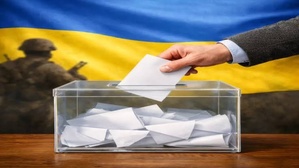
Ukraine is entering a new phase of political uncertainty as the war with Russia intensifies and disagreements within the country's leadership become increasingly public. Former Defence Minister Mykhailo Fedorov's call for presidential elections has transformed a long-running constitutional and wartime question into a direct political challenge to President Volodymyr Zelenskyy, at a moment when Kyiv is already dealing with military pressure, corruption investigations and growing arguments over the direction of wartime governance.
Fedorov's intervention came shortly after Zelenskyy formally moved to replace him with Yevhenii Khmara, effectively ending speculation that the former minister could return to government. His dismissal in July had already triggered protests and exposed tensions between the defence ministry and senior military leadership. His subsequent decision to demand elections therefore carries greater political weight than a simple argument over electoral procedure. It signals that a prominent former government insider is now challenging the political system that he previously served.
The timing is especially significant because Ukraine has not held a presidential election since 2019. Martial law, imposed after Russia's full-scale invasion in February 2022, prevents elections from being conducted under the existing legal framework. Zelenskyy's position is that elections can be held once adequate security conditions and a workable legal mechanism are established. But the longer the war continues, the more politically difficult it becomes to maintain an open-ended system in which normal electoral competition remains suspended.
Fedorov Turns A Wartime Dispute Into A Political Challenge
Fedorov's call for elections represents the clearest sign yet that wartime political unity is beginning to weaken. During the first years of the invasion, Ukraine's leadership largely presented political stability as essential to national survival. Public criticism of the government remained limited compared with the scale of the military emergency, while Zelenskyy became the central international and domestic symbol of resistance to Russia.
That political environment has changed. Fedorov, a former technology minister who became defence minister and gained prominence for Ukraine's development of drone warfare, was removed after a dispute with the military leadership. The dismissal produced unusually large public demonstrations for wartime Ukraine, with protesters questioning the government's decision and demanding changes in military leadership. The dispute eventually contributed to further changes at the top of the armed forces.
Fedorov's subsequent election demand suggests that the dispute is no longer confined to defence policy. His criticism has broadened into accusations that Ukraine's political system is resisting reform and that corruption and institutional weaknesses are damaging the country's ability to fight Russia. Those allegations remain political claims rather than established findings against the president, but they have gained significance because they are coming from a former senior official who was once closely associated with Zelenskyy's political movement.
The emergence of Fedorov as a potential political challenger also changes the calculations surrounding any future election. Polling cited in Ukrainian media has placed him among the figures capable of attracting substantial support, alongside former military commander Valerii Zaluzhnyi and Zelenskyy himself. That means the election debate is no longer only about democratic procedure. It is increasingly connected to the question of who could govern Ukraine when wartime politics eventually gives way to electoral competition.
Corruption Is Adding Pressure On Zelenskyy
The political uncertainty is being intensified by renewed corruption investigations involving people close to the presidential administration. Ukrainian anti-corruption authorities announced an investigation into an alleged network involving current and former lawmakers, financial executives and officials connected to Zelenskyy's office. Investigators said the case involved an alleged money-laundering operation and millions of dollars in funds connected to an earlier corruption scandal.
The investigation does not establish wrongdoing by Zelenskyy himself, and the allegations against individual officials must still be resolved through the legal process. Its political importance, however, is difficult to separate from the wider debate over wartime governance. Corruption has remained one of the most sensitive domestic issues in Ukraine because public confidence in state institutions is directly connected to the country's ability to mobilise resources and maintain support from European governments and other allies.
The latest investigation comes after a series of political controversies surrounding Zelenskyy's administration. The dismissal of Fedorov, changes within the military command and earlier cabinet restructuring have created an impression of a government repeatedly adjusting its internal balance while the war continues. Supporters can argue that such changes are necessary responses to an extraordinary military situation. Critics can argue that frequent reshuffles indicate deeper problems in decision-making and accountability.
This is where the election question becomes politically important. Delaying elections may be legally justified by the continuing war, but every new controversy gives opponents another opportunity to argue that wartime restrictions are allowing political accountability to remain suspended. The longer Ukraine remains under martial law, the more important it becomes for the government to demonstrate that exceptional powers are being used because of genuine security requirements rather than because political competition has become inconvenient.
The War Makes Political Stability Harder To Maintain
The military situation provides Zelenskyy with a powerful argument against immediate elections. Russia continues to attack Ukrainian cities with missiles and drones, while fighting remains active along a vast front. Energy infrastructure remains vulnerable, and civilian areas far from the battlefield can still come under attack. Under these circumstances, organising a nationwide campaign and guaranteeing safe access to polling stations would be extraordinarily difficult.
The electoral problem is also demographic. Millions of Ukrainians remain displaced inside the country, while millions more are living elsewhere in Europe under temporary protection arrangements. Hundreds of thousands of soldiers are serving in the armed forces, and millions of people remain in Russian-occupied territories where a free Ukrainian election cannot realistically be guaranteed.
These conditions mean that an election could create its own legitimacy problem. If large numbers of Ukrainians were unable to vote because they were displaced, serving at the front or living under Russian occupation, the eventual result could be challenged as unrepresentative. Russia would also have an obvious incentive to disrupt the process through cyberattacks, disinformation, missile strikes or attempts to exploit divisions among Ukrainian political groups.
Yet postponement carries a different risk. The absence of elections gives Russia an opportunity to portray Zelenskyy as a leader without a current electoral mandate, even though Ukrainian law provides for the continuation of presidential authority during martial law. Moscow has repeatedly used the issue as part of its broader effort to question the legitimacy of Ukraine's government.
Zelenskyy therefore faces a dilemma in which neither option is politically cost-free. Elections during an active war could expose the country to security and legitimacy problems, while indefinite postponement can deepen concerns about political accountability and provide Russia with material for its propaganda.
A Future Election Could Reshape Ukraine’s Leadership
The most important development may be that Ukraine's political contest is already beginning before an election can even be scheduled. Zelenskyy remains a leading political figure, but the emergence of Fedorov and Zaluzhnyi as potential alternatives demonstrates that the wartime political order is no longer as settled as it once appeared.
Zaluzhnyi has a particularly strong public profile because of his former role as commander of Ukraine's armed forces and his current position as ambassador to Britain. Fedorov represents a different type of challenge, built around technology, military innovation and reform. Both offer voters potential alternatives to the existing political establishment, although neither has formally declared a presidential campaign.
That emerging competition could become more significant if the war produces further military or economic difficulties. Zelenskyy's political standing will eventually depend not only on his wartime leadership but also on perceptions of corruption, military management, relations with Western allies and the government's ability to protect ordinary Ukrainians from the economic consequences of prolonged conflict.
The possibility of elections is therefore becoming inseparable from the broader question of what Ukraine's political system will look like after years of concentrated wartime decision-making. The country needs unity to continue resisting Russia, but it also needs functioning institutions capable of challenging decisions, investigating corruption and allowing political alternatives to emerge.
Fedorov's intervention has exposed that tension at a particularly difficult moment. Ukraine cannot easily return to normal electoral politics while Russian attacks continue, yet the continuing suspension of normal politics is itself creating pressure for greater accountability. As the battlefield remains uncertain and the political field becomes more competitive, Zelenskyy's challenge is increasingly not only to manage the war but also to preserve confidence that the exceptional political system created by the war will eventually give way to genuine democratic competition.
(Source:www.aljazeera.com)
Fedorov's intervention came shortly after Zelenskyy formally moved to replace him with Yevhenii Khmara, effectively ending speculation that the former minister could return to government. His dismissal in July had already triggered protests and exposed tensions between the defence ministry and senior military leadership. His subsequent decision to demand elections therefore carries greater political weight than a simple argument over electoral procedure. It signals that a prominent former government insider is now challenging the political system that he previously served.
The timing is especially significant because Ukraine has not held a presidential election since 2019. Martial law, imposed after Russia's full-scale invasion in February 2022, prevents elections from being conducted under the existing legal framework. Zelenskyy's position is that elections can be held once adequate security conditions and a workable legal mechanism are established. But the longer the war continues, the more politically difficult it becomes to maintain an open-ended system in which normal electoral competition remains suspended.
Fedorov Turns A Wartime Dispute Into A Political Challenge
Fedorov's call for elections represents the clearest sign yet that wartime political unity is beginning to weaken. During the first years of the invasion, Ukraine's leadership largely presented political stability as essential to national survival. Public criticism of the government remained limited compared with the scale of the military emergency, while Zelenskyy became the central international and domestic symbol of resistance to Russia.
That political environment has changed. Fedorov, a former technology minister who became defence minister and gained prominence for Ukraine's development of drone warfare, was removed after a dispute with the military leadership. The dismissal produced unusually large public demonstrations for wartime Ukraine, with protesters questioning the government's decision and demanding changes in military leadership. The dispute eventually contributed to further changes at the top of the armed forces.
Fedorov's subsequent election demand suggests that the dispute is no longer confined to defence policy. His criticism has broadened into accusations that Ukraine's political system is resisting reform and that corruption and institutional weaknesses are damaging the country's ability to fight Russia. Those allegations remain political claims rather than established findings against the president, but they have gained significance because they are coming from a former senior official who was once closely associated with Zelenskyy's political movement.
The emergence of Fedorov as a potential political challenger also changes the calculations surrounding any future election. Polling cited in Ukrainian media has placed him among the figures capable of attracting substantial support, alongside former military commander Valerii Zaluzhnyi and Zelenskyy himself. That means the election debate is no longer only about democratic procedure. It is increasingly connected to the question of who could govern Ukraine when wartime politics eventually gives way to electoral competition.
Corruption Is Adding Pressure On Zelenskyy
The political uncertainty is being intensified by renewed corruption investigations involving people close to the presidential administration. Ukrainian anti-corruption authorities announced an investigation into an alleged network involving current and former lawmakers, financial executives and officials connected to Zelenskyy's office. Investigators said the case involved an alleged money-laundering operation and millions of dollars in funds connected to an earlier corruption scandal.
The investigation does not establish wrongdoing by Zelenskyy himself, and the allegations against individual officials must still be resolved through the legal process. Its political importance, however, is difficult to separate from the wider debate over wartime governance. Corruption has remained one of the most sensitive domestic issues in Ukraine because public confidence in state institutions is directly connected to the country's ability to mobilise resources and maintain support from European governments and other allies.
The latest investigation comes after a series of political controversies surrounding Zelenskyy's administration. The dismissal of Fedorov, changes within the military command and earlier cabinet restructuring have created an impression of a government repeatedly adjusting its internal balance while the war continues. Supporters can argue that such changes are necessary responses to an extraordinary military situation. Critics can argue that frequent reshuffles indicate deeper problems in decision-making and accountability.
This is where the election question becomes politically important. Delaying elections may be legally justified by the continuing war, but every new controversy gives opponents another opportunity to argue that wartime restrictions are allowing political accountability to remain suspended. The longer Ukraine remains under martial law, the more important it becomes for the government to demonstrate that exceptional powers are being used because of genuine security requirements rather than because political competition has become inconvenient.
The War Makes Political Stability Harder To Maintain
The military situation provides Zelenskyy with a powerful argument against immediate elections. Russia continues to attack Ukrainian cities with missiles and drones, while fighting remains active along a vast front. Energy infrastructure remains vulnerable, and civilian areas far from the battlefield can still come under attack. Under these circumstances, organising a nationwide campaign and guaranteeing safe access to polling stations would be extraordinarily difficult.
The electoral problem is also demographic. Millions of Ukrainians remain displaced inside the country, while millions more are living elsewhere in Europe under temporary protection arrangements. Hundreds of thousands of soldiers are serving in the armed forces, and millions of people remain in Russian-occupied territories where a free Ukrainian election cannot realistically be guaranteed.
These conditions mean that an election could create its own legitimacy problem. If large numbers of Ukrainians were unable to vote because they were displaced, serving at the front or living under Russian occupation, the eventual result could be challenged as unrepresentative. Russia would also have an obvious incentive to disrupt the process through cyberattacks, disinformation, missile strikes or attempts to exploit divisions among Ukrainian political groups.
Yet postponement carries a different risk. The absence of elections gives Russia an opportunity to portray Zelenskyy as a leader without a current electoral mandate, even though Ukrainian law provides for the continuation of presidential authority during martial law. Moscow has repeatedly used the issue as part of its broader effort to question the legitimacy of Ukraine's government.
Zelenskyy therefore faces a dilemma in which neither option is politically cost-free. Elections during an active war could expose the country to security and legitimacy problems, while indefinite postponement can deepen concerns about political accountability and provide Russia with material for its propaganda.
A Future Election Could Reshape Ukraine’s Leadership
The most important development may be that Ukraine's political contest is already beginning before an election can even be scheduled. Zelenskyy remains a leading political figure, but the emergence of Fedorov and Zaluzhnyi as potential alternatives demonstrates that the wartime political order is no longer as settled as it once appeared.
Zaluzhnyi has a particularly strong public profile because of his former role as commander of Ukraine's armed forces and his current position as ambassador to Britain. Fedorov represents a different type of challenge, built around technology, military innovation and reform. Both offer voters potential alternatives to the existing political establishment, although neither has formally declared a presidential campaign.
That emerging competition could become more significant if the war produces further military or economic difficulties. Zelenskyy's political standing will eventually depend not only on his wartime leadership but also on perceptions of corruption, military management, relations with Western allies and the government's ability to protect ordinary Ukrainians from the economic consequences of prolonged conflict.
The possibility of elections is therefore becoming inseparable from the broader question of what Ukraine's political system will look like after years of concentrated wartime decision-making. The country needs unity to continue resisting Russia, but it also needs functioning institutions capable of challenging decisions, investigating corruption and allowing political alternatives to emerge.
Fedorov's intervention has exposed that tension at a particularly difficult moment. Ukraine cannot easily return to normal electoral politics while Russian attacks continue, yet the continuing suspension of normal politics is itself creating pressure for greater accountability. As the battlefield remains uncertain and the political field becomes more competitive, Zelenskyy's challenge is increasingly not only to manage the war but also to preserve confidence that the exceptional political system created by the war will eventually give way to genuine democratic competition.
(Source:www.aljazeera.com)
