


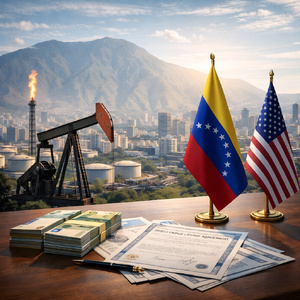
The United States has moved to significantly ease sanctions on Venezuela’s energy industry, granting wide-ranging authorizations that allow major international oil companies to operate, invest, and expand activities in the OPEC member state. The decision marks a calculated recalibration of policy, shifting from broad economic isolation toward a framework designed to channel foreign capital, restore oil output, and reshape geopolitical alignments in the Western Hemisphere.
At the heart of the policy shift lies a dual objective: stabilizing global energy markets while influencing Venezuela’s economic trajectory through controlled reintegration. By issuing general licenses that permit established oil majors to resume and expand operations alongside state-run PDVSA, Washington has created a pathway for large-scale investment under strict financial oversight. The approach signals that energy security and strategic leverage now outweigh the logic of blanket restrictions.
Reopening the Door to Global Energy Majors
Under the new licensing regime, international companies with longstanding stakes in Venezuelan joint ventures can operate oil and gas projects with fewer constraints. Firms such as Chevron, BP, Eni, Shell, and Repsol—many of which maintained technical presence or dormant partnerships during the sanctions period—now have broader scope to extract, export, and monetize hydrocarbons.
The authorizations are not unconditional. Royalties and tax payments linked to operations must be routed through a U.S.-controlled financial mechanism, ensuring that revenues are monitored and directed within a framework acceptable to Washington. This structure enables energy activity to resume without fully relinquishing leverage over the destination of proceeds.
In parallel, a second general license allows global firms to negotiate new contracts with PDVSA, subject to separate regulatory approvals. This provision is particularly significant because it invites fresh capital inflows into a sector that has suffered from years of underinvestment, operational decline, and infrastructure decay. By allowing companies to explore new production-sharing agreements or expand existing joint ventures, the U.S. is effectively signaling that Venezuela’s vast hydrocarbon reserves—among the largest proven oil reserves in the world—can once again be part of mainstream global supply.
Energy Security and Market Stability
The easing of sanctions unfolds against a backdrop of tight global energy markets and persistent geopolitical disruptions. Conflicts, supply chain vulnerabilities, and coordinated production strategies among major exporters have heightened concerns about price volatility and supply adequacy. In this environment, Venezuela’s dormant production capacity represents a strategic asset.
Before sanctions tightened in 2019, Venezuela produced well over 2 million barrels per day. Output later collapsed to a fraction of that level due to financial isolation, loss of technical expertise, and deteriorating infrastructure. Restoring even part of that capacity could ease pressure on global crude benchmarks and enhance supply diversification for U.S. refiners and allied economies.
For Washington, reintroducing Venezuelan barrels into global markets serves multiple purposes. It reduces dependence on adversarial producers, cushions domestic fuel markets, and strengthens regional energy integration. By enabling Western-aligned firms to expand operations, the U.S. also seeks to counterbalance the influence of Russia, Iran, and China, whose companies have cultivated ties with Caracas during years of sanctions-driven isolation.
The licenses explicitly restrict transactions involving entities linked to those countries, underscoring that the policy shift is not a blanket opening but a strategic realignment toward preferred partners.
Legal and Structural Reform in Caracas
The U.S. move follows sweeping reforms to Venezuela’s hydrocarbons law, which aim to make the sector more attractive to foreign investors. The updated framework grants greater operational autonomy to foreign producers, expands options for production-sharing agreements, and allows companies more flexibility in exporting and retaining proceeds.
These changes address longstanding concerns among international firms regarding governance, contract security, and profit repatriation. Historically, Venezuela’s energy policy—particularly during the wave of expropriations in the late 2000s—created an environment marked by legal uncertainty and arbitration disputes. By revising the legal architecture and signaling willingness to accommodate foreign participation, Caracas has laid groundwork for re-engagement.
From Washington’s perspective, linking sanctions relief to structural reform creates incentives for institutional adjustment. The easing of restrictions is thus both economic and political in design: it encourages policy shifts within Venezuela while maintaining oversight mechanisms that prevent unrestricted financial flows.
Financial Controls and Oversight Mechanisms
A defining feature of the new policy is the routing of oil revenues through monitored channels. Proceeds from exports are directed via designated funds before reaching Venezuelan authorities. This arrangement reflects Washington’s determination to prevent unrestricted access to oil income while still enabling commercial activity.
Such financial controls seek to strike a balance between engagement and accountability. Critics have raised questions about transparency and legal underpinnings of the arrangement, warning of potential governance risks. Supporters argue that without structured oversight, sanctions relief could undermine leverage or create unintended windfalls.
The controlled flow of funds allows the U.S. to retain influence over how revenues are deployed, reinforcing the principle that sanctions easing is conditional and reversible. It also reassures energy companies and financial institutions that transactions fall within authorized frameworks, reducing compliance risk.
Reviving Investment in a Depleted Sector
Years of sanctions, mismanagement, and capital flight have left Venezuela’s oil infrastructure in disrepair. Refineries operate below capacity, pipelines require maintenance, and drilling equipment has deteriorated. Foreign investment is essential not only for production growth but also for technical modernization.
Oil majors bring capital, engineering expertise, and global marketing networks. Their participation can accelerate field rehabilitation, improve operational efficiency, and expand export channels. For companies that previously wrote down assets or suspended operations, the new licenses offer an opportunity to recover value and secure long-term resource positions.
At the same time, firms remain cautious. The history of expropriations involving companies such as Exxon Mobil and ConocoPhillips continues to shape corporate risk assessments. While some companies are exploring renewed engagement, executives emphasize the need for durable legal guarantees and predictable regulatory conditions.
Beyond economics, the sanctions adjustment reflects a broader geopolitical calculus. Venezuela occupies a strategic location in the Western Hemisphere and possesses energy reserves that can influence regional dynamics. By re-engaging through licensed activity, Washington aims to reduce Caracas’ reliance on alternative partnerships that emerged during years of isolation.
Energy cooperation becomes a vehicle for diplomatic recalibration. Encouraging American and allied companies to play a “constructive role” aligns economic interests with strategic objectives. The policy signals that engagement, when structured and conditional, can be more effective than prolonged economic exclusion.
For Venezuela, the prospect of renewed investment and export growth offers a pathway toward economic stabilization. For the United States, easing sanctions under controlled conditions allows it to influence the terms of that recovery while advancing energy security priorities.
The evolution of U.S. sanctions policy toward Venezuela thus reflects a pragmatic recognition: restoring oil production through regulated engagement can serve both market stability and geopolitical strategy. By granting broad operational scope to major energy companies while maintaining financial oversight, Washington is redefining its approach to sanctions—shifting from isolation toward calibrated reintegration designed to reshape both economic flows and strategic alignments in the energy-rich nation.
(Source:www.pressreader.com)
At the heart of the policy shift lies a dual objective: stabilizing global energy markets while influencing Venezuela’s economic trajectory through controlled reintegration. By issuing general licenses that permit established oil majors to resume and expand operations alongside state-run PDVSA, Washington has created a pathway for large-scale investment under strict financial oversight. The approach signals that energy security and strategic leverage now outweigh the logic of blanket restrictions.
Reopening the Door to Global Energy Majors
Under the new licensing regime, international companies with longstanding stakes in Venezuelan joint ventures can operate oil and gas projects with fewer constraints. Firms such as Chevron, BP, Eni, Shell, and Repsol—many of which maintained technical presence or dormant partnerships during the sanctions period—now have broader scope to extract, export, and monetize hydrocarbons.
The authorizations are not unconditional. Royalties and tax payments linked to operations must be routed through a U.S.-controlled financial mechanism, ensuring that revenues are monitored and directed within a framework acceptable to Washington. This structure enables energy activity to resume without fully relinquishing leverage over the destination of proceeds.
In parallel, a second general license allows global firms to negotiate new contracts with PDVSA, subject to separate regulatory approvals. This provision is particularly significant because it invites fresh capital inflows into a sector that has suffered from years of underinvestment, operational decline, and infrastructure decay. By allowing companies to explore new production-sharing agreements or expand existing joint ventures, the U.S. is effectively signaling that Venezuela’s vast hydrocarbon reserves—among the largest proven oil reserves in the world—can once again be part of mainstream global supply.
Energy Security and Market Stability
The easing of sanctions unfolds against a backdrop of tight global energy markets and persistent geopolitical disruptions. Conflicts, supply chain vulnerabilities, and coordinated production strategies among major exporters have heightened concerns about price volatility and supply adequacy. In this environment, Venezuela’s dormant production capacity represents a strategic asset.
Before sanctions tightened in 2019, Venezuela produced well over 2 million barrels per day. Output later collapsed to a fraction of that level due to financial isolation, loss of technical expertise, and deteriorating infrastructure. Restoring even part of that capacity could ease pressure on global crude benchmarks and enhance supply diversification for U.S. refiners and allied economies.
For Washington, reintroducing Venezuelan barrels into global markets serves multiple purposes. It reduces dependence on adversarial producers, cushions domestic fuel markets, and strengthens regional energy integration. By enabling Western-aligned firms to expand operations, the U.S. also seeks to counterbalance the influence of Russia, Iran, and China, whose companies have cultivated ties with Caracas during years of sanctions-driven isolation.
The licenses explicitly restrict transactions involving entities linked to those countries, underscoring that the policy shift is not a blanket opening but a strategic realignment toward preferred partners.
Legal and Structural Reform in Caracas
The U.S. move follows sweeping reforms to Venezuela’s hydrocarbons law, which aim to make the sector more attractive to foreign investors. The updated framework grants greater operational autonomy to foreign producers, expands options for production-sharing agreements, and allows companies more flexibility in exporting and retaining proceeds.
These changes address longstanding concerns among international firms regarding governance, contract security, and profit repatriation. Historically, Venezuela’s energy policy—particularly during the wave of expropriations in the late 2000s—created an environment marked by legal uncertainty and arbitration disputes. By revising the legal architecture and signaling willingness to accommodate foreign participation, Caracas has laid groundwork for re-engagement.
From Washington’s perspective, linking sanctions relief to structural reform creates incentives for institutional adjustment. The easing of restrictions is thus both economic and political in design: it encourages policy shifts within Venezuela while maintaining oversight mechanisms that prevent unrestricted financial flows.
Financial Controls and Oversight Mechanisms
A defining feature of the new policy is the routing of oil revenues through monitored channels. Proceeds from exports are directed via designated funds before reaching Venezuelan authorities. This arrangement reflects Washington’s determination to prevent unrestricted access to oil income while still enabling commercial activity.
Such financial controls seek to strike a balance between engagement and accountability. Critics have raised questions about transparency and legal underpinnings of the arrangement, warning of potential governance risks. Supporters argue that without structured oversight, sanctions relief could undermine leverage or create unintended windfalls.
The controlled flow of funds allows the U.S. to retain influence over how revenues are deployed, reinforcing the principle that sanctions easing is conditional and reversible. It also reassures energy companies and financial institutions that transactions fall within authorized frameworks, reducing compliance risk.
Reviving Investment in a Depleted Sector
Years of sanctions, mismanagement, and capital flight have left Venezuela’s oil infrastructure in disrepair. Refineries operate below capacity, pipelines require maintenance, and drilling equipment has deteriorated. Foreign investment is essential not only for production growth but also for technical modernization.
Oil majors bring capital, engineering expertise, and global marketing networks. Their participation can accelerate field rehabilitation, improve operational efficiency, and expand export channels. For companies that previously wrote down assets or suspended operations, the new licenses offer an opportunity to recover value and secure long-term resource positions.
At the same time, firms remain cautious. The history of expropriations involving companies such as Exxon Mobil and ConocoPhillips continues to shape corporate risk assessments. While some companies are exploring renewed engagement, executives emphasize the need for durable legal guarantees and predictable regulatory conditions.
Beyond economics, the sanctions adjustment reflects a broader geopolitical calculus. Venezuela occupies a strategic location in the Western Hemisphere and possesses energy reserves that can influence regional dynamics. By re-engaging through licensed activity, Washington aims to reduce Caracas’ reliance on alternative partnerships that emerged during years of isolation.
Energy cooperation becomes a vehicle for diplomatic recalibration. Encouraging American and allied companies to play a “constructive role” aligns economic interests with strategic objectives. The policy signals that engagement, when structured and conditional, can be more effective than prolonged economic exclusion.
For Venezuela, the prospect of renewed investment and export growth offers a pathway toward economic stabilization. For the United States, easing sanctions under controlled conditions allows it to influence the terms of that recovery while advancing energy security priorities.
The evolution of U.S. sanctions policy toward Venezuela thus reflects a pragmatic recognition: restoring oil production through regulated engagement can serve both market stability and geopolitical strategy. By granting broad operational scope to major energy companies while maintaining financial oversight, Washington is redefining its approach to sanctions—shifting from isolation toward calibrated reintegration designed to reshape both economic flows and strategic alignments in the energy-rich nation.
(Source:www.pressreader.com)
