


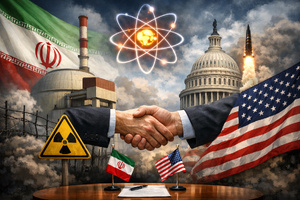
Diplomatic movement between the United States and Iran has often followed a familiar rhythm: escalation, pause, indirect talks, and renewed tension. Yet beneath the surface of repeated crises lies a structural question that has shaped every serious attempt at negotiation between the two adversaries—whether the nuclear file should stand alone or be entangled with the broader web of regional and security disputes. A senior Iranian official’s recent assertion that a deal is possible if nuclear and non-nuclear issues are separated reflects more than tactical positioning. It highlights a fundamental divergence in negotiating philosophy that has repeatedly stalled progress.
For Tehran, the argument is straightforward. The nuclear program, sanctions relief, and compliance mechanisms constitute a defined, technical dispute rooted in international law and treaty obligations. Missile capabilities, regional alliances, and ideological posturing belong to a different strategic arena. By separating the tracks, Iran believes an agreement could be revived or reconstructed around nuclear transparency and sanctions relief without being weighed down by unrelated demands.
Washington, however, has increasingly viewed Iran’s nuclear advances as inseparable from its regional behavior. Successive U.S. administrations have argued that enrichment capability, ballistic missile development, and support for allied armed groups collectively shape Iran’s leverage in the Middle East. The debate over separation is therefore not procedural—it is strategic.
The Logic Behind Issue Separation
The case for separating nuclear and non-nuclear matters rests on precedent. The 2015 Joint Comprehensive Plan of Action (JCPOA) was narrowly constructed around uranium enrichment limits, inspections, and phased sanctions relief. It did not resolve regional rivalries or missile disputes. By design, it treated the nuclear issue as a discrete non-proliferation challenge. That structure enabled detailed technical bargaining between experts and reduced ideological confrontation.
From Tehran’s perspective, returning to that model—or adapting it—could recreate a framework where progress is measurable. Nuclear constraints can be verified by international inspectors. Centrifuge counts, enrichment levels, and stockpile quantities are quantifiable. Sanctions relief, too, can be sequenced and monitored. Missile policy and regional alignments, by contrast, involve sovereignty and long-term security doctrines that Iran is unlikely to negotiate under pressure.
Separation would also allow negotiators to narrow gaps incrementally. Iranian officials have repeatedly signaled willingness to accept limits on enrichment levels, enhanced monitoring, and confidence-building measures, provided sanctions tied to the nuclear program are lifted. By isolating this exchange, each side could test compliance without committing to broader geopolitical compromises.
Sanctions Relief as Central Incentive
Sanctions remain the core leverage mechanism in U.S. policy toward Iran. Over the past decade, restrictions on oil exports, banking access, shipping, and foreign investment have deeply affected Iran’s economy. Inflation, currency depreciation, and constrained trade have generated domestic pressure within the country. Iranian leadership understands that economic stabilization depends significantly on sanctions relief.
Yet sanctions are layered. Some are tied explicitly to nuclear concerns; others relate to terrorism designations, missile proliferation, or human rights issues. Tehran’s proposal to separate nuclear from non-nuclear issues implicitly seeks clarity in this architecture. If nuclear-related sanctions can be lifted in exchange for verifiable limits, negotiators avoid the ambiguity that has previously undermined trust.
From Washington’s standpoint, disentangling sanctions regimes carries political complexity. Lawmakers and regional partners often resist relief unless broader behavior changes accompany it. However, advocates of a compartmentalized deal argue that partial economic relief in return for nuclear rollback reduces immediate proliferation risks and creates space for later discussions on regional security.
Ballistic Missiles and Regional Policy as Sticking Points
The most persistent obstacle to issue separation has been Iran’s ballistic missile program. U.S. officials have described it as destabilizing and potentially capable of delivering nuclear payloads. Iran counters that its missiles are conventional deterrence tools developed in response to decades of isolation and regional threats.
By insisting that missile policy remain outside nuclear talks, Tehran signals that its defense doctrine is non-negotiable in the short term. The argument is that linking missiles to nuclear talks effectively transforms a technical non-proliferation negotiation into a comprehensive security overhaul—something neither side is prepared to conclude swiftly.
Regional alliances pose a similar challenge. Iran’s relationships with armed groups across the Middle East are central to its strategic depth. Washington views these ties as a source of instability. Yet folding these disputes into nuclear negotiations expands the agenda to the point where consensus becomes elusive.
Supporters of separation contend that a narrower deal reduces risk. If nuclear activities are constrained and monitored, the most immediate proliferation threat is contained, even if broader tensions persist.
Military Pressure and Diplomatic Leverage
Diplomacy between Washington and Tehran rarely unfolds in isolation from military signaling. U.S. deployments in the region, including aircraft carriers and advanced fighter jets, are often interpreted as pressure tactics aimed at strengthening Washington’s negotiating position. Iran, in turn, signals deterrence through missile tests or regional maneuvering.
This dual track of pressure and negotiation complicates trust. Yet history suggests that periods of heightened tension have sometimes preceded breakthroughs. Advocates of issue separation argue that removing peripheral disputes from the negotiating table can prevent military posturing from overwhelming technical talks.
By confining negotiations to enrichment limits, inspection protocols, and sanctions sequencing, diplomats can shield progress from broader geopolitical turbulence. In this view, a nuclear-only deal becomes a stabilizing mechanism rather than a comprehensive reconciliation.
Internal political dynamics also influence the feasibility of separation. In Iran, economic strain has heightened public scrutiny of foreign policy outcomes. Leadership must balance ideological commitments with practical economic needs. Presenting a nuclear-focused agreement as a defense of peaceful nuclear rights, coupled with economic relief, may be more politically sustainable than broader concessions.
In the United States, administrations face congressional oversight and electoral considerations. A narrowly defined nuclear agreement can be framed as a non-proliferation achievement rather than a sweeping geopolitical accommodation. This framing may ease domestic resistance compared to a deal perceived as legitimizing Iran’s regional role.
Both sides therefore have incentives to reduce the scope of talks. Limiting negotiations lowers the political cost of compromise.
Sequencing and Verification as Confidence Builders
For separation to succeed, sequencing becomes critical. Iran would likely need to scale back enrichment levels, dilute stockpiles, or cap centrifuge expansion in defined phases. In parallel, the United States would need to specify which sanctions are lifted and on what timeline. Clear milestones could create mutual accountability.
Verification mechanisms would anchor the arrangement. International inspectors, access to facilities, and transparent reporting could provide reassurance. A focused agreement reduces ambiguity over compliance, enabling disputes to be resolved through technical channels rather than political confrontation.
Such a structure does not eliminate distrust, but it contains it within manageable parameters.
A compartmentalized agreement would not resolve the broader rivalry between Washington and Tehran. Regional competition, ideological hostility, and alliances would remain. Yet separating the nuclear file could stabilize the most volatile dimension of the relationship.
Preventing escalation over enrichment activities reduces the risk of pre-emptive strikes or retaliatory attacks. It also lowers the probability of regional actors intervening militarily. In that sense, a nuclear-only framework functions as a firewall—insulating one domain from the cascading effects of others.
Critics argue that such separation merely postpones deeper conflicts. Supporters counter that diplomacy often proceeds incrementally. Addressing one dimension at a time may be the only realistic path in a relationship marked by decades of mistrust.
The prospect of a deal emerging from separated tracks reflects a pragmatic recognition on both sides: comprehensive reconciliation is unlikely in the near term. Yet limiting nuclear escalation is achievable if negotiators resist expanding the agenda beyond what can be credibly enforced. In an environment where every concession carries strategic weight, narrowing the focus may paradoxically widen the path to agreement.
(Source:www.iraninti,com)
For Tehran, the argument is straightforward. The nuclear program, sanctions relief, and compliance mechanisms constitute a defined, technical dispute rooted in international law and treaty obligations. Missile capabilities, regional alliances, and ideological posturing belong to a different strategic arena. By separating the tracks, Iran believes an agreement could be revived or reconstructed around nuclear transparency and sanctions relief without being weighed down by unrelated demands.
Washington, however, has increasingly viewed Iran’s nuclear advances as inseparable from its regional behavior. Successive U.S. administrations have argued that enrichment capability, ballistic missile development, and support for allied armed groups collectively shape Iran’s leverage in the Middle East. The debate over separation is therefore not procedural—it is strategic.
The Logic Behind Issue Separation
The case for separating nuclear and non-nuclear matters rests on precedent. The 2015 Joint Comprehensive Plan of Action (JCPOA) was narrowly constructed around uranium enrichment limits, inspections, and phased sanctions relief. It did not resolve regional rivalries or missile disputes. By design, it treated the nuclear issue as a discrete non-proliferation challenge. That structure enabled detailed technical bargaining between experts and reduced ideological confrontation.
From Tehran’s perspective, returning to that model—or adapting it—could recreate a framework where progress is measurable. Nuclear constraints can be verified by international inspectors. Centrifuge counts, enrichment levels, and stockpile quantities are quantifiable. Sanctions relief, too, can be sequenced and monitored. Missile policy and regional alignments, by contrast, involve sovereignty and long-term security doctrines that Iran is unlikely to negotiate under pressure.
Separation would also allow negotiators to narrow gaps incrementally. Iranian officials have repeatedly signaled willingness to accept limits on enrichment levels, enhanced monitoring, and confidence-building measures, provided sanctions tied to the nuclear program are lifted. By isolating this exchange, each side could test compliance without committing to broader geopolitical compromises.
Sanctions Relief as Central Incentive
Sanctions remain the core leverage mechanism in U.S. policy toward Iran. Over the past decade, restrictions on oil exports, banking access, shipping, and foreign investment have deeply affected Iran’s economy. Inflation, currency depreciation, and constrained trade have generated domestic pressure within the country. Iranian leadership understands that economic stabilization depends significantly on sanctions relief.
Yet sanctions are layered. Some are tied explicitly to nuclear concerns; others relate to terrorism designations, missile proliferation, or human rights issues. Tehran’s proposal to separate nuclear from non-nuclear issues implicitly seeks clarity in this architecture. If nuclear-related sanctions can be lifted in exchange for verifiable limits, negotiators avoid the ambiguity that has previously undermined trust.
From Washington’s standpoint, disentangling sanctions regimes carries political complexity. Lawmakers and regional partners often resist relief unless broader behavior changes accompany it. However, advocates of a compartmentalized deal argue that partial economic relief in return for nuclear rollback reduces immediate proliferation risks and creates space for later discussions on regional security.
Ballistic Missiles and Regional Policy as Sticking Points
The most persistent obstacle to issue separation has been Iran’s ballistic missile program. U.S. officials have described it as destabilizing and potentially capable of delivering nuclear payloads. Iran counters that its missiles are conventional deterrence tools developed in response to decades of isolation and regional threats.
By insisting that missile policy remain outside nuclear talks, Tehran signals that its defense doctrine is non-negotiable in the short term. The argument is that linking missiles to nuclear talks effectively transforms a technical non-proliferation negotiation into a comprehensive security overhaul—something neither side is prepared to conclude swiftly.
Regional alliances pose a similar challenge. Iran’s relationships with armed groups across the Middle East are central to its strategic depth. Washington views these ties as a source of instability. Yet folding these disputes into nuclear negotiations expands the agenda to the point where consensus becomes elusive.
Supporters of separation contend that a narrower deal reduces risk. If nuclear activities are constrained and monitored, the most immediate proliferation threat is contained, even if broader tensions persist.
Military Pressure and Diplomatic Leverage
Diplomacy between Washington and Tehran rarely unfolds in isolation from military signaling. U.S. deployments in the region, including aircraft carriers and advanced fighter jets, are often interpreted as pressure tactics aimed at strengthening Washington’s negotiating position. Iran, in turn, signals deterrence through missile tests or regional maneuvering.
This dual track of pressure and negotiation complicates trust. Yet history suggests that periods of heightened tension have sometimes preceded breakthroughs. Advocates of issue separation argue that removing peripheral disputes from the negotiating table can prevent military posturing from overwhelming technical talks.
By confining negotiations to enrichment limits, inspection protocols, and sanctions sequencing, diplomats can shield progress from broader geopolitical turbulence. In this view, a nuclear-only deal becomes a stabilizing mechanism rather than a comprehensive reconciliation.
Internal political dynamics also influence the feasibility of separation. In Iran, economic strain has heightened public scrutiny of foreign policy outcomes. Leadership must balance ideological commitments with practical economic needs. Presenting a nuclear-focused agreement as a defense of peaceful nuclear rights, coupled with economic relief, may be more politically sustainable than broader concessions.
In the United States, administrations face congressional oversight and electoral considerations. A narrowly defined nuclear agreement can be framed as a non-proliferation achievement rather than a sweeping geopolitical accommodation. This framing may ease domestic resistance compared to a deal perceived as legitimizing Iran’s regional role.
Both sides therefore have incentives to reduce the scope of talks. Limiting negotiations lowers the political cost of compromise.
Sequencing and Verification as Confidence Builders
For separation to succeed, sequencing becomes critical. Iran would likely need to scale back enrichment levels, dilute stockpiles, or cap centrifuge expansion in defined phases. In parallel, the United States would need to specify which sanctions are lifted and on what timeline. Clear milestones could create mutual accountability.
Verification mechanisms would anchor the arrangement. International inspectors, access to facilities, and transparent reporting could provide reassurance. A focused agreement reduces ambiguity over compliance, enabling disputes to be resolved through technical channels rather than political confrontation.
Such a structure does not eliminate distrust, but it contains it within manageable parameters.
A compartmentalized agreement would not resolve the broader rivalry between Washington and Tehran. Regional competition, ideological hostility, and alliances would remain. Yet separating the nuclear file could stabilize the most volatile dimension of the relationship.
Preventing escalation over enrichment activities reduces the risk of pre-emptive strikes or retaliatory attacks. It also lowers the probability of regional actors intervening militarily. In that sense, a nuclear-only framework functions as a firewall—insulating one domain from the cascading effects of others.
Critics argue that such separation merely postpones deeper conflicts. Supporters counter that diplomacy often proceeds incrementally. Addressing one dimension at a time may be the only realistic path in a relationship marked by decades of mistrust.
The prospect of a deal emerging from separated tracks reflects a pragmatic recognition on both sides: comprehensive reconciliation is unlikely in the near term. Yet limiting nuclear escalation is achievable if negotiators resist expanding the agenda beyond what can be credibly enforced. In an environment where every concession carries strategic weight, narrowing the focus may paradoxically widen the path to agreement.
(Source:www.iraninti,com)
