


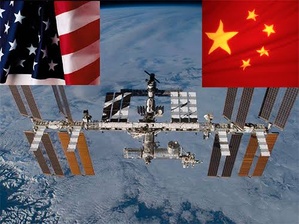
For decades, military satellites were largely treated as infrastructure: platforms that carried communications, navigation, surveillance and early-warning functions while remaining on relatively predictable orbital paths. That assumption is changing. The United States and China are increasingly developing spacecraft that can maneuver, inspect, approach, track and potentially interfere with other satellites, turning orbit into a more contested military environment.
The significance lies not simply in the number of satellites being launched, but in what those satellites can do once they reach orbit. A spacecraft capable of changing its position rapidly can potentially move toward another satellite, observe it at close range, protect a friendly asset or interfere with an adversary. Technologies developed for servicing, refueling and debris removal can also have military applications, making it increasingly difficult to distinguish between peaceful orbital maintenance and preparations for conflict.
Recent Chinese activity has reinforced concerns in Washington about this shift. A Chinese reusable spaceplane has been observed operating with another spacecraft after deploying a small satellite in orbit. The precise purpose of the mission remains unclear, but the ability to deploy and maneuver spacecraft in a crowded orbital environment is itself strategically significant. The United States operates its own highly classified reusable spaceplane, reflecting the fact that both sides increasingly regard orbital maneuverability as an important military capability.
From Passive Satellites To Orbital Hunters
The central change in space warfare is the emergence of what could be described as hunter satellites. Instead of simply collecting information or transmitting signals, these spacecraft can potentially pursue, inspect or interact with other objects in orbit.
China has demonstrated several capabilities that have attracted attention from U.S. military officials. Chinese spacecraft have conducted coordinated close approaches and unusual orbital maneuvers, while other missions have demonstrated the ability to move inactive satellites into different orbits. China has also pursued technologies associated with on-orbit servicing and refueling.
These capabilities have legitimate civilian applications. A spacecraft that can approach another satellite could repair it, extend its operational life or remove dangerous debris. Refueling could make commercial and scientific missions more sustainable. Robotic systems could eventually transform satellite maintenance in the same way that servicing transformed other forms of infrastructure.
The military significance, however, comes from the same technical foundation. A spacecraft capable of approaching another satellite does not necessarily need a conventional weapon to create a threat. It could potentially interfere with an opponent's operations, collect information at close range, obstruct its movement or create uncertainty about its intentions.
That ambiguity is strategically important. A satellite maneuvering toward another spacecraft may be conducting an inspection, testing a servicing system or preparing for something more aggressive. Ground controllers may have only limited information about the other side's intentions. This creates a new form of escalation in which miscalculation could become as dangerous as deliberate attack.
Why Washington Is Accelerating Its Response
The United States has strong reasons to protect its space advantage because so much of modern military power depends on satellites. Precision weapons, intelligence collection, missile warning, secure communications and global command networks all rely heavily on space-based systems.
That dependence creates a vulnerability. If an adversary could significantly disrupt American satellite networks at the beginning of a major conflict, the effects could spread far beyond space. Military forces on Earth could lose communications, navigation support or access to critical intelligence. A conflict that begins with attacks on satellites could therefore influence operations across air, land and sea.
This explains the increasingly forceful language coming from U.S. military leaders. Washington is investing not only in protecting satellites but also in systems designed to operate in a contested orbital environment. The United States is developing more resilient satellite architectures, improving space surveillance and fielding electromagnetic systems capable of disrupting satellite communications.
The broader American strategy is also moving toward greater orbital resilience. Instead of relying on a small number of highly valuable satellites, the United States is expanding networks of smaller spacecraft that can distribute military functions across larger constellations. The logic is straightforward: destroying or disabling one satellite should not be enough to cripple an entire capability.
The same principle is increasingly visible in missile defense. The United States is pursuing a layered architecture involving large numbers of satellites for missile detection, tracking and potentially interception. That makes space not merely a supporting environment for military operations but an increasingly important part of the weapons architecture itself.
China's expanding satellite networks are creating a parallel dynamic. Beijing is developing large communications constellations and expanding its intelligence, surveillance and reconnaissance capabilities. The result is a competition in which both sides are seeking not only better satellites but larger, more resilient and more militarily useful orbital networks.
The Danger Lies In Dual-Use Technology
The most difficult problem in the emerging competition is that many of the technologies involved cannot easily be classified as weapons. A satellite equipped with a robotic arm could repair another spacecraft or potentially disable it. A vehicle capable of refueling another satellite could extend a civilian mission or give a military spacecraft greater freedom of movement. A system designed to track objects could support space traffic management or enable military targeting.
This dual-use character complicates deterrence. Traditional military systems are comparatively easier to identify because their purpose is often explicit. In space, the same technology can serve commercial, scientific and military objectives.
The United States and China therefore face a security dilemma in which defensive preparations can appear offensive to the other side. Washington may view greater orbital maneuverability as necessary to protect its satellites. Beijing may interpret the same capability as preparation for attacking Chinese spacecraft. China may describe a servicing mission as peaceful while American officials assess the underlying technology as potentially useful for counterspace operations.
The result is a gradual erosion of the distinction between civilian space activity and military power. This competition is also occurring in an increasingly crowded orbital environment. Thousands of commercial and government satellites now operate around Earth, while both countries are planning much larger constellations. Greater congestion makes maneuvering more difficult and increases the possibility that routine operations could be misinterpreted.
The strategic consequence is that space warfare may not begin with a dramatic destruction of satellites. It could begin with surveillance, close approaches, electronic interference or attempts to demonstrate control over another spacecraft. That is why the emerging competition matters. The United States and China are not simply building more satellites. They are developing the ability to make those satellites more mobile, more resilient and potentially more capable of influencing one another.
If that trend continues, orbital superiority will increasingly depend on the ability to see, maneuver, protect, disrupt and recover in space. The decisive advantage may belong not to the country with the largest number of satellites, but to the one that can keep its network functioning while denying an opponent the same freedom of action.
The transformation is already underway. Space is becoming less like a remote support infrastructure and more like a contested operational domain in which satellites themselves may have to maneuver, defend and survive.
(Source:www.asianews.com)
The significance lies not simply in the number of satellites being launched, but in what those satellites can do once they reach orbit. A spacecraft capable of changing its position rapidly can potentially move toward another satellite, observe it at close range, protect a friendly asset or interfere with an adversary. Technologies developed for servicing, refueling and debris removal can also have military applications, making it increasingly difficult to distinguish between peaceful orbital maintenance and preparations for conflict.
Recent Chinese activity has reinforced concerns in Washington about this shift. A Chinese reusable spaceplane has been observed operating with another spacecraft after deploying a small satellite in orbit. The precise purpose of the mission remains unclear, but the ability to deploy and maneuver spacecraft in a crowded orbital environment is itself strategically significant. The United States operates its own highly classified reusable spaceplane, reflecting the fact that both sides increasingly regard orbital maneuverability as an important military capability.
From Passive Satellites To Orbital Hunters
The central change in space warfare is the emergence of what could be described as hunter satellites. Instead of simply collecting information or transmitting signals, these spacecraft can potentially pursue, inspect or interact with other objects in orbit.
China has demonstrated several capabilities that have attracted attention from U.S. military officials. Chinese spacecraft have conducted coordinated close approaches and unusual orbital maneuvers, while other missions have demonstrated the ability to move inactive satellites into different orbits. China has also pursued technologies associated with on-orbit servicing and refueling.
These capabilities have legitimate civilian applications. A spacecraft that can approach another satellite could repair it, extend its operational life or remove dangerous debris. Refueling could make commercial and scientific missions more sustainable. Robotic systems could eventually transform satellite maintenance in the same way that servicing transformed other forms of infrastructure.
The military significance, however, comes from the same technical foundation. A spacecraft capable of approaching another satellite does not necessarily need a conventional weapon to create a threat. It could potentially interfere with an opponent's operations, collect information at close range, obstruct its movement or create uncertainty about its intentions.
That ambiguity is strategically important. A satellite maneuvering toward another spacecraft may be conducting an inspection, testing a servicing system or preparing for something more aggressive. Ground controllers may have only limited information about the other side's intentions. This creates a new form of escalation in which miscalculation could become as dangerous as deliberate attack.
Why Washington Is Accelerating Its Response
The United States has strong reasons to protect its space advantage because so much of modern military power depends on satellites. Precision weapons, intelligence collection, missile warning, secure communications and global command networks all rely heavily on space-based systems.
That dependence creates a vulnerability. If an adversary could significantly disrupt American satellite networks at the beginning of a major conflict, the effects could spread far beyond space. Military forces on Earth could lose communications, navigation support or access to critical intelligence. A conflict that begins with attacks on satellites could therefore influence operations across air, land and sea.
This explains the increasingly forceful language coming from U.S. military leaders. Washington is investing not only in protecting satellites but also in systems designed to operate in a contested orbital environment. The United States is developing more resilient satellite architectures, improving space surveillance and fielding electromagnetic systems capable of disrupting satellite communications.
The broader American strategy is also moving toward greater orbital resilience. Instead of relying on a small number of highly valuable satellites, the United States is expanding networks of smaller spacecraft that can distribute military functions across larger constellations. The logic is straightforward: destroying or disabling one satellite should not be enough to cripple an entire capability.
The same principle is increasingly visible in missile defense. The United States is pursuing a layered architecture involving large numbers of satellites for missile detection, tracking and potentially interception. That makes space not merely a supporting environment for military operations but an increasingly important part of the weapons architecture itself.
China's expanding satellite networks are creating a parallel dynamic. Beijing is developing large communications constellations and expanding its intelligence, surveillance and reconnaissance capabilities. The result is a competition in which both sides are seeking not only better satellites but larger, more resilient and more militarily useful orbital networks.
The Danger Lies In Dual-Use Technology
The most difficult problem in the emerging competition is that many of the technologies involved cannot easily be classified as weapons. A satellite equipped with a robotic arm could repair another spacecraft or potentially disable it. A vehicle capable of refueling another satellite could extend a civilian mission or give a military spacecraft greater freedom of movement. A system designed to track objects could support space traffic management or enable military targeting.
This dual-use character complicates deterrence. Traditional military systems are comparatively easier to identify because their purpose is often explicit. In space, the same technology can serve commercial, scientific and military objectives.
The United States and China therefore face a security dilemma in which defensive preparations can appear offensive to the other side. Washington may view greater orbital maneuverability as necessary to protect its satellites. Beijing may interpret the same capability as preparation for attacking Chinese spacecraft. China may describe a servicing mission as peaceful while American officials assess the underlying technology as potentially useful for counterspace operations.
The result is a gradual erosion of the distinction between civilian space activity and military power. This competition is also occurring in an increasingly crowded orbital environment. Thousands of commercial and government satellites now operate around Earth, while both countries are planning much larger constellations. Greater congestion makes maneuvering more difficult and increases the possibility that routine operations could be misinterpreted.
The strategic consequence is that space warfare may not begin with a dramatic destruction of satellites. It could begin with surveillance, close approaches, electronic interference or attempts to demonstrate control over another spacecraft. That is why the emerging competition matters. The United States and China are not simply building more satellites. They are developing the ability to make those satellites more mobile, more resilient and potentially more capable of influencing one another.
If that trend continues, orbital superiority will increasingly depend on the ability to see, maneuver, protect, disrupt and recover in space. The decisive advantage may belong not to the country with the largest number of satellites, but to the one that can keep its network functioning while denying an opponent the same freedom of action.
The transformation is already underway. Space is becoming less like a remote support infrastructure and more like a contested operational domain in which satellites themselves may have to maneuver, defend and survive.
(Source:www.asianews.com)
