


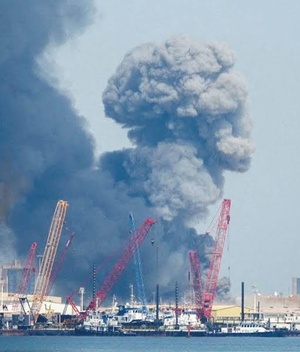
The financial consequences of the Iran conflict are becoming increasingly visible across Gulf economies, but the burden is proving far from uniform. As listed companies begin reporting quarterly earnings, investors are receiving one of the clearest assessments yet of how prolonged geopolitical instability has filtered into corporate balance sheets. Rather than producing a region-wide economic downturn, the conflict has created distinct winners and losers depending on industry, geography and exposure to international trade.
The latest earnings season comes after several months of military confrontation, disruptions to shipping routes and repeated swings in global energy markets. Although Gulf economies are often viewed collectively because of their dependence on hydrocarbons, recent developments suggest that resilience varies significantly from one country and one sector to another.
The emerging picture indicates that while energy producers and telecommunications companies have largely weathered the crisis, sectors tied to consumer confidence, international investment and cross-border trade are facing much greater pressure. The divergence reflects how modern Gulf economies have evolved beyond oil production, creating new areas of vulnerability whenever geopolitical tensions intensify.
Geography has become a major economic advantage
One of the strongest themes emerging from corporate performance is that geography has played an increasingly decisive role in determining economic resilience.
Countries with alternative export routes outside the Strait of Hormuz have generally been better positioned to manage supply disruptions than those almost entirely dependent on the strategic waterway. Saudi Arabia, for example, benefits from energy infrastructure connected to both the Gulf and the Red Sea, allowing crude exports to continue even when maritime risks increased in the Strait of Hormuz.
By contrast, economies whose energy exports, imports and commercial shipping rely almost exclusively on the narrow passage have faced greater uncertainty. The United Arab Emirates, Qatar and Kuwait remain more exposed whenever military tensions threaten shipping movements or insurance costs rise.
This geographic distinction has influenced investor confidence, business activity and economic expectations. It has also reinforced an important lesson for policymakers: physical infrastructure and export diversification can significantly reduce the economic impact of regional security crises.
The conflict has therefore highlighted that strategic logistics are becoming almost as important as natural resource wealth in determining economic resilience.
Corporate earnings expose sectoral inequality
While the regional economy continues functioning, company earnings are expected to demonstrate that the conflict has affected industries in markedly different ways.
Financial institutions have experienced slower business activity as higher uncertainty reduced international transactions, trade finance and consumer spending linked to travel. Banks remain well-capitalised, but lower lending activity and weaker fee generation are expected to weigh on profitability compared with earlier periods.
Property developers face an equally complex environment. Real estate markets across parts of the Gulf had already begun moderating following several years of exceptionally strong growth. The conflict has added another layer of caution among investors and expatriate buyers, slowing residential transactions and prompting some developers to preserve liquidity by delaying dividend payments or adjusting investment plans.
These pressures are particularly significant because banking and real estate have become central pillars of Gulf economic diversification strategies. Weakness in both sectors carries broader implications than fluctuations in individual corporate earnings.
In contrast, telecommunications companies have remained relatively insulated. Stable subscription revenues, long-term customer contracts and consistent demand for digital services have limited the immediate financial effects of geopolitical instability. The sector illustrates how predictable domestic demand can provide an important buffer during periods of external uncertainty.
Energy companies face opportunity alongside disruption
No industry better illustrates the complexity of the conflict than energy.
Military operations and shipping disruptions have interrupted production and logistics for some companies, particularly where facilities experienced operational challenges. At the same time, elevated oil and natural gas prices have substantially increased revenue opportunities across much of the sector.
Higher benchmark crude prices have offset production losses for many producers, allowing several companies to maintain strong earnings despite operational disruption. The conflict has introduced a geopolitical risk premium into global energy markets, supporting prices even as supply chains became more complicated. Recent market developments have shown that energy producers outside the immediate conflict zone have also benefited from stronger realized oil prices driven by supply concerns surrounding the Strait of Hormuz.
This combination of higher prices and selective operational disruption means that financial performance within the energy sector is likely to vary considerably between companies rather than follow a single regional trend.
The situation demonstrates that geopolitical crises can simultaneously create commercial opportunities and operational risks, depending on individual business models and infrastructure resilience.
Consumer confidence has become a key economic indicator
Beyond energy markets, the conflict has increasingly influenced consumer behaviour across Gulf economies.
Tourism, aviation and discretionary retail spending all experienced disruption during periods of heightened military activity. Although airline operations have gradually recovered as regional airspace stabilised, consumer confidence remains sensitive to renewed security concerns.
Retail businesses have encountered mixed conditions. While international tourism weakened during the height of the conflict, domestic consumption strengthened in several markets as residents shifted spending closer to home. Food delivery platforms, supermarkets and locally focused consumer services benefited from this behavioural adjustment, partially offsetting weakness in travel-related industries.
This divergence reflects a broader economic pattern often observed during periods of geopolitical uncertainty. Consumers rarely stop spending altogether; instead, they redirect expenditure toward goods and services perceived as less exposed to disruption.
For companies serving domestic markets, that adjustment has helped preserve revenue even while broader economic sentiment weakened.
Investors are focusing on balance-sheet strength
The earnings season is also highlighting another important distinction among Gulf companies: financial resilience increasingly depends on corporate balance sheets rather than sector classification alone.
Many of the region's largest listed companies entered the conflict with relatively low debt levels, substantial cash reserves and access to stable financing. These strengths have allowed businesses to continue investing, maintain operations and absorb temporary revenue declines without facing immediate financial stress.
Regional banks likewise continue benefiting from stable funding bases and strong capital positions despite slower credit growth. Property developers with conservative leverage have generally remained more resilient than companies that relied heavily on rapid sales growth before the conflict.
Investors are therefore placing greater emphasis on financial flexibility than on short-term earnings volatility. Companies capable of maintaining liquidity during periods of uncertainty are viewed as better positioned to recover once geopolitical conditions improve.
This shift in investor priorities suggests that balance-sheet quality may become an increasingly important competitive advantage if regional instability persists.
The conflict reinforces the cost of geopolitical risk
Perhaps the most significant lesson emerging from Gulf corporate earnings is that geopolitical risk affects economies through multiple channels rather than a single shock.
Higher shipping costs, elevated insurance premiums, changing consumer behaviour, delayed investment decisions and fluctuating energy prices all interact simultaneously. Even businesses with limited direct exposure to military operations can experience indirect consequences through financing conditions, weaker confidence or disrupted supply chains.
The uneven impact across sectors also demonstrates that economic diversification does not eliminate vulnerability to regional conflicts. Instead, diversification changes where the risks emerge. Financial services, tourism, property development and consumer industries now represent major engines of Gulf growth, making them increasingly sensitive to prolonged geopolitical uncertainty.
As renewed military exchanges and diplomatic tensions continue to cloud the regional outlook, many companies are adapting to an environment where periodic disruption may become part of normal business planning rather than an exceptional event. Recent sanctions, renewed attacks and uncertainty surrounding diplomatic efforts have reinforced expectations that geopolitical risk will remain embedded in regional investment decisions for the foreseeable future.
The latest earnings reports are therefore likely to reveal more than quarterly financial performance. They will provide a broader measure of how Gulf economies are adjusting to a security environment in which resilience depends not only on commodity prices, but also on geography, financial discipline, diversified business models and the ability to operate amid persistent uncertainty.
(Source:www.investing.com)
The latest earnings season comes after several months of military confrontation, disruptions to shipping routes and repeated swings in global energy markets. Although Gulf economies are often viewed collectively because of their dependence on hydrocarbons, recent developments suggest that resilience varies significantly from one country and one sector to another.
The emerging picture indicates that while energy producers and telecommunications companies have largely weathered the crisis, sectors tied to consumer confidence, international investment and cross-border trade are facing much greater pressure. The divergence reflects how modern Gulf economies have evolved beyond oil production, creating new areas of vulnerability whenever geopolitical tensions intensify.
Geography has become a major economic advantage
One of the strongest themes emerging from corporate performance is that geography has played an increasingly decisive role in determining economic resilience.
Countries with alternative export routes outside the Strait of Hormuz have generally been better positioned to manage supply disruptions than those almost entirely dependent on the strategic waterway. Saudi Arabia, for example, benefits from energy infrastructure connected to both the Gulf and the Red Sea, allowing crude exports to continue even when maritime risks increased in the Strait of Hormuz.
By contrast, economies whose energy exports, imports and commercial shipping rely almost exclusively on the narrow passage have faced greater uncertainty. The United Arab Emirates, Qatar and Kuwait remain more exposed whenever military tensions threaten shipping movements or insurance costs rise.
This geographic distinction has influenced investor confidence, business activity and economic expectations. It has also reinforced an important lesson for policymakers: physical infrastructure and export diversification can significantly reduce the economic impact of regional security crises.
The conflict has therefore highlighted that strategic logistics are becoming almost as important as natural resource wealth in determining economic resilience.
Corporate earnings expose sectoral inequality
While the regional economy continues functioning, company earnings are expected to demonstrate that the conflict has affected industries in markedly different ways.
Financial institutions have experienced slower business activity as higher uncertainty reduced international transactions, trade finance and consumer spending linked to travel. Banks remain well-capitalised, but lower lending activity and weaker fee generation are expected to weigh on profitability compared with earlier periods.
Property developers face an equally complex environment. Real estate markets across parts of the Gulf had already begun moderating following several years of exceptionally strong growth. The conflict has added another layer of caution among investors and expatriate buyers, slowing residential transactions and prompting some developers to preserve liquidity by delaying dividend payments or adjusting investment plans.
These pressures are particularly significant because banking and real estate have become central pillars of Gulf economic diversification strategies. Weakness in both sectors carries broader implications than fluctuations in individual corporate earnings.
In contrast, telecommunications companies have remained relatively insulated. Stable subscription revenues, long-term customer contracts and consistent demand for digital services have limited the immediate financial effects of geopolitical instability. The sector illustrates how predictable domestic demand can provide an important buffer during periods of external uncertainty.
Energy companies face opportunity alongside disruption
No industry better illustrates the complexity of the conflict than energy.
Military operations and shipping disruptions have interrupted production and logistics for some companies, particularly where facilities experienced operational challenges. At the same time, elevated oil and natural gas prices have substantially increased revenue opportunities across much of the sector.
Higher benchmark crude prices have offset production losses for many producers, allowing several companies to maintain strong earnings despite operational disruption. The conflict has introduced a geopolitical risk premium into global energy markets, supporting prices even as supply chains became more complicated. Recent market developments have shown that energy producers outside the immediate conflict zone have also benefited from stronger realized oil prices driven by supply concerns surrounding the Strait of Hormuz.
This combination of higher prices and selective operational disruption means that financial performance within the energy sector is likely to vary considerably between companies rather than follow a single regional trend.
The situation demonstrates that geopolitical crises can simultaneously create commercial opportunities and operational risks, depending on individual business models and infrastructure resilience.
Consumer confidence has become a key economic indicator
Beyond energy markets, the conflict has increasingly influenced consumer behaviour across Gulf economies.
Tourism, aviation and discretionary retail spending all experienced disruption during periods of heightened military activity. Although airline operations have gradually recovered as regional airspace stabilised, consumer confidence remains sensitive to renewed security concerns.
Retail businesses have encountered mixed conditions. While international tourism weakened during the height of the conflict, domestic consumption strengthened in several markets as residents shifted spending closer to home. Food delivery platforms, supermarkets and locally focused consumer services benefited from this behavioural adjustment, partially offsetting weakness in travel-related industries.
This divergence reflects a broader economic pattern often observed during periods of geopolitical uncertainty. Consumers rarely stop spending altogether; instead, they redirect expenditure toward goods and services perceived as less exposed to disruption.
For companies serving domestic markets, that adjustment has helped preserve revenue even while broader economic sentiment weakened.
Investors are focusing on balance-sheet strength
The earnings season is also highlighting another important distinction among Gulf companies: financial resilience increasingly depends on corporate balance sheets rather than sector classification alone.
Many of the region's largest listed companies entered the conflict with relatively low debt levels, substantial cash reserves and access to stable financing. These strengths have allowed businesses to continue investing, maintain operations and absorb temporary revenue declines without facing immediate financial stress.
Regional banks likewise continue benefiting from stable funding bases and strong capital positions despite slower credit growth. Property developers with conservative leverage have generally remained more resilient than companies that relied heavily on rapid sales growth before the conflict.
Investors are therefore placing greater emphasis on financial flexibility than on short-term earnings volatility. Companies capable of maintaining liquidity during periods of uncertainty are viewed as better positioned to recover once geopolitical conditions improve.
This shift in investor priorities suggests that balance-sheet quality may become an increasingly important competitive advantage if regional instability persists.
The conflict reinforces the cost of geopolitical risk
Perhaps the most significant lesson emerging from Gulf corporate earnings is that geopolitical risk affects economies through multiple channels rather than a single shock.
Higher shipping costs, elevated insurance premiums, changing consumer behaviour, delayed investment decisions and fluctuating energy prices all interact simultaneously. Even businesses with limited direct exposure to military operations can experience indirect consequences through financing conditions, weaker confidence or disrupted supply chains.
The uneven impact across sectors also demonstrates that economic diversification does not eliminate vulnerability to regional conflicts. Instead, diversification changes where the risks emerge. Financial services, tourism, property development and consumer industries now represent major engines of Gulf growth, making them increasingly sensitive to prolonged geopolitical uncertainty.
As renewed military exchanges and diplomatic tensions continue to cloud the regional outlook, many companies are adapting to an environment where periodic disruption may become part of normal business planning rather than an exceptional event. Recent sanctions, renewed attacks and uncertainty surrounding diplomatic efforts have reinforced expectations that geopolitical risk will remain embedded in regional investment decisions for the foreseeable future.
The latest earnings reports are therefore likely to reveal more than quarterly financial performance. They will provide a broader measure of how Gulf economies are adjusting to a security environment in which resilience depends not only on commodity prices, but also on geography, financial discipline, diversified business models and the ability to operate amid persistent uncertainty.
(Source:www.investing.com)
