

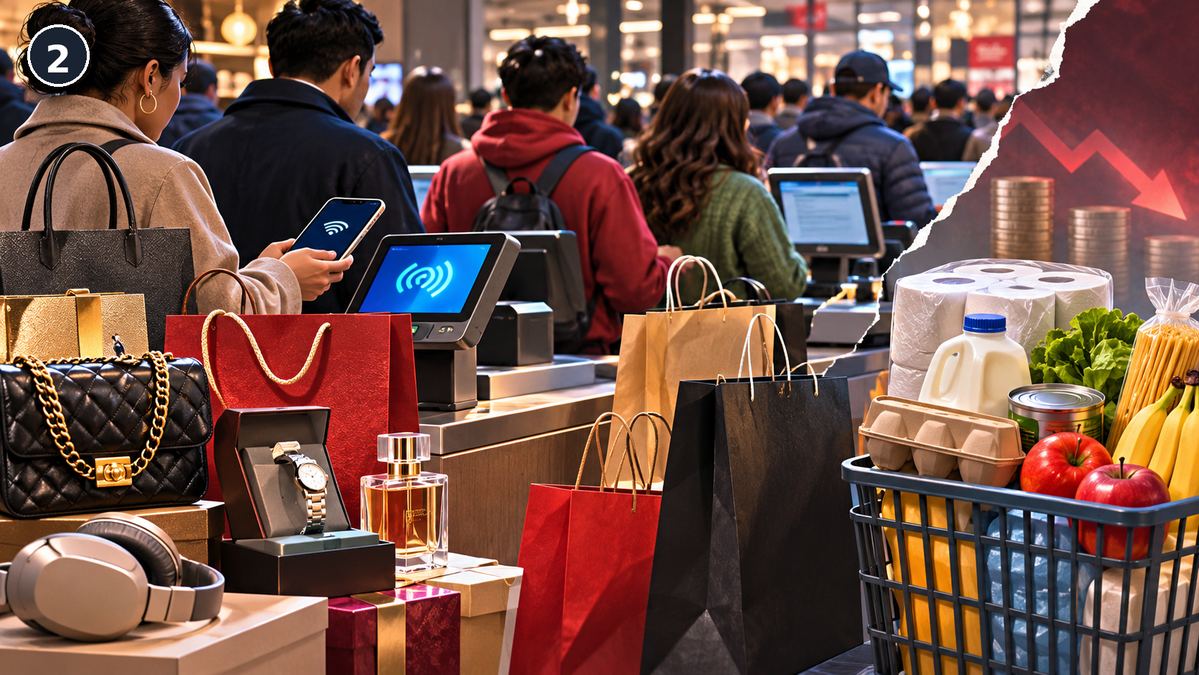
American online retail is heading towards another record Black Friday, but the expected increase in spending does not necessarily indicate that consumers have become more comfortable with their financial circumstances. Instead, the latest shopping figures point towards a market increasingly driven by discount hunting, digital convenience and consumers’ willingness to postpone purchases until retailers offer sufficiently attractive prices. The distinction matters because higher transaction values do not automatically translate into stronger underlying purchasing power.
Online spending in the United States reached an estimated $9.7 billion by 6:30 pm Eastern Time on Black Friday, representing a 12.8% increase from the corresponding period last year. Adobe Analytics projected the final figure would reach between $13 billion and $13.4 billion. The wider five-day period covering Thanksgiving through Cyber Monday was expected to generate approximately $47.5 billion in online spending, an increase of 7.4% year on year.
These figures demonstrate the continued strength of online retail, although they also need to be considered against inflation, elevated fuel costs and the wider pressure on household budgets. Consumers may be spending more because prices have increased, because they are buying larger quantities during promotional periods or because they are shifting purchases away from physical stores. Each possibility has different implications for retailers and the wider economy.
Higher Spending Does Not Necessarily Mean Greater Financial Confidence
The American retail sector is entering the holiday season with expectations of substantial sales growth. However, the increase in online expenditure needs to be separated from the question of how comfortably households can afford their purchases. When essential expenses absorb a larger share of disposable income, consumers tend to become more selective about discretionary spending and more dependent on promotional offers.
Black Friday has increasingly become an opportunity to purchase products that households might otherwise postpone buying. Electronics, computers, home appliances, clothing and personal goods are particularly suited to promotional campaigns because consumers can compare prices across retailers before making a decision. The availability of online discounts also allows shoppers to avoid the costs and inconvenience associated with travelling to physical stores.
This behaviour creates a different kind of retail demand from the traditional Black Friday shopping rush. Rather than buying immediately because a limited-time offer appears attractive, consumers can monitor prices, compare competing products and wait for a more favourable deal. Retailers therefore face pressure to offer discounts that are sufficiently competitive to convert interest into actual purchases.
The increase in sales should also be considered alongside the timing of promotions. Major retailers have increasingly extended Black Friday campaigns into October and early November, reducing the importance of the traditional shopping day. This allows companies to spread demand across several weeks, but it also makes the final sales figures less representative of a single shopping event.
Online Retailers Are Competing Beyond Price
The expected growth in online spending is also evidence of how significantly the American retail market has changed. Companies such as Walmart, Amazon and Target are competing through a combination of product availability, delivery infrastructure, loyalty programmes, promotional pricing and personalised shopping experiences. Their ability to attract customers increasingly depends on how effectively they integrate these elements rather than simply offering the largest discount.
Online platforms have an advantage because they can collect information about consumer preferences and shopping behaviour. This allows retailers to recommend products, adjust promotional offers and identify customers who are likely to abandon their shopping baskets. The same information can also help companies manage inventories and direct marketing expenditure towards products with stronger demand.
However, competition has become more difficult because consumers are no longer dependent on individual retailer websites for product discovery. Price comparison services, independent product reviews and artificial intelligence-based shopping tools allow customers to assess multiple alternatives before completing a purchase. Retailers consequently have less control over the information available to shoppers.
This development could gradually weaken the traditional advantage of large retailers that previously benefited from customer loyalty and established brand recognition. A consumer searching for a particular television or household appliance can compare several manufacturers and retailers within minutes. If another seller offers a better price or more favourable delivery conditions, the original retailer may lose the transaction.
Cyber Monday Extends the Battle for Consumer Spending
The projected performance of Cyber Monday indicates that the holiday shopping competition will continue beyond Black Friday. Adobe expected online spending on Cyber Monday to reach approximately $15.1 billion, representing an increase of 6.2% from the previous year. Saturday and Sunday spending were projected at $6.1 billion and $6.4 billion respectively.
The figures suggest that retailers are increasingly competing for an extended period of consumer attention rather than concentrating their efforts on a single promotional event. This creates opportunities to generate additional sales, but it also increases the cost of maintaining attractive offers over several weeks. Businesses must balance discounts against inventory costs, delivery expenses and profit margins.
The pressure is particularly significant for smaller retailers that cannot match the purchasing power, logistics infrastructure and advertising budgets of major online platforms. While smaller businesses can benefit from specialised products and customer relationships, they may struggle to compete when consumers focus primarily on price.
There is also a risk that excessive discounting could train customers to delay purchases until promotional periods. This makes it harder for retailers to maintain regular pricing throughout the year and can undermine profitability even when sales volumes increase.
The latest spending projections demonstrate that digital commerce remains an important driver of American retail activity. However, the underlying market is becoming more complicated. Consumers are increasingly informed, retailers have less control over product comparisons and promotional campaigns are becoming longer and more expensive.
For businesses, the challenge is no longer simply to attract more visitors to online stores. They must convert increasingly price-conscious consumers into profitable customers while maintaining reliable delivery, product quality and customer service. This is particularly important during the holiday season, when delays, stock shortages and poor service can quickly damage customer relationships.
The strongest retailers are likely to be those that understand the difference between generating a large number of transactions and building sustainable demand. A record Black Friday can provide a substantial boost to quarterly sales, but it cannot by itself establish whether consumers are financially confident or whether the wider economy is experiencing stronger household purchasing power.
The expected $13 billion-plus online spending figure is therefore significant, but its real meaning lies in the changing relationship between consumers and retailers. American shoppers continue to spend, although increasingly on their own terms, with price, convenience and timing determining where their money goes.
(Source:www.foxbusiness.com)