


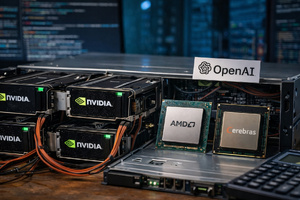
The rapid rise of generative artificial intelligence has turned advanced computing hardware into one of the most strategic resources in the technology industry. For years, the boom has been synonymous with the dominance of Nvidia, whose graphics processing units became the default engines for training large AI models. Yet as AI systems move from experimentation to mass deployment, a quieter but consequential shift is underway. OpenAI, the company behind ChatGPT, has grown dissatisfied with aspects of Nvidia’s latest chips and has been actively exploring alternatives, signaling that the next phase of AI competition will be shaped less by raw training power and more by speed, efficiency, and cost at scale.
This reassessment does not amount to a clean break. Nvidia remains deeply embedded in OpenAI’s infrastructure. But the search for complementary or alternative hardware reflects a structural change in how AI workloads are evolving—and why traditional assumptions about chip leadership are being challenged.
From training supremacy to the bottleneck of inference
The early AI arms race revolved around training ever-larger models, a task that rewards brute-force parallel computation. Nvidia’s GPUs excelled at this, allowing companies to process enormous datasets and refine neural networks with unprecedented speed. Training, however, is only the first act. Once models are deployed, they must respond to millions of real-time queries, a phase known as inference.
Inference places very different demands on hardware. Instead of long, compute-heavy training runs, inference requires rapid memory access, low latency, and predictable performance under constant load. For consumer-facing products like ChatGPT, even small delays can translate into a noticeably worse user experience. As OpenAI expanded its offerings—particularly tools aimed at developers and enterprise users—the limits of general-purpose GPU architectures became more apparent.
Engineers inside OpenAI began to focus on whether Nvidia’s chips, optimized for flexibility, were the best tools for high-volume inference. The concern was not that the chips were underpowered, but that they were not always optimized for the specific task of delivering fast, cost-effective responses at global scale.
Why speed matters more than raw power
In consumer AI, speed is not a luxury; it is a competitive differentiator. Users tolerate a brief pause when a system is generating a long essay, but they expect near-instant feedback when writing code, debugging software, or interacting with automated agents. OpenAI’s coding tools, which compete directly with products from Google and Anthropic, brought this issue into sharp relief.
Inference workloads spend a disproportionate amount of time moving data between memory and processing units. Traditional GPUs rely heavily on external memory, which introduces latency and consumes power. For OpenAI, that translated into slower responses for certain tasks and higher operating costs as usage scaled.
The dissatisfaction, according to people familiar with the matter, centered on these practical constraints rather than on headline performance metrics. OpenAI began looking for chips designed from the ground up for inference—hardware that trades some flexibility for speed and efficiency in narrowly defined workloads.
The appeal of specialized inference chips
This search led OpenAI to engage with a new generation of chipmakers focused on specialization. Companies such as Cerebras and Groq have built architectures that embed large amounts of fast memory directly on the chip. By minimizing the distance data must travel, these designs can deliver faster inference with lower energy consumption.
The technical distinction is subtle but crucial. Inference often involves repeatedly accessing model parameters stored in memory. Embedding static random-access memory (SRAM) on the same silicon die as the processor reduces bottlenecks and improves predictability. For AI systems serving millions of simultaneous requests, those gains compound quickly.
OpenAI’s interest in such architectures reflects a broader industry trend. As AI moves into everyday applications, the economics of inference—measured in milliseconds and cents per query—are becoming as important as the raw ability to train ever-larger models.
Nvidia’s response and the limits of dominance
Nvidia has not been blind to this shift. The company continues to argue that its chips offer the best overall performance and total cost of ownership, particularly when deployed at scale. It has also expanded its software ecosystem, making it easier for customers to optimize inference workloads on existing hardware.
At the same time, Nvidia has taken defensive steps to ensure that emerging alternatives do not erode its position. By licensing or acquiring complementary technologies and recruiting talent from specialized startups, it has sought to incorporate inference-focused innovations into its own roadmap.
Yet OpenAI’s exploration of alternatives illustrates a key vulnerability in Nvidia’s dominance. Leadership in one phase of the AI lifecycle does not automatically guarantee leadership in the next. As workloads diversify, customers with the scale and capital of OpenAI are incentivized to hedge their bets.
Competitive pressure from vertically integrated rivals
OpenAI’s reassessment also reflects competitive dynamics beyond Nvidia. Rivals such as Google and Anthropic benefit from access to custom chips designed in-house. Google’s tensor processing units, for example, are tightly integrated with its software stack and data centers, giving it more control over inference performance and cost.
By contrast, OpenAI relies on external suppliers for much of its hardware. That dependence magnifies the impact of any mismatch between workload and chip design. Exploring alternatives is not just about performance; it is about strategic independence and bargaining power in a market where demand for AI compute consistently outstrips supply.
The hardware debate is further complicated by financial relationships. Nvidia has been in talks to invest heavily in OpenAI, a move that would deepen their partnership while potentially limiting OpenAI’s flexibility to diversify its hardware stack. Negotiations stretching over months underscore how technical considerations can collide with strategic and financial interests.
Publicly, executives on both sides have emphasized mutual respect and ongoing collaboration. OpenAI has acknowledged that Nvidia’s chips still power the majority of its inference fleet, while Nvidia has dismissed reports of tension. Privately, however, the search for alternatives suggests that OpenAI is preparing for a future in which no single supplier can meet all of its needs.
An industry entering its efficiency phase
The broader implication is that the AI industry is entering an efficiency phase. Training breakthroughs still matter, but the commercial success of AI will increasingly depend on how cheaply and reliably models can be run in production. That shift favors specialization, architectural experimentation, and a more fragmented hardware ecosystem.
For OpenAI, dissatisfaction with certain Nvidia chips is less a rejection than a recalibration. It reflects a recognition that inference is becoming the dominant cost and performance driver for large-scale AI services. For Nvidia, it is a warning that maintaining leadership will require continual adaptation, not just incremental improvements.
As AI systems become embedded in everyday workflows, the chips behind them will matter as much as the algorithms themselves. The quiet search for alternatives underway at OpenAI suggests that the next chapter of the AI boom will be written not only in lines of code, but in silicon designed for speed, memory, and efficiency at scale.
(Source:www.reuters.com)
This reassessment does not amount to a clean break. Nvidia remains deeply embedded in OpenAI’s infrastructure. But the search for complementary or alternative hardware reflects a structural change in how AI workloads are evolving—and why traditional assumptions about chip leadership are being challenged.
From training supremacy to the bottleneck of inference
The early AI arms race revolved around training ever-larger models, a task that rewards brute-force parallel computation. Nvidia’s GPUs excelled at this, allowing companies to process enormous datasets and refine neural networks with unprecedented speed. Training, however, is only the first act. Once models are deployed, they must respond to millions of real-time queries, a phase known as inference.
Inference places very different demands on hardware. Instead of long, compute-heavy training runs, inference requires rapid memory access, low latency, and predictable performance under constant load. For consumer-facing products like ChatGPT, even small delays can translate into a noticeably worse user experience. As OpenAI expanded its offerings—particularly tools aimed at developers and enterprise users—the limits of general-purpose GPU architectures became more apparent.
Engineers inside OpenAI began to focus on whether Nvidia’s chips, optimized for flexibility, were the best tools for high-volume inference. The concern was not that the chips were underpowered, but that they were not always optimized for the specific task of delivering fast, cost-effective responses at global scale.
Why speed matters more than raw power
In consumer AI, speed is not a luxury; it is a competitive differentiator. Users tolerate a brief pause when a system is generating a long essay, but they expect near-instant feedback when writing code, debugging software, or interacting with automated agents. OpenAI’s coding tools, which compete directly with products from Google and Anthropic, brought this issue into sharp relief.
Inference workloads spend a disproportionate amount of time moving data between memory and processing units. Traditional GPUs rely heavily on external memory, which introduces latency and consumes power. For OpenAI, that translated into slower responses for certain tasks and higher operating costs as usage scaled.
The dissatisfaction, according to people familiar with the matter, centered on these practical constraints rather than on headline performance metrics. OpenAI began looking for chips designed from the ground up for inference—hardware that trades some flexibility for speed and efficiency in narrowly defined workloads.
The appeal of specialized inference chips
This search led OpenAI to engage with a new generation of chipmakers focused on specialization. Companies such as Cerebras and Groq have built architectures that embed large amounts of fast memory directly on the chip. By minimizing the distance data must travel, these designs can deliver faster inference with lower energy consumption.
The technical distinction is subtle but crucial. Inference often involves repeatedly accessing model parameters stored in memory. Embedding static random-access memory (SRAM) on the same silicon die as the processor reduces bottlenecks and improves predictability. For AI systems serving millions of simultaneous requests, those gains compound quickly.
OpenAI’s interest in such architectures reflects a broader industry trend. As AI moves into everyday applications, the economics of inference—measured in milliseconds and cents per query—are becoming as important as the raw ability to train ever-larger models.
Nvidia’s response and the limits of dominance
Nvidia has not been blind to this shift. The company continues to argue that its chips offer the best overall performance and total cost of ownership, particularly when deployed at scale. It has also expanded its software ecosystem, making it easier for customers to optimize inference workloads on existing hardware.
At the same time, Nvidia has taken defensive steps to ensure that emerging alternatives do not erode its position. By licensing or acquiring complementary technologies and recruiting talent from specialized startups, it has sought to incorporate inference-focused innovations into its own roadmap.
Yet OpenAI’s exploration of alternatives illustrates a key vulnerability in Nvidia’s dominance. Leadership in one phase of the AI lifecycle does not automatically guarantee leadership in the next. As workloads diversify, customers with the scale and capital of OpenAI are incentivized to hedge their bets.
Competitive pressure from vertically integrated rivals
OpenAI’s reassessment also reflects competitive dynamics beyond Nvidia. Rivals such as Google and Anthropic benefit from access to custom chips designed in-house. Google’s tensor processing units, for example, are tightly integrated with its software stack and data centers, giving it more control over inference performance and cost.
By contrast, OpenAI relies on external suppliers for much of its hardware. That dependence magnifies the impact of any mismatch between workload and chip design. Exploring alternatives is not just about performance; it is about strategic independence and bargaining power in a market where demand for AI compute consistently outstrips supply.
The hardware debate is further complicated by financial relationships. Nvidia has been in talks to invest heavily in OpenAI, a move that would deepen their partnership while potentially limiting OpenAI’s flexibility to diversify its hardware stack. Negotiations stretching over months underscore how technical considerations can collide with strategic and financial interests.
Publicly, executives on both sides have emphasized mutual respect and ongoing collaboration. OpenAI has acknowledged that Nvidia’s chips still power the majority of its inference fleet, while Nvidia has dismissed reports of tension. Privately, however, the search for alternatives suggests that OpenAI is preparing for a future in which no single supplier can meet all of its needs.
An industry entering its efficiency phase
The broader implication is that the AI industry is entering an efficiency phase. Training breakthroughs still matter, but the commercial success of AI will increasingly depend on how cheaply and reliably models can be run in production. That shift favors specialization, architectural experimentation, and a more fragmented hardware ecosystem.
For OpenAI, dissatisfaction with certain Nvidia chips is less a rejection than a recalibration. It reflects a recognition that inference is becoming the dominant cost and performance driver for large-scale AI services. For Nvidia, it is a warning that maintaining leadership will require continual adaptation, not just incremental improvements.
As AI systems become embedded in everyday workflows, the chips behind them will matter as much as the algorithms themselves. The quiet search for alternatives underway at OpenAI suggests that the next chapter of the AI boom will be written not only in lines of code, but in silicon designed for speed, memory, and efficiency at scale.
(Source:www.reuters.com)
