


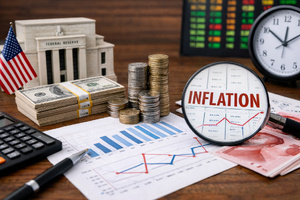
The U.S. Federal Reserve’s decision to keep interest rates unchanged reflects a central bank increasingly confident that the economy has moved into a more stable, if still delicate, phase. After years defined by inflation shocks, aggressive tightening, and recession fears, policymakers now see an environment where risks are no longer skewed sharply in one direction. Inflation remains above target, but it is no longer accelerating. The labor market is cooling, but not cracking. Against that backdrop, the Fed’s posture is one of strategic patience—waiting for clearer confirmation before altering the policy path again.
For investors, households, and businesses, the message is subtle but important: monetary policy is no longer reacting to crisis conditions but calibrating for durability. The decision to pause is not simply about holding rates steady; it is about preserving flexibility while the economy absorbs the cumulative effects of past tightening.
Why the Fed Is Comfortable Holding Rates Steady
At the core of the decision is the Fed’s assessment that its benchmark rate is close to a neutral setting—neither actively restraining nor stimulating growth. After a rapid hiking cycle followed by several rate cuts, policymakers believe monetary conditions are appropriately aligned with current economic realities. Growth has remained resilient, consumer spending has moderated without collapsing, and financial conditions have avoided the kind of stress that would force urgent intervention.
Comments from **Jerome Powell** underscored this confidence. He framed the economy as solid rather than overheated, and cooling rather than weakening. That distinction matters. A solid economy allows the Fed to wait. A weakening one would require action. For now, incoming data suggest the former.
By holding rates steady, the Fed is also acknowledging the long and variable lags of monetary policy. Much of the impact from earlier decisions is still working its way through credit markets, housing, and business investment. Acting too quickly—either by cutting further or tightening again—risks destabilising an economy that is gradually finding equilibrium.
Inflation: Still Above Target, But Less Threatening
Inflation remains “somewhat elevated” relative to the Fed’s 2% goal, but officials increasingly view the risk profile as manageable rather than alarming. Price pressures have proven stickier than expected, particularly in services, but they have also lost momentum. The absence of renewed acceleration has been crucial in allowing policymakers to pause.
A key factor complicating the inflation picture is the role of trade policy. Tariffs imposed in recent years have added cost pressures across supply chains, contributing to higher prices even as demand has cooled. Fed officials broadly view these effects as temporary, expecting them to fade as businesses adjust sourcing and pricing strategies. However, the uncertainty around timing reinforces the case for patience.
Just as important is inflation expectations. Despite years of above-target inflation following the pandemic, longer-term expectations remain relatively anchored. That anchoring gives the Fed room to wait, reducing the urgency to force inflation down at the risk of damaging employment or growth.
The labor market has been central to the Fed’s evolving stance. After an extended period of overheating—marked by rapid job gains and acute worker shortages—conditions have normalised. Hiring has slowed, job openings have declined, and wage growth has moderated, all without a sharp rise in unemployment.
This stabilisation is precisely what policymakers had hoped to achieve. A labor market in balance reduces inflationary pressure while supporting consumer income and confidence. The unemployment rate has edged lower even as job growth cooled, reflecting slower labor force expansion alongside reduced hiring.
Policy statements have subtly shifted to reflect this reality. Language highlighting rising downside risks to employment has been removed, signalling reduced concern about an abrupt downturn. For the Fed, this reinforces the view that current policy settings are broadly appropriate.
The Meaning of Dissent Within the Fed
Although the rate decision commanded broad support, dissenting voices in favour of a modest rate cut highlight the internal debate shaping future policy. These officials argue that with inflation no longer accelerating and employment risks receding, easing could help ensure a soft landing.
The majority, however, appears unconvinced that the data justify further moves just yet. Their stance reflects institutional caution shaped by recent history. The post-pandemic inflation surge left a lasting imprint on policymakers, who are wary of declaring victory prematurely. Even a small misstep could undermine credibility built through painful tightening.
This balance between internal debate and external unity is a hallmark of the Fed’s current approach. Diverging views are acknowledged, but consensus policy is guided by risk management rather than directional conviction.
Political Pressure and the Question of Independence
The decision also comes amid heightened political scrutiny of the central bank. **Donald Trump** has repeatedly criticised the Fed for not cutting rates more aggressively, arguing that lower borrowing costs are needed to boost growth. Such pressure places the Fed in a delicate position, particularly as leadership transitions approach.
Powell’s remarks about avoiding entanglement with elected politics were not incidental. They reflect a broader institutional priority: maintaining independence as a prerequisite for effective monetary policy. Markets tend to punish central banks perceived as politically constrained, especially in periods of elevated inflation.
By holding rates steady and emphasising data dependence, the Fed is reinforcing the message that policy decisions are driven by economic assessment rather than political timelines. That signal is critical for maintaining credibility both domestically and globally.
The Fed’s guidance offers little clarity on the timing of future rate moves, and that ambiguity is intentional. Policymakers have emphasised that the extent and timing of any additional adjustments will depend on how inflation and employment evolve. In practice, this means each data release carries weight, but no single indicator will dictate policy.
If inflation resumes a clear downward trajectory, rate cuts may become appropriate later. If price pressures persist or re-accelerate, the pause could extend longer than markets anticipate. The Fed’s current posture keeps both options open.
Financial markets have largely absorbed this stance, with asset prices reflecting expectations of gradual easing rather than imminent action. Bond yields and equities have reacted modestly, suggesting that the pause was well anticipated and broadly accepted.
A Shift From Crisis Management to Fine Tuning
Perhaps the most significant takeaway from the Fed’s decision is what it represents in a broader sense. The era of emergency policymaking appears to be over. Instead, the central bank is engaged in fine tuning—adjusting policy at the margins while monitoring complex trade-offs between inflation control, employment stability, and financial conditions.
This shift does not imply complacency. Inflation remains above target, and global risks persist. But it does suggest that the U.S. economy has moved into a phase where stability, rather than shock response, defines policy choices.
In that environment, holding rates steady is not inaction. It is an expression of confidence that the current policy stance is doing its job—cooling inflation, supporting employment, and allowing the economy to adjust without unnecessary disruption.
(Source:www.reuters.com)
For investors, households, and businesses, the message is subtle but important: monetary policy is no longer reacting to crisis conditions but calibrating for durability. The decision to pause is not simply about holding rates steady; it is about preserving flexibility while the economy absorbs the cumulative effects of past tightening.
Why the Fed Is Comfortable Holding Rates Steady
At the core of the decision is the Fed’s assessment that its benchmark rate is close to a neutral setting—neither actively restraining nor stimulating growth. After a rapid hiking cycle followed by several rate cuts, policymakers believe monetary conditions are appropriately aligned with current economic realities. Growth has remained resilient, consumer spending has moderated without collapsing, and financial conditions have avoided the kind of stress that would force urgent intervention.
Comments from **Jerome Powell** underscored this confidence. He framed the economy as solid rather than overheated, and cooling rather than weakening. That distinction matters. A solid economy allows the Fed to wait. A weakening one would require action. For now, incoming data suggest the former.
By holding rates steady, the Fed is also acknowledging the long and variable lags of monetary policy. Much of the impact from earlier decisions is still working its way through credit markets, housing, and business investment. Acting too quickly—either by cutting further or tightening again—risks destabilising an economy that is gradually finding equilibrium.
Inflation: Still Above Target, But Less Threatening
Inflation remains “somewhat elevated” relative to the Fed’s 2% goal, but officials increasingly view the risk profile as manageable rather than alarming. Price pressures have proven stickier than expected, particularly in services, but they have also lost momentum. The absence of renewed acceleration has been crucial in allowing policymakers to pause.
A key factor complicating the inflation picture is the role of trade policy. Tariffs imposed in recent years have added cost pressures across supply chains, contributing to higher prices even as demand has cooled. Fed officials broadly view these effects as temporary, expecting them to fade as businesses adjust sourcing and pricing strategies. However, the uncertainty around timing reinforces the case for patience.
Just as important is inflation expectations. Despite years of above-target inflation following the pandemic, longer-term expectations remain relatively anchored. That anchoring gives the Fed room to wait, reducing the urgency to force inflation down at the risk of damaging employment or growth.
The labor market has been central to the Fed’s evolving stance. After an extended period of overheating—marked by rapid job gains and acute worker shortages—conditions have normalised. Hiring has slowed, job openings have declined, and wage growth has moderated, all without a sharp rise in unemployment.
This stabilisation is precisely what policymakers had hoped to achieve. A labor market in balance reduces inflationary pressure while supporting consumer income and confidence. The unemployment rate has edged lower even as job growth cooled, reflecting slower labor force expansion alongside reduced hiring.
Policy statements have subtly shifted to reflect this reality. Language highlighting rising downside risks to employment has been removed, signalling reduced concern about an abrupt downturn. For the Fed, this reinforces the view that current policy settings are broadly appropriate.
The Meaning of Dissent Within the Fed
Although the rate decision commanded broad support, dissenting voices in favour of a modest rate cut highlight the internal debate shaping future policy. These officials argue that with inflation no longer accelerating and employment risks receding, easing could help ensure a soft landing.
The majority, however, appears unconvinced that the data justify further moves just yet. Their stance reflects institutional caution shaped by recent history. The post-pandemic inflation surge left a lasting imprint on policymakers, who are wary of declaring victory prematurely. Even a small misstep could undermine credibility built through painful tightening.
This balance between internal debate and external unity is a hallmark of the Fed’s current approach. Diverging views are acknowledged, but consensus policy is guided by risk management rather than directional conviction.
Political Pressure and the Question of Independence
The decision also comes amid heightened political scrutiny of the central bank. **Donald Trump** has repeatedly criticised the Fed for not cutting rates more aggressively, arguing that lower borrowing costs are needed to boost growth. Such pressure places the Fed in a delicate position, particularly as leadership transitions approach.
Powell’s remarks about avoiding entanglement with elected politics were not incidental. They reflect a broader institutional priority: maintaining independence as a prerequisite for effective monetary policy. Markets tend to punish central banks perceived as politically constrained, especially in periods of elevated inflation.
By holding rates steady and emphasising data dependence, the Fed is reinforcing the message that policy decisions are driven by economic assessment rather than political timelines. That signal is critical for maintaining credibility both domestically and globally.
The Fed’s guidance offers little clarity on the timing of future rate moves, and that ambiguity is intentional. Policymakers have emphasised that the extent and timing of any additional adjustments will depend on how inflation and employment evolve. In practice, this means each data release carries weight, but no single indicator will dictate policy.
If inflation resumes a clear downward trajectory, rate cuts may become appropriate later. If price pressures persist or re-accelerate, the pause could extend longer than markets anticipate. The Fed’s current posture keeps both options open.
Financial markets have largely absorbed this stance, with asset prices reflecting expectations of gradual easing rather than imminent action. Bond yields and equities have reacted modestly, suggesting that the pause was well anticipated and broadly accepted.
A Shift From Crisis Management to Fine Tuning
Perhaps the most significant takeaway from the Fed’s decision is what it represents in a broader sense. The era of emergency policymaking appears to be over. Instead, the central bank is engaged in fine tuning—adjusting policy at the margins while monitoring complex trade-offs between inflation control, employment stability, and financial conditions.
This shift does not imply complacency. Inflation remains above target, and global risks persist. But it does suggest that the U.S. economy has moved into a phase where stability, rather than shock response, defines policy choices.
In that environment, holding rates steady is not inaction. It is an expression of confidence that the current policy stance is doing its job—cooling inflation, supporting employment, and allowing the economy to adjust without unnecessary disruption.
(Source:www.reuters.com)
