


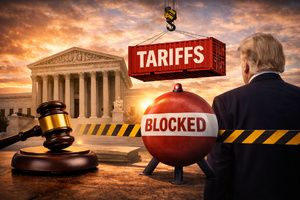
After a year marked by repeated judicial victories for President Donald Trump across immigration, military service, federal employment and executive control over agencies, the U.S. Supreme Court delivered a decisive counterweight. In striking down sweeping global tariffs imposed under emergency authority, the justices signaled that presidential power—even in politically charged domains such as trade—remains subject to statutory limits.
The ruling did more than invalidate a set of duties affecting nearly every major U.S. trading partner. It reasserted the Court’s constitutional role as a check on executive expansion, clarifying that emergency statutes cannot be repurposed to achieve policy objectives beyond what Congress explicitly authorized. In doing so, the justices drew a line that had appeared increasingly blurred during a period of aggressive presidential policymaking.
The decision marked a notable inflection point. Over the preceding months, the Court had sided with the administration in numerous emergency applications, allowing contested policies to proceed while litigation unfolded. Those rapid-fire decisions, often issued through the Court’s emergency docket without extended briefing or oral argument, had fueled criticism that the judiciary was granting broad deference to executive power. The tariffs case, by contrast, was fully argued and carefully deliberated—resulting in a clear and comprehensive judgment.
Statutory Interpretation as a Constitutional Guardrail
At the heart of the case lay a narrow but consequential question: whether a 1977 statute designed to address international economic emergencies granted the president authority to impose tariffs. The administration argued that language empowering the president to “regulate” importation encompassed the power to levy duties. The Court disagreed.
In a detailed opinion, the majority concluded that while Congress delegated significant emergency powers, it did not authorize the imposition of tariffs under that statute. Tariffs, the justices reasoned, have historically been treated as tools of revenue and trade policy, traditionally governed by more specific trade laws. To stretch emergency language to cover broad, across-the-board duties would, in the Court’s view, alter the balance of power between Congress and the executive.
The ruling thus turned on statutory interpretation, not on an assessment of the wisdom or economic consequences of the tariffs. By focusing on legislative intent and textual boundaries, the Court avoided entering into political debates over protectionism or trade strategy. Instead, it underscored a principle embedded in constitutional structure: Congress writes the laws, and the president executes them within defined limits.
This methodical approach strengthened the Court’s institutional position. Rather than confronting the president’s motives or policy preferences, the justices confined themselves to legal authority. In doing so, they demonstrated that even in a polarized environment, constitutional guardrails can operate through disciplined interpretation.
A Shift from Emergency Deference to Merits Review
The decision also distinguished itself procedurally. Much of the administration’s recent success before the Court had occurred on the so-called “shadow docket,” where emergency relief is granted or denied without full hearings. Critics argued that these expedited rulings tilted toward executive interests and lacked transparency.
The tariffs case proceeded differently. It received extensive briefing, oral argument, and a written opinion that engaged directly with statutory text and precedent. The contrast was striking. Where emergency decisions often hinge on provisional judgments about likelihood of success or irreparable harm, this ruling rested on definitive interpretation.
That distinction carries broader implications. It suggests that while the Court may grant temporary latitude in urgent circumstances, it remains prepared to enforce statutory boundaries when reviewing policies on the merits. For observers concerned about judicial independence, the ruling provided evidence that deference in emergency contexts does not necessarily translate into permanent endorsement.
The ideological alignment of the majority further reinforced this message. Justices appointed by both Republican and Democratic presidents joined the decision to invalidate the tariffs. The cross-ideological coalition complicated narratives portraying the Court as uniformly aligned with executive ambitions.
Trade Policy and the Separation of Powers
Trade has long occupied a complex space in constitutional governance. While the Constitution assigns Congress the power to regulate commerce and levy duties, legislators have delegated significant authority to the executive branch over decades. Presidents can negotiate trade agreements, adjust tariffs in response to unfair practices, and invoke national security justifications under specific statutes.
The tariffs at issue sought to leverage emergency authority to impose sweeping duties across a broad range of imports. By rejecting that approach, the Court reaffirmed that delegation has limits. If Congress intends to grant the president new or expansive tariff authority, it must do so clearly.
This clarification may reshape how future administrations approach trade policy. Presidents retain substantial tools under other trade statutes, including mechanisms tied to national security investigations or unfair trade practices. Yet the ruling establishes that emergency economic powers cannot serve as a catch-all justification for sweeping tariff regimes.
In practical terms, the decision restores a measure of legislative primacy in trade matters. It places the onus on Congress to authorize major shifts in tariff policy rather than allowing executive reinterpretation of existing laws to achieve similar ends.
Reasserting Judicial Independence
The broader significance of the ruling lies in its institutional context. Over the preceding year, critics had questioned whether the Court was willing to confront a president pushing the outer edges of executive authority. Emergency victories for the administration—on issues ranging from deportation practices to control of independent agencies—had amplified those concerns.
By decisively invalidating the tariff measures, the Court demonstrated that its earlier emergency decisions did not signal unconditional support. Instead, the justices showed a readiness to engage rigorously when confronted with a major policy initiative on the merits.
The reaction from the president underscored the tension inherent in such moments. Public criticism of the Court’s decision, particularly when directed at justices appointed by the president himself, highlighted the personal and political stakes. Yet the ruling also illustrated that lifetime judicial appointments can foster independence from immediate political pressures.
Historically, the Court has both expanded and constrained executive authority in different eras. It has upheld broad presidential discretion in matters of national security while simultaneously rejecting overreach in areas where statutory limits are clear. The tariffs ruling fits within that tradition of calibrated oversight.
Implications for Future Executive Action
The decision does not eliminate presidential influence over trade. Nor does it preclude the administration from pursuing tariff strategies under other statutory frameworks. However, it signals that attempts to stretch emergency laws beyond their intended scope will face judicial scrutiny.
The ruling may also influence how lower courts approach challenges to executive action. By articulating a firm interpretive standard, the Supreme Court provides guidance for evaluating future claims of expansive authority under broadly worded statutes.
Moreover, the case serves as a reminder that judicial review operates over time. Temporary victories in emergency applications may not survive full consideration. The Court’s willingness to draw a boundary in this instance reinforces the dynamic balance among branches of government.
In reaffirming that statutory text—not executive ambition—defines the contours of presidential power, the Supreme Court underscored its enduring constitutional role. The tariffs decision stands as a reminder that even in periods of assertive executive governance, institutional checks remain embedded in the American system, capable of recalibrating authority when legal limits are crossed.
(Source:www.tbsnews.net)
The ruling did more than invalidate a set of duties affecting nearly every major U.S. trading partner. It reasserted the Court’s constitutional role as a check on executive expansion, clarifying that emergency statutes cannot be repurposed to achieve policy objectives beyond what Congress explicitly authorized. In doing so, the justices drew a line that had appeared increasingly blurred during a period of aggressive presidential policymaking.
The decision marked a notable inflection point. Over the preceding months, the Court had sided with the administration in numerous emergency applications, allowing contested policies to proceed while litigation unfolded. Those rapid-fire decisions, often issued through the Court’s emergency docket without extended briefing or oral argument, had fueled criticism that the judiciary was granting broad deference to executive power. The tariffs case, by contrast, was fully argued and carefully deliberated—resulting in a clear and comprehensive judgment.
Statutory Interpretation as a Constitutional Guardrail
At the heart of the case lay a narrow but consequential question: whether a 1977 statute designed to address international economic emergencies granted the president authority to impose tariffs. The administration argued that language empowering the president to “regulate” importation encompassed the power to levy duties. The Court disagreed.
In a detailed opinion, the majority concluded that while Congress delegated significant emergency powers, it did not authorize the imposition of tariffs under that statute. Tariffs, the justices reasoned, have historically been treated as tools of revenue and trade policy, traditionally governed by more specific trade laws. To stretch emergency language to cover broad, across-the-board duties would, in the Court’s view, alter the balance of power between Congress and the executive.
The ruling thus turned on statutory interpretation, not on an assessment of the wisdom or economic consequences of the tariffs. By focusing on legislative intent and textual boundaries, the Court avoided entering into political debates over protectionism or trade strategy. Instead, it underscored a principle embedded in constitutional structure: Congress writes the laws, and the president executes them within defined limits.
This methodical approach strengthened the Court’s institutional position. Rather than confronting the president’s motives or policy preferences, the justices confined themselves to legal authority. In doing so, they demonstrated that even in a polarized environment, constitutional guardrails can operate through disciplined interpretation.
A Shift from Emergency Deference to Merits Review
The decision also distinguished itself procedurally. Much of the administration’s recent success before the Court had occurred on the so-called “shadow docket,” where emergency relief is granted or denied without full hearings. Critics argued that these expedited rulings tilted toward executive interests and lacked transparency.
The tariffs case proceeded differently. It received extensive briefing, oral argument, and a written opinion that engaged directly with statutory text and precedent. The contrast was striking. Where emergency decisions often hinge on provisional judgments about likelihood of success or irreparable harm, this ruling rested on definitive interpretation.
That distinction carries broader implications. It suggests that while the Court may grant temporary latitude in urgent circumstances, it remains prepared to enforce statutory boundaries when reviewing policies on the merits. For observers concerned about judicial independence, the ruling provided evidence that deference in emergency contexts does not necessarily translate into permanent endorsement.
The ideological alignment of the majority further reinforced this message. Justices appointed by both Republican and Democratic presidents joined the decision to invalidate the tariffs. The cross-ideological coalition complicated narratives portraying the Court as uniformly aligned with executive ambitions.
Trade Policy and the Separation of Powers
Trade has long occupied a complex space in constitutional governance. While the Constitution assigns Congress the power to regulate commerce and levy duties, legislators have delegated significant authority to the executive branch over decades. Presidents can negotiate trade agreements, adjust tariffs in response to unfair practices, and invoke national security justifications under specific statutes.
The tariffs at issue sought to leverage emergency authority to impose sweeping duties across a broad range of imports. By rejecting that approach, the Court reaffirmed that delegation has limits. If Congress intends to grant the president new or expansive tariff authority, it must do so clearly.
This clarification may reshape how future administrations approach trade policy. Presidents retain substantial tools under other trade statutes, including mechanisms tied to national security investigations or unfair trade practices. Yet the ruling establishes that emergency economic powers cannot serve as a catch-all justification for sweeping tariff regimes.
In practical terms, the decision restores a measure of legislative primacy in trade matters. It places the onus on Congress to authorize major shifts in tariff policy rather than allowing executive reinterpretation of existing laws to achieve similar ends.
Reasserting Judicial Independence
The broader significance of the ruling lies in its institutional context. Over the preceding year, critics had questioned whether the Court was willing to confront a president pushing the outer edges of executive authority. Emergency victories for the administration—on issues ranging from deportation practices to control of independent agencies—had amplified those concerns.
By decisively invalidating the tariff measures, the Court demonstrated that its earlier emergency decisions did not signal unconditional support. Instead, the justices showed a readiness to engage rigorously when confronted with a major policy initiative on the merits.
The reaction from the president underscored the tension inherent in such moments. Public criticism of the Court’s decision, particularly when directed at justices appointed by the president himself, highlighted the personal and political stakes. Yet the ruling also illustrated that lifetime judicial appointments can foster independence from immediate political pressures.
Historically, the Court has both expanded and constrained executive authority in different eras. It has upheld broad presidential discretion in matters of national security while simultaneously rejecting overreach in areas where statutory limits are clear. The tariffs ruling fits within that tradition of calibrated oversight.
Implications for Future Executive Action
The decision does not eliminate presidential influence over trade. Nor does it preclude the administration from pursuing tariff strategies under other statutory frameworks. However, it signals that attempts to stretch emergency laws beyond their intended scope will face judicial scrutiny.
The ruling may also influence how lower courts approach challenges to executive action. By articulating a firm interpretive standard, the Supreme Court provides guidance for evaluating future claims of expansive authority under broadly worded statutes.
Moreover, the case serves as a reminder that judicial review operates over time. Temporary victories in emergency applications may not survive full consideration. The Court’s willingness to draw a boundary in this instance reinforces the dynamic balance among branches of government.
In reaffirming that statutory text—not executive ambition—defines the contours of presidential power, the Supreme Court underscored its enduring constitutional role. The tariffs decision stands as a reminder that even in periods of assertive executive governance, institutional checks remain embedded in the American system, capable of recalibrating authority when legal limits are crossed.
(Source:www.tbsnews.net)
